Pages

Showing posts with label Relationships. Show all posts

Let’s Be On Our Way – John 14:25-31

For it is not right that a worshipper of God should be injured by another worshipper of God.”
–Lactantius[1]
            Historically, it is no secret that diverse Christianities have had difficulties dwelling together peacefully. Strife among God’s people can be traced almost anywhere, anytime to anything imaginable under heaven.
C. S. Lewis famously remarked that the quickest way to a desired destination – if a wrong turn has been taken – is to get back to the right road. The individual making an about-turn first, though seemingly counter-productive, is the most progressive.[2]
Doctrinal dissension has arguably proven to be divisive and destructive throughout the history of the Church.[3] This text is a prime example of such a battleground. It is a theological lithosphere of christological, pneumatological and ultimately Trinitarian layers which shifted[4] early and shook Christianity to its core for centuries.[5] Not only is there what some see as a proto-Trinitarian formation,[6] there is also an unavoidable subordinationist Christology present.[7]
As it happened, to argue that Jesus was equal in divine majesty to God the Father required “considerable literary ingenuity”[8] to explain these texts. The result was a widened rift between the subordinationists and those in favor of the Nicene Creed. Gregory of Nyssa described, 
“If in this city you ask anyone for change, he will discuss with you whether the Son is begotten or unbegotten. If you ask about the quality of bread, you will receive the answer that, ‘the Father is greater, the Son is less.’ If you suggest that a bath is desirable, you will be told that ‘there was nothing before the Son was created.’”[9]
Having personally been involved in unavoidable, chaotic feuds merely for being open-minded theologically, I am more convinced than ever that relating to our brothers and sisters in Christ with peaceful and humane dialogue is the only way forward. One’s conviction on any given text is never grounds to degrade or deride a perceived theological opponent or, in consideration of Church history, use violence. “Loving one another,”[10] as so frequently and plainly taught within the Johannine corpus, should never be annexed for that which is speculative, and the subject of constant debate.
Regardless of one’s Christology, Jesus – as God’s executive agent and revealer[11] – has given a supreme example of perfect peace.[12]  Though conflict came to him, 
“Christ did not become what men were; he became what they were meant to be, and what they too, through accepting him, actually became.”[13]
Before actually leaving, Jesus prayed: “[that] they may be one, as we are one” (John 17:22 NRS). Believers in Jesus have the hope that he will indeed return, 
“He is the promise, but the Father is the fulfillment. What Jesus says here about his own death applies also to the death of individual Christians.”[14] 
Until that time, we have the responsibility of emulating his example to love each other, even if our theological, doctrinal or political views don’t always mesh. By grasping onto the theme of the Prince of Peace we can bring the shalom[15] of the age to come into our present, one selfless action at a time. Let’s make an about-turn and get-on. “Let us go from here.” Let’s keep conversing, but be of the same mind and in the same love through humility while we do.[16]


[1] A Treatise on the Anger of God, 13.99 (ANF 7.271).
[2] C. S. Lewis, “Mere Christianity,” The Complete C. S. Lewis Signature Classics (New York, NY.: Harper One, 1952, 2002) 33.
[3] Swartley seems to imply that some are not as prone toward provocations of this nature: “Even among Mennonites, historically considered sectarian, one finds both high christology adhered to be some and a considerably lower christology adhered to by others.” Willard M. Swartley, Covenant of Peace: The Missing Peace in New Testament Theology and Ethics (Grand Rapids, MI: Wm. B. Eerdmans Publishing Co., 2006), 296 (fn. 48).
[4] Hans Küng, Christianity : Essence, History, and Future (New York, NY.: Continuum Publishing Co, 1996), 170-71.
[5] See Professor of Conflict Resolution Richard Rubenstein’s excellent book, When Jesus Became God: The Epic Fight over Christ’s Divinity in the Last Days of Rome (Orlando, FL.: Harcourt Brace and Company, 1999), 7-8.
[6] George R. Beasley-Murray, Word Biblical Commentary: John, vol. 36 (Dallas, TX.: Word, Incorporated, 2002), 261; Craig S. Keener, The Gospel of John: A Commentary, vol. 2 (Grand Rapids, MI.: Baker Academic, 2003), 2:976.
[7] C. K. Barrett, “The Father is Great Than I,” Essays on John (London, SPCK, 1982), 19-36; Karl-Josef Kuschel, Born Before All Time? : The Dispute Over Christ’s Origin, trans. John Bowden (New York, NY.: The Crossroad Publishing Company, 1992), 388.
[8] Charles Freeman, A.D. 381: Heretics, Pagans, of the Monotheistic State (New York, NY.: Overlook Press, 2009), 60.
[9] Joseph H. Lynch, Early Christianity: A Brief History (New York, NY.: Oxford University Press, 2010), 166.
[10] John 13:34-35; 15:12, 17; 17:26; 21:15-17. Even the Johannine Epistles carry this theme: cf. 1 Joh 3:10-11, 14, 16, 18, 23; 4:7-8, 11-12, 16-21; 5:2; 2 Jo 1:5.
[11] Barrett 1982, 23.
[12] F. F. Bruce points out, “the world can only wish peace; Jesus gives it.” F. F. Bruce, The Gospel of John: Introduction, Exposition and Notes (Grand Rapids, MI.: Wm. B. Eerdman’s Publishing Co., 1983), 307 (Fn. 14).
[13] John A.T. Robinson, The Priority of John, ed. J. F. Coakley (Oak Park, IL.: Meyer-Stone Books, 1985), 378.
[14] Ernst  Haenchen, Robert W. Funk, and Ulrich Busse, John 2: A Commentary on the Gospel of John, Chapters 7-21 (Philadelphia, PA.: Fortress Press, 1984), 128. See (Keener 2003, 982).
[15]  “Peace was believed to be a feature of righteous royal rule and of the messianic age.” Marianne Meye Thompson, John: A Commentary (Louisville, KY.: Westminster John Knox Press, 2015), 316
[16] Phil 2:1-3.

Christian Know-It-Allism

Jon Pavlovitz on being a recovering Christian know-it-all.

"When they hear another follower of Jesus share their doubts or deviations, whether about theological concepts or Church doctrine or even regarding the fundamental issues of God and faith, they’re forced to consider their own questions, if even for a moment. They have to confront the things they may passionately argue, yet not be quite certain of—and that can be terrifying."

Intolerance

Here is a quote from Mahatma Gandhi. In a simple and profound way, he pinpoints yet another underlying attitude prevalent throughout some forms of Christendom today: 

"Intolerance betrays want of faith in one's cause." 

Unfortunately, the downward trend is anything goes, but it never should become a point of hatred or ostracism. Of all people, Christians should be the ones who can deal with situations and handle those who do not believe quite like them. So what has happened? Have Christians lost faith in their own cause and leader, having traded it for a bunch of worthless doctrines and traditions? It's repugnant, that's what it is.

You: Singular or Plural?

Paul’s words have caused a lot of confusion for Christians in the past two-thousand years. In 1 (pronounced one) Corinthians 6:19, he made a statement that has been interpreted in various ways:

“Do you not know that your body is a temple of the Holy Spirit who is in you, whom you have from God, and that you are not your own?”

There have been some creative exegetical ventures exploring exactly what Paul meant when he wrote this to the Corinthians. The results are humorous when neglecting to distinguish between singular and plural.

In the passage, “body” and “temple” are singular, but in the phrase “do you not know,” the verb is plural as is the possessive pronoun in “your own.” The pronouns “you” and “your” throughout the verse are also plural. This should immediately inform the reader that Paul is not talking to an individual or communicating that each of them is their own temple, but rather the cumulative people are a temple, i.e. a dwelling of the most high.

In 3:16 of the same letter, Paul had made this statement:

“Do you not know that you are a temple of God and that the Spirit of God dwells in you?”

Here again, the pronouns and the verbal phrase “do you not know” are plural as they are in chapter 6. Also notice “a temple” not the temple. What’s the deal?

Because of the Hellenistic paradigm that pervades western culture and subsequently Christian thinking, the interpretation of this passage has largely - and anachronistically - focused on the individual; me, my and mine rather than the Pauline presentation of a community house, aka. temple.

Part of the reason the Church has lost the sense of community and participatory attitude is because no longer do most look for it, neither do we read the Bible that way. It has instead been replaced by singular faith, personal salvation and eternity, my mansion, my personal Lord and savior; I think you get my point.

Sometimes I feel like I am overusing the word, but context is crucial for a correct understanding of what Paul intended his recipients of this personal correspondence to perceive. Paul’s cultural context is relevant in how and what he thinks about temple, salvation, eschatology and his place as an observant Jew. Paul was addressing the “church” as a collective assembly, not the pastor or (under) shepherd, but the people. If you doubt, start at the beginning of the letter.

Throughout the NT it is observable that certain writers refer to the community of God with temple imagery. The picture conveyed is that within the community, the people of Yahweh, the Sheep of his pasture, is where his presence dwells. He set-up his temple/tabernacle among his people, ultimately desiring them to be a royal priesthood and exhibit to the nations around what he is like. That is – at least in part - what the temple signified. It is not that of individualism where his people are little individual temples walking around, the picture is all together his people comprise a temple, a metaphorical habitation.

In 1 (pronounced one) Peter 2 (pronounced two) the imagery is used:

 “You also, as living stones, are being built up as a spiritual house for a holy priesthood, to offer up spiritual sacrifices acceptable to God through Jesus Christ.” 1Pe 2:5.

Here, the writer uses the plural pronoun “you” as well to describe a singular house. Don’t get the idea that this was a way of replacing The Temple in Jerusalem. Paul had written before the destruction in 70 A.D. and no thought of such a replacement is found in Paul’s writing.

The point is that Paul is focusing on the role of believers and the intimate dwelling God intends with his people. This is not a new concept. The prophets continually spoke of God being with or among his people in various ways. The writer of John also subtly alludes to this reality (although often distorted beyond recognition from what the author intended). 

The writer of Revelation in chapter twenty-one also describes the phenomenon a slightly different way. In the description of a Jerusalem (v. 10) coming out of heaven, her measurements represent an enormous cube. The only cube existing in the Scriptures is the Holy of Holies, the most intimate place of the Temple/Tabernacle where the presence of God resided. The habitation of the saints vis-à-vis Revelation and the “holy city,” “the Lamb’s wife” is this magnificent Holy of Holies. It gives a whole new meaning to “kingdom of priests.”

This is of course a metaphor, like Paul used with the Corinthians. They are all building blocks, components and representatives of God’s presence. God does not live in our physical and mortal bodies; this is not what Paul was saying. The first (not pronounced one) century Christians with their ancient physiology did not even think this.  It is rather about presence, anointing, authority and relationship.

Lastly, I don’t mean to insinuate that there is no amount of individual responsibility in our personal relationship with God, of course there is. It begins with you and me. God’s presence is with each of his followers, but not at the expense of his community. We (collective) have been bought with a price (6:20, 7:23 guess what, plural again).

It’s Okay to Change Your Mind

I was doing my daily blog reading when I came to Dr. James McGrath's post of a few statements from John Pavlovitz. It is worth your read. He has another that is also worth the time. For those readers who struggle from the degenerative disease of TLDR, here are some statements that give a brief synopsis:


"The first time I questioned my theology, I mean really questioned it I was flat-out terrified. Not terrified of God, per se (because I figured God being God an all, was more than big enough to handle my assorted queries), but the people of God.


My orthodoxy was my membership card in the Club, affording me the perks and privileges that came along with it. As long as my theology didn’t waver greatly from the party line, I remained securely cradled in the bosom of the Body. Stray too far from the narrow path though, and things could get really ugly, really quickly.

It’s okay to question things you used to be sure of, to come to different theological conclusions than those you had previously, or to find yourself in small or large ways challenging orthodoxy. These things are not sins.

Doubts and questions, and changes of heart and mind on issues of faith (even fundamental ones) are not character defects or moral flaws. On the contrary, often they are the bravest and most God-honoring places to reside because they are the most authentic. The bottom line is, that’s really the only thing you’re responsible for.

Life should alter us. It should renovate our souls and adjust our lenses. Time and experience, and the things we read and see and discover should change us or we’re probably more committed to the appearance of consistency than to real growth. I don’t have the understanding of myself and of God and the world that I had twenty years ago, I am not too proud to suspect the same won’t be true two decades from today.

God isn’t as insecure or easily angered as those we share space with or worship beside. God is pleased with the depth of our personal search and the integrity of our road, and understands our conclusions better than anyone.

Imagine if we created church communities where theological deviation and spiritual doubt weren’t red flags or prayer concerns or deal breakers; where everyone could speak the truest true without fear of being pushed to the margins or excluded outright. How different might our journeys be? How much richer might our communities become?"

An Old New World

I have just returned home after extensive traveling. Thousands of miles across eighteen states, from the bustling, nervous east coast in D.C. to the quiet and desolate Texas turnpikes with its blowing tumbleweeds. While there is indeed much diversity throughout this land, one thing I continue to find as a common denominator wherever I go is the unrest and uneasiness regarding the future of this land.

Throughout the years amid changing and often turbulent times, this country has endured.  It can be debated by many as to what the force behind it may have been. However, what we do know is that it has stood as a legacy of ingenuity and a testament to the productivity that can come from a society structured such as ours.

The people of this land are experiencing change in cultural, social, religious and economical trends to one extent or another.  Whether it is a business owner, a senior citizen, a college graduate or the single mother trying to maintain a family while coping with inflation, all are being touched by an emerging new world that has quickly become threatening.  Many find that the world in which they were raised included attributes and values of morality, courtesy, patriotism and more.  They have also found that in many instances these attributes and values have all but disappeared. 

Still, in other ways, the more mature citizens in our culture find technological marvels which in their childhood would have seemed only that of science fiction.  The shifts in our small sands of time have uncovered a world that is new, yet very old.

Despite all the changes we are experiencing in technology, the economy, big business and myriads more that could be enumerated, one thing remains, it is still people that matter most.  Whether it is exercised on a practical level or not, the truth of the matter persists. 

In a time when so much emphasis is placed on the political polls, parties and politicians, the largest factor - that which really makes the difference - is our relationship with the people who are in our day-to-day lives.  The revolution that elevated this country to its supreme stature would have never been accomplished without the unity of its countrymen.  The strength exhibited, was in the ability to act harmoniously with each, stand together and in so doing demonstrate the importance of human relationships during perilous times.

Regardless of your religious or spiritual convictions, there are universal laws that have been written on the hearts of mankind.  They are laws which dictate certain guidelines in the treatment of others, regardless of feelings toward them or their beliefs.  Loving our neighbor and treating them the way we desire to be treated is not out of style despite popular opinion.  Touching lives by reaching out to the hurting, or intervening in someone's distressed universe bringing a little heaven to their hell should not be considered unfashionable!

In our day of advances in societal structure, we find that we are more individualistic than ever.  As long as the status quo can be maintained, it may continue to work, but what if it cannot be maintained?  Communication has been taken to unprecedented levels and is available in more diverse ways than ever before in the history of mankind. Unfortunately, as a result, we do not have better relationships as one would hope.  Instead, social severance from the traditional person-to-person exchange is being sprung on humanity. Could the repercussions of a disjointed citizenry in the event of economic upheaval or (God-forbid) further acts of terror as is seen being perpetrated throughout the world take us along the same route as our predecessors in our ability to band together for the justice and salvation of our families?

As observable by merely spending time in the D.C. area, and seeing the bureaucratic madness, it is abundantly clear that reform will not come from Washington, therefore it must start on Main Street, in our homes. What will happen when hard times once again visit, as history dictates it must?  Will this people continue to drive the stake of diversity into and among us at the behest of a more sinister suggestion?  Diversity is only a downfall if we let it be, it can equally be a strength.  Helping and supporting each other is vital, a truth with which those before us, at the inception of this country were well acquainted.

We have seen devastation in many areas of this country as well as around the globe.  Some of it is publicized, some goes all but unnoticed.  No one knows for sure what lies ahead, but when adversity once again arises, would you rather have your neighbors and countrymen as enemies or allies, as friends or foes?  There is much change occurring which will inevitably continue.  We should then ask ourselves the question, “what are we going to do with the time given to us? How well do we know our neighbors?  How are our relationships?

“Only a virtuous people are capable of freedom. As nations become corrupt and vicious, they have more need of masters.” – Benjamin Franklin.

Forgiveness is Divine

“To err is human; to forgive, divine”
Alexander Pope.
“Forgive them, they don’t know what they are doing”, was voiced by the Messiah (Luke 23:34) and re-echoed by Stephen (Acts 7:60) as to exemplify his master’s (lord’s) words. Seeing our fellow man in the proper light is essential to having the forgiving spirit that we survey in these testimonies. While things were being said and done unjustly (from the biblical narration’s standpoint), the realization was that those who were speaking and acting were slaves, tools in the hands of a far greater power at work. Paul later stated in similar fashion that it is not against mortal man (flesh and blood) with whom we wrestle, but against the powers of darkness (Eph. 6:12). 

Our enemies are not those who speak ill of us, or anything related. Most (generally in religious circles) genuinely believe they have good cause to do what they do and say what they say. Their motives are mostly based on convictions held very dear, and makes them willing to take action to protect at all costs. It is an easy process of self-examination when we view our actions and words towards others: do we follow the pattern of Saul of Tarsus, zealous in trying to bring the world to our way of thinking and belief, or after the messianic exhibition, forgiving those who don’t see the message God has laid on our heart? Is there any biblical example or precedence in which God’s messengers are not to forgive and love, but rather oppress and persecute? The crusades and inquisition were laced with such attitudes. 

There is coming a day when the Messiah will return and judge. The prophets foretold of this day as well as delivered harsh proclamations for those who would not follow the word of the Lord. Those who are voiced before “his army” (Joel 2:11) will participate in judgment (1 Cor. 6:1-3), but at this moment we are not commanded to follow the pattern of his second coming, we are to be aligning ourselves with the example of his first coming.

"The Bible Is Not the Origin of Faith" series by Derek Leman

Here are some thoughts well worth consideration. What should be our relationship to the Bible? Has traditionalism fostered an unhealthy perspective that the original authors and even God does not condone? Do we have a relationship with a book, or the God with whom writers of the book relay personal experience? The "word of God" is no doubt is a prerequisite, but perhaps we've gotten the "word of God" confused with the "Bible" or the "Scriptures". They are not synonymous terms, although the Scriptures do contain words spoken by God to his servants. Abraham had faith, heard God's words, believed and acted upon God's words, but had no Bible. I have seen the modern view of inerrancy shatter too many people's faith, because it's a wrongly based faith. Dr. Craig Evans put it: 
In reading some of the more radical books on Jesus, I find that a loss of confidence in the historical reliability of the New Testament Gospels is often occasioned by misplaced faith and misguided suspicions. By misplaced faith I mean placing one's faith in the wrong thing, such as believing that the Scriptures must be inerrant according to rather strict idiosyncratic standards and that we must be able to harmonize the four Gospels. If our faith depends on these ideas, especially in rigid terms, and scholarly study may well lead to a collapse of faith. Craig Evans, Fabricating Jesus, How Modern Scholars Distort the Gospels.
Below are the links to three articles by author and Rabbi Derek Leman.

The Four Loves

Reading "The Four Loves" by C.S. Lewis. I came across this great statement regarding friendship. Friends with whom you can share, trust and find companionship are truly a gift from God. 

“In friendship...we think we have chosen our peers. In reality a few years' difference in the dates of our births, a few more miles between certain houses, the choice of one university instead of another...the accident of a topic being raised or not raised at a first meeting--any of these chances might have kept us apart. But, for a Christian, there are, strictly speaking no chances. A secret master of ceremonies has been at work. Christ, who said to the disciples, 'Ye have not chosen me, but I have chosen you,' can truly say to every group of Christian friends, 'Ye have not chosen one another but I have chosen you for one another.' The friendship is not a reward for our discriminating and good taste in finding one another out. It is the instrument by which God reveals to each of us the beauties of others.”  pg 126

Loving God and Others; Lost in the Matrix


As people who live in a post modern society, we are very prone towards taking many things for granted. Unfortunately, some of the worst results of this practice surface suddenly when someone we love is taken. We are forced upon the realization as to how little we demonstrated true feelings. Or perhaps, our actions or negligence of  the past years spoke that we didn’t care all that much. Why do we (in general) have to come to our senses in an after-shock? Tell the people with whom you are closest how much they mean to you. Say you’re sorry, and not by texting it. Go out of your way to make someone’s day. Put down your pod, phone, magazine or book, shut your screen and come back into the real world. Consider and choose your words closely, as if they were the last you should ever communicate to that individual; someday they will be. Examine the choices of time you make, and the end result of those choices. Re-evaluate the meaning and the purpose of life, what will matter most when we reach a “good old age”? What will we regret; think about it and adjust your course now which will save agonizing years later. In our culture, our adversary has made it way too easy for us to get lost in the matrix of Hellenistic individualism through technology, entertainment and other sub-cultural aspects of contemporary living. God first, others second; let’s not continue contributing to the perpetuation of a trend which has hastened the destruction of familial and other human relationships. I can assure you, you won’t regret it.

en touto nika, In this Sign...


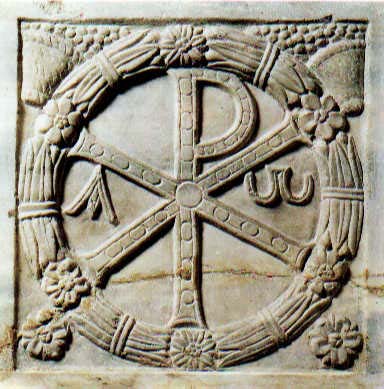
John MacArthur said, “It should be an absolute in the church that you have a highly defined doctrinal statement” (Strange Fire Conference, 10/18/13). What he really means (when used with multitudes of his other declarations) is, in order to escape the eternal dungeons of Hell, which of course will be inhabited by the countless millions who participate in the “cultist and heretical” practice of “strange fire”, all must adhere to his "God anointed MacArthuristic" doctrine, or perhaps a statement that he and his constituents would approve as not disavowing nor compromising a major point of the "saving faith". Really, it is only the “reformed leaders who know the Word of God”? What limits his “spiritual terrorists” merely to the “strange fire” Charismatics, why stop there? Those who carry the chi-rho may as well grab their tar,
feathers, torches and pitch forks and cleanse the whole of American religion, or for that matter, the world and all else that does not fit their definition; “Liberate the Faith from the infidel!” Does God really feel the same way toward these people as JM does? Do the followers of God have nothing better to do than blast or denounce each another all the time? What happened to disciples being known for their love? Instead, we too often resemble the descriptions of the Church of Ephesus. I am glad they do not have authority from the State (as of yet) to burn at the stake (or at least behead) because there would almost certainly be “strange fire” rising from the land.

 "If reformed leaders who know the Word of God don't police this movement, the spiritual terrorists will dominate." JM at the Strange Fire Conference 10/18/13
"The working of signs and wonders was never meant to be part of the ongoing missionary strategy of the church." -Phil Johnson (MacArthur follower, speaker at the Strange Fire Conference).
“Following the leading of the Holy Spirit can present us with a dilemma. While He never contradicts His word, He is very comfortable contradicting our understanding of it. Those who feel safe because of their intellectual grasp of scriptures enjoy a false sense of security. The Holy Spirit will always lead us into truth. But to follow Him, we must be willing to go off the map. To go beyond what we know.” - Bill Johnson (Charismatic leader).

The Road Goes Ever on...


In all honesty, my deepest desire is to seek truth with an honest and sincere heart. I want to be like the Messiah and long to walk in obedience in every way no matter the outcome. I continue to plead with the Father to show me truth in spite of what people may say. I ask Him for wisdom to help me, my family and whomever He brings on my path. I desire for eyes that see and ears that hear, and that He will continue to give greater sense to both. I want a humble and teachable heart, for without humility, learning is done the hard way. Why does it seem that egotism and pride get the best of us far too often? If I already have everything all figured out, what need have I of Him teaching me? God has been perfectly willing to contradict my understanding of Him in the past, but I also had to let go and allow Him to remove the error in my mind and the log from my eye. “So I was wrong”; what have I really lost? Lost? On the contrary, I have gained so much it is indescribable. It is only after my eyes were opened that I could describe what blindness was like. There are those who would say “I have become blind”. Can you tell a man who had darkened eyes that his darkness was light and his light is now darkness? Only from someone who themselves have had no experience with light could such an accusation come. As YHVH says through the mouth of Isaiah the Prophet, “Woe to those who call evil good and good evil, who change darkness into light and light into darkness, who change bitter into sweet and sweet into bitter! Woe to those seeing themselves as wise, esteeming themselves as cleverIsaiah 5) “And so the road goes ever on...”

Whose straight thinking is the straightest?


Disagreement among brothers and sisters as fellow followers of God is not in and of itself the issue; there always has been, and for the foreseeable future will continue to be disagreement. The problems arise from a failure to handle those disagreements in God honoring ways. Those who exclude other followers of God because of theological differences they may possess, feel they have justifiable and even at times Biblical reasons to do so. It is an interesting
phenomenon that in the minds of so many believers, salvation or ones eternal destiny is swayed dramatically (and many times rapidly) by a belief to which someone may or may not adhere. Is our eternal destination or participation in the Kingdom of God completely bound up in the theological or doctrinal strands to which we may or may not hold (have held)? Who’s Orthodoxy is actually correct, and does this refer to Apostolic understanding or should the later Roman Ecumenical Church Council rulings be upheld? If so, which one(s)? Should we instead set our sights on later history when the Reformers took us back to what they considered the pure faith? If so, which Reformer accomplished this as a perfect vice-regent of God's divine purpose? If our eternal destiny indeed hangs in the balance upon the scales of Christian belief, then we would do well to spend our time in pursuit of the one and only guardian of “straight thinking” that God condones and follow those who teach it (satire). There have been many of our ancestors (i.e. Anabaptists, Jews) who have been persecuted because they failed to conform to the religious dictum of the times. Is this how the Messiah taught to bring the Good News of the Kingdom? 
They that approve a private opinion, call it opinion; but they that dislike it, heresy; and yet heresy signifies no more than private opinion."Thomas Hobbes
(Note: To make sure I am not misunderstood in my context; I am not speaking of other religions such as Islam which have an entire different system of epistemology, nor am I inferring an embrace of  Ecumenicism. I am directly speaking of the many factions and splinters of diversity on the Judeo-Christian frontier. Treatment for other humans in a Messiah-like manner is a perquisite for his followers regardless of their religious or theological orientation).

Knowing


The danger any passionate student of Scripture must guard himself against is of being more in love with the story than with its author. Now one may ask how the story could be loved apart from its author, and to this I would not entirely object. To properly
understand the story, one must first know its author, however, to know the author, one must also know the story. But regardless, scholasticism in all of its forms (theology, language exposition, ect.) is a very good and tremendously powerful tool, but placing this pursuit on a higher pedestal than that of an intimate relationship with the God of Hosts is a poor and bitter substitute which inevitably will lead to our undoing. Knowing “about” God is not the same as “knowing” Him in intimacy. If mere academics or even belief were the credentials to relationship with our Father in Heaven, the Devil would have us all beat. “You believe that "God is one"? Good for you! The demons believe it too- the thought makes them shudder with fear!” Jam 2:19

Unboxed


Just because the best and brightest minds cannot rationalize the “unboxed” things of God, does not make them any less true. Inevitably, for this reason, doctrines and systematic type theologies have taken the dominant position over relationship. Our intelligence and scholastic achievements have become our gods. If we cannot understand it, then it must not be true. In this type of thinking, we are limiting God’s entire being to what man can understand. This is a complete absurdity. We have been taught (at least in our culture) to approach God from an academic angle and we equate “knowing about Him” with “knowing Him.”  By making the things of God merely intellectual, we negate the Spirit of the Father, and His function as the Teacher and Guide. So understandably, without the Spirit we can devise nothing more than doctrines of men. It's certain that we are "mistaken, not knowing the Scriptures nor the power of God" Matt 22:23-33