Pages

Showing posts with label Hebrew. Show all posts

Review of Aviya Kushner's "The Grammar of God"

"A Hebrew Speaker's Response to the Bible in English." xxxii.

It is important to note that most of the reading I do is in biblical academia, so my judgment of this book is not based on the same criterion. The reason I mention it is because I read some other reviews of this book in which they were quite unfair, attempting to judge it as a work of biblical or linguistic scholarship. That is not what this book is, nor does the author claim this (see Introduction xxxii); reading the book you will find that to not be the point.

This book was recommended to me and now I am so glad it was; what a fantastic work! I appreciated her insights and background of having been raised in a Jewish home where speaking and reading Hebrew was at the center of the family life.

Again, while it is not a scholarly work, The Grammar of God does contain many trails for the chasing, if the reader possesses the notion. This book will thrill both the grammarian and lover of the Bible, as it is written beautifully and is full of heart. She investigates the histories of English translational difficulties and tells the story of her own personal journey with the realization that "some of the most politically charged issues of our time are rooted in biblical translation." xxiii

Here is one of my favorite quotes from the book:
"It [the Bible] is a story that is part of every man and woman who has ever felt the need to claw against destiny, to insist on a different future than what God appears to be offering. And sometimes, in the Bible, what man wants so passionately is unacceptable to God. What man wants is so destructive that is is a threat to the earth, to the creatures that live on it, to other humans." 114.

Also, the book is available in multiple formats and editions, including audiobook.

Mueller's Hebrew

“I now studied much, about 12 hours a day, chiefly Hebrew … [and] committed portions of the Hebrew Old Testament to memory; and this I did with prayer, often falling on my knees … I looked up to the Lord even whilst turning over the leaves of my Hebrew dictionary.”

George Mueller, Autobiography of George Mueller (London: J. Nisbet and Co., 1906), 31.

Heiser Videos on The Gods of the Bible

I have posted articles and content from Dr. Mike Heiser before containing numerous links. Here are a couple more videos recently done, and well done, I should add. These are short and to the point, covering an area of study that most Christians are unaware exists.

It is a subject of utmost importance to me, on which I have spent a great deal of time and energy because of its contribution to misunderstanding what the ANE context reveals and does not teach about God. Misunderstandings and misguided hermeneutical approaches have crept into Genesis and even transformed themselves into bad trinitarian apologetics (and really bad christological ones for the particularly uninformed and overzealous apologist) via linguistic sophistry.


A New Old Orthodoxy

"When the Jew said something was ‘predestined,’ he thought of it as already ‘existing’ in a higher sphere of life. The world’s history is thus predestined because it is already, in a sense, preexisting and consequently fixed. This typically Jewish conception of predestination may be distinguished from the Greek idea of preexistence by the predominance of the thought of ‘preexistence’ in the Divine purpose."

E.C. Dewick, Primitive Christian Eschatology, The Hulsean Prize Essay for 1908 (Cambridge University Press, 1912), 253f.

God is not a Hebrew, but has chosen to communicate to the world via the Jewish people (e.g. prophets and his son). Merely because something or other is Jewish does not mean it is inherently better or closer in proximity to God's heart. They were the conduit through whom God chose to tell his saving story. But to understand the story as it was originally intended, simply reading the Jewish message that was placed into their world and cultural context with any paradigm has often severely distorted that message. When the writers used words and definition, it cannot be supposed that what they meant means the same thing in a twenty-first century context. Language changes, cultures shift and what Paul really meant can get glossed by later explanations that would not have been indigenous to his historical context and theological edifice. With the rise of historical analysis, the new perspectives on Paul were inevitable and much needed. 

Being or thinking like a Greek (westerner) is not wrong. But to take the Greek worldview, definition or ways of thinking and impose it on what radically different Jewish writers were communicating is to do violence to the original message. For example, we cannot read Paul and assume that he was a Trinitarian. To go into the text with that anachronistic presumption and interpret his words through a fourth and fifth century filter is to miss what he actually was saying. We don't have to assume that Paul's idea of kenosis matches that of many modern interpreter's opinions regarding the Carmen Christi.

The Second Temple Jewish view of preexistence is virtually absent in our world of Christian congregants. When a post-modern interpreter thinks of preexistence, it is generally not with the opinion that God's foreknown purpose was thought to have preexisted the reality. Greeks (westerners) tend toward thinking in terms of abstract metaphysics and ontological categories. If Jesus preexisted (whatever that actually means), he must therefore of necessity have existed in some other form (i.e. logos theology) before entering the womb of Mary. 

When biblical titles like Son of God are redefined by using later definition, it is not difficult to see how the shift in this thinking occurred. With neo-Platonism governing the overall approach to biblical hermeneutics, and the spark of creativity in the air, the Patristics - and eventually the councils - replaced the NT (based on OT use) Son of God with a philosophically contrived God the Son. Thus, a new "orthodoxy" was born. It threatened - under the pain of excommunication and eternal damnation - that its definitions and dogmas must be unquestioningly accepted for salvation (Athanasian Creed). Jesus was subsequently torn out of his Hebraic world and placed into another. Geza Vermes put it well in The Authentic Gospel of Jesus, 

“Compared to the dynamic religion of Jesus, fully evolved Christianity seems to belong to another world.”

The use of Jewish foreknowledge and pre-ordination was ripped from its own context and sculpted around a twisted philosophical template of John's Gospel. 

"This man [Jesus], delivered over by the predetermined plan and foreknowledge of God" Acts 2:23 (c.f. 1 Peter 1:2).

 God already had it predetermined; the plan was there, but did not make its appearance upon the stage of humanity until it literally came into existence. It did, or was said to exist in a different way before its revelation.

The New Schaff-Herzog Encyclopedia of Religious Knowledge, “Revelation” says it well,

"God avails Himself of human thought and speech to make Himself known and His speech intelligible." 

He does not reveal himself in illogical or intangible ways. However, it must be qualified that just because traditional Christianity has based much of its belief on tradition and has muddied the waters, does not mean it was difficult and challenging to the original hearers. The NT and OT are thoroughly Jewish collections of writing. Its writers were Jewish, and most of its audience was Jewish (obviously there are intended Gentile recipients within the Pauline corpus). Post-modern readership has approached their interpretive reading with a Greek (western) perspective, this cannot be helped. It has been handed down from the church and early post-biblical creeds which neglected the context and cultural significance of utmost importance, that Jesus was a Jew who thought and taught in Rabbinical Jewish ways with Jewish interpretations, hermeneutics and categories. It is a person of ignorance who claims that they can close their eyes and ears to this reality. Our savior was a Jew and came into existence by birth, not, as Irenaeus has it: 

"This Christ passed through Mary just as water flows through a tube." 

This is something radically different from Matthew and Luke’s description that Jesus was brought into existence inside Mary, by the power of God. Greg Deuble in his book, They Never Told Me This in Church noted that 

"Protestants who deplore tradition-bound Roman Catholics because they revere Church tradition above the Scriptures fail to see that in some areas they are just as bound to tradition, i.e. to long held interpretations of Scriptures."

J. R. D. Kirk I believe summarized it well, 

“We sometimes see divinity where the text doesn’t require it because that is the theology we bring with us to the text.”

Ancient Near Eastern Cosmology Video

This is a great video by Dr. Mike Heiser on ANE cosmology (for those of us interested in such things). If you are interested in investigating more in this area of study, check out his Divine Council site. And of course, you could always explore here, but I'm no pro. Read my paper, this review, watch my lecture and read this.

Daniel - Part V

The Continuing Four-Kingdom Theme:


Apparently, the Jews did not abandon the four kingdom theme, but interpreted Rome as the fourth and final empire. Within these later Jewish sources it was intended as an anti-Roman polemic. Where five empire lists exist (Polybius), it is most likely a conflation of the prior-existing schema that began with Assyria. Rabbinic and other interpreters obviously relied on Daniel for their interpretations (e.g. 4 Esdras (Ezra) 12:11-12; 2 Bar. 39:3-7), and Jesus speaks of elements within Daniel as still as yet to take place (Matt 24:15; Mk 13:14).

As Rome became viewed as the fourth empire, Babylonia had to remain as the first due to Daniel explicitly saying so; Greece became the third, which left either Media or Persia being cut or combined into one kingdom in the dream. Since the time of at least Josephus, the interpretation has been most popular as follows:

Babylonia (head, gold), a combined Medo-Persian empire (arms/chest, silver), which Josephus intimated by stating,

“the two hands and arms signify this, that your government shall be dissolved by two kings” Ant. 10.10.4.

The third empire has been thought to be Greece (belly/thigh, bronze) and finally, the fourth kingdom most popularly interpreted as Rome (legs/feet, iron and iron/clay mixture). While Josephus does not explicitly say he believes the fourth kingdom to be Rome, it appears as though he did. Flusser comments,

“He could not openly speak about the common interpretation of the four empires in Daniel because of its anti-Roman character, but when he interprets Nebuchadnezzer’s dream in Daniel ii (Ant. X, 209-210) his intention was clear to all readers who were prepared to understand him” JOC, 327.

Commenting on chapter eight Josephus also records,

“Indeed it so came to pass, that our nation suffered these things under Antiochus Epiphanies, according to Daniel’s vision, and what he wrote many years before they came to pass. In the very same manner Daniel also wrote concerning the Roman government, and that our country should be made desolate by them” Ant. 10.11.6.

Iian Provan in his commentary on Daniel states:

“There is, moreover, an inherent weakness in the ‘Greek hypothesis’ – that the book of Daniel nowhere explicitly says that there was a Median Empire. It only says that Babylon was ruled for a while by a king of Median extraction, who is said to have applied the laws of the Medes and the Persians (6:8) and may well have been the same person as Cyrus the Persian (if the end of 6:28 is translated ‘the reign of Darius, that is, the reign of Cyrus the Persian’). Media and Persia are two parts of the same empire in Daniel – the two horns on the single ram of ch. 8 [v.20]. The fourth empire on this view is not named in the book, but thought of as coming after Greece (i.e. Rome).”

While Provan does not specifically view Rome as being the fourth kingdom following Greece as third, he does view the fourth simply as

“an empire to come, at some point after the Greek empire has passed away, during which the events of the end times occur” Dunn, Provan, “Daniel,” Eerdman’s Commentary on the Bible, 667.

Finally, it is interesting to note that nowhere is the kingdom that replaces the fourth (whether identified as Greece, Rome or some other unknown confederacy) called the “fifth.” Due to its description of 

1) originating without human hands; 
2) encompassing the whole earth; 
3) being without end, replacement or destruction, it is clearly not just another kingdom, but rather the eschaton of sorts; another kind of kingdom. Some view this kingdom as the reversion of the Jews to their rightful locale or the rule of God, interpreted through the rise of Christianity.

Whatever identification we assign to the four kingdoms and their exact time of existence and supplanting, it is evident that the point of it all is summed up in the rule of God, and his establishment of a superior kingdom. This is a kingdom dominated by peace (Isa. 2) and a time of rejuvenation of the nations (Isa. 19:22-25). Attempts to predict the time of the end with calculation and application of Danielic text to modern events has proven to be inaccurate while doing a great disservice to the intention of the book. It is a form of chronological snobbery to consider Daniel – or any other biblical text for that matter – irrelevant to the contemporary social context in which it was written. 

Pete Enns, in a recent blog post, made some worthwhile observations when he said (albeit in the context of Genesis, but nevertheless still applies):

“All biblical writers were limited by their culture and time in how they viewed the physical world around them. This is hardly a novel notion of inspiration, and premodern theologians from Augustine to Calvin were quite adamant about the point. No responsible doctrine of inspiration can deny that the biblical authors were thoroughly encultured, ancient people, who spoke as ancient people. Inspiration does not cancel out their “historical particularity,” no matter how inconvenient. . . . We do indeed ‘know more’ than the biblical writers about some things. That alone isn’t an alarming theological problem in principle. But that principle has become a problem because it now touches on an issue that some feel is of paramount theological importance. . . . Should the principle be abandoned when it becomes theologically uncomfortable? . . . Acknowledging that we know more than biblical writers about certain things is not to disrespect Scripture. We are merely recognizing that the good and wise God had far less difficulty with ancient categories of thinking than some of us do.”

Daniel must be read within its own cultural context. Did Daniel have a message for its contemporaries, or was it only a book that was meant to be understood much later? It is unfair to place on this collection of writing a system of interpretation that would have been quite foreign to it. While I continue to investigate and attempt to understand the content, I won’t willfully ignore the vast amount of scholarship that has been done on this canonical collection.

There is much regarding Daniel, its timing, interpretations etc. which we may never be completely sure of, but what we can assuredly conclude is that Daniel stresses the action of the God of Israel and his intimate involvement within the affairs of humanity. Nothing, even the most horrific acts, eludes his attention.

Here are some thoughts from Goldingay which are worthy of repeating:

“There is no hint of timing in Daniel’s revelation. Whether it is actually comes from the Babylonian period, the Persian period, or the Greek period, it implies that history can be divinely foreknown, but not that it is divinely foreordained. The chapter does not speak of final events fixed since time’s beginning, of the whole world under evil’s power, of a dualism of this world and the righteous world to come, of judgment in the form of an immutable fate, or of a division of world history into periods determined by God. . . . It assumes that human beings make real decisions that do shape history, yet that human decision-making does not necessarily have the last word. It affirms the sovereignty of God in history, working sometimes via the process of human decision-making, sometimes despite it. The end of history promised here is not history coming to its goal. . . . Nor, however, is it history being broken off. . . . Nor are the four empires succeeded by a further, fifth empire, but by something wholly other. Daniel promises a new future, one which is not merely an extension of the present. . . . It is of supernatural origin. But it is located on earth, not in heaven. Daniel envisages no dissolution of the cosmos or creation of a different world. His understanding of this kingdom is more like the prophetic idea of the Day of Yahweh than that of some later apocalypses. The problems of politics and history can only be resolved by a supernatural intervention that inaugurates a new kingdom, but this involves changing the lordship of this world, not abandoning this world. The new kingdom fills the earth. History is not destroyed; other sovereignties are. . . . The qualities of this new rule are not described except by saying that it is God’s and that it lasts, both of which qualities contrast with those of its predecessors” Goldingay, WBC, Daniel, 59f.

In his book Seriously Dangerous Religion, Provan gives some good thoughts regarding Daniel. Daniel goes out of its way to inform the reader that this world -

“is governed by ‘beasts’ – the beastly empires described in Daniel 2 and 7. It is a world, therefore, that has been turned upside down. The world created by God is one in which human beings should govern the animals (Genesis 1:26-30), but in Daniel, the ‘animals’ govern the human beings. Here the idolatry of the self has been transposed into the idolatry of the state, and upon human beings who refuse such idolatry suffering falls, whether in fiery furnaces or in lions’ dens or in some other way. This is what happens when the emperor, in particular, comes to think that he is a god (Daniel 3)” Provan, Seriously Dangerous Religion: What the Old Testament Really Says and Why it Matters, 168.

I will conclude this chapter with this reminder as to the greater picture of God’s plan:

“The belief in the destruction of Babylonian, Median, Persian, and Greek rule is a powerful pronouncement to the listener that God will bring these reigns of terror to an end. All forms of inhumanity are destined to end, and it is this destiny that the faithful are invited to know and act upon by means of an insight in to the future of God’s plan” D.L. Smith-Christopher, NIBD, VII:55.

Check out DustinMartyr blog on Daniel 9, one, two and three.

Daniel - Part IV


Before the King: 


Daniel begins his interpretation of this dream in v 36. There is no need to speculate regarding the golden head, as Daniel informs the king that it is he. Josephus has it, 

“the head of gold represents you and the Babylonian kings who were before you” Ant. 10.10.4.

The four parts of the statue are similar to the four beasts of chapter seven and are four empires, although Goldingay does not think chapter two and seven correspond to the same motif. Other commentators such as Keil and Delitzsch view chapters seven, eight and nine to be further descriptive of that represented as a “whole” in chapter two (Keil and Delitzsch, 9:557). Regardless, both are linked together through some commonalities: in Nebuchadnezzar’s dream they are all part of one unified image and in Daniel’s vision of chapter seven, they are all beasts. Also, a shared component is the external phenomenon – not from among them – that ultimately triumphs by annihilation, i.e. stone cut without human hands (chapter two) and the intervention of the “son of man” and “ancient of days” (chapter seven). 

But within chapter two, what conclusion should be drawn of these kingdoms as to their identities? It probably comes as no surprise to know that through the years the interpretations regarding the “who’s who” of these “empires” has varied, depending on the period of time and who was doing the interpreting.

Even before the Greek conquest, the idea of three empires succeeding one another – Assyria, Media and Persia – is documented. Both Herodotus (I, 95, 130), writing in the fifth century B.C., and Ctesias, writing in the fourth century B.C., affirm this. Flusser notes,

“Thus, the idea of three empires: Assyria, Media and Persia is probably a Median historical conception before the conquest of the East by Alexander” JOC, 323. 

Even Assyria to Media is mentioned in Tobit (14).

Flusser adds that when the idea of four empires is compared with the Zoroastrian conception of four periods within human history, it became an eschatological and political ideology with anti-Greek tendencies, as Rome would be in a later period and interpretation. It’s not too hard to imagine how a contemporary rule would react to literature that speaks of its utter overthrow and destruction. Such speech is anti-imperial and thus rarely explicit in its detail, as well as interpretation.

The fourth book of the Sibylline Oracles contains the four-empires. It is related as Assyria, Medes, Persians, Macedonians (Greece). In the document, an apparent secondary change (Flusser, JOC, 319) took place where Rome was introduced following Greece. “World domination” is applied (in the SibOr text) to the Assyrians (v. 50), Persians (v. 65) and the Romans (v. 103). Rome did not belong in this source, as it is outside of the ten generation history on which it is based, meaning that it was a later redaction of the text.

It is generally accepted today by scholars, that the four empires of Daniel were intended as Babylonia, Media, Persia and Greece (Flusser, Judaism and the Origins of Christianity, 324). Isaiah and Jeremiah have texts that seem to point in this direction as well:

“The LORD has aroused the spirit of the kings of the Medes, Because His purpose is against Babylon to destroy it; For it is the vengeance of the LORD, vengeance for His temple” Jer. 51:11, cf. 28 NAU

and 

“Behold, I am going to stir up the Medes against them, Who will not value silver or take pleasure in gold. . . . Babylon, the beauty of kingdoms, the glory of the Chaldeans' pride, Will be as when God overthrew Sodom and Gomorrah” Isa 13:17, 19 NAU.

In addition to these texts, there are those that speak of Persia, with Cyrus at the Babylonian helm (2 Chron. 36:22-23; the entire book of Ezra; Isa. 43, 44, 45). There are also texts which mention a “Darius” as king during Jerusalem’s post-exile restoration (Hag 1:1, 15; 2:10; Zech 1:1, 7; 7:1).

Historian W. Durant, with a detailed historical recounting of the ANE empires, says this of Cyrus:

“When Cyrus and his disciplined Persians stood at the gates, the anti-clericals of Babylon connived to open the city to him, and welcomed his enlightened domination. For two centuries Persia ruled Babylonia as part of the greatest empire that history had yet known” Our Oriental Heritage, 263.

Durant also summarizes the downfall of the Medes:

“When Cyrus, the brilliant young ruler of the Median dependency of Anshan, in Persia, rebelled against the effeminate despot of Ecbatana, the Medes themselves welcomed Cyrus' victory, and accepted him, almost without protest, as their king. By one engagement Media ceased to be the master of Persia, Persia became the master of Media, and prepared to become master of the whole Near Eastern world” Ibid, 352.  

While I am not entirely convinced one way or another (mostly due to not having adequately considered the parallels in chapter seven), important questions to consider are, “why would content have been included or excluded in a book such as this, what purpose would it serve? What would the readership have taken it to mean, and why?

Flusser offers an explanation of how and why the interpretive shift from Greece to Rome as the fourth kingdom took place:

“The book of Daniel reached its present form between 168 and 165 B.C.E. at the beginning of the Maccabean revolt against Antiochus Epiphanes. The scheme of four empires with Greece at the end was not obsolete from the political point of view of the Jews in Palestine persecuted by the Greek King [Flusser here notes Dan. 11:30 containing a hint of Rome’s intervention against Antiochus’ plans to conquer Egypt]; but it would no longer fit the political reality in Asia Minor after 191 B.C. E. because there it was already clear that the Romans succeed Macedonia. . . . As to the book of Daniel itself, there is a common opinion that its author used older material from various periods” JOC, 324.

It is the historical events of Babylonia, Media and Persia and their relation to certain parts of Daniel where I have some difficulties. For instance, Daniel five states that Belshazzar saw writing on the wall, which communicated that his kingdom was being turned over to the “Medes and Persians” (5:28). That night, says the text, Darius the Mede received the kingdom (30-31). However, Belshazzar was the son of Nabonidus, not Nebuchadnezzar. And it was Nabonidus, not his son, who was the last king of Babylon, regardless of being a coregent or not. Carol Newsom points out that there are 

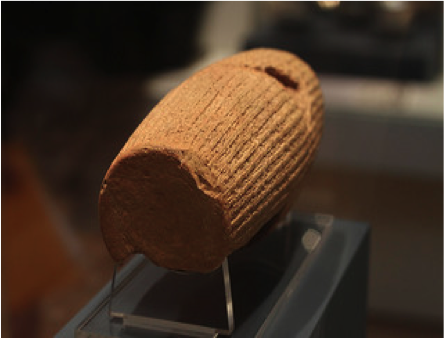
“five ancient sources that refer to the events of the fall of Babylon in 539 B.C.E.: (1) The Babylonian Chronicle . . . (2) the Cyrus Cylinder . . . (3-4) the accounts of the Greek historians Herodotus (1.190-91) and Xenophon . . .(5) the account of Berossus, a Hellenistic-era Babylonian historian ” Newsom, Daniel, 163.  

According to the Nabonidus Chronicle in the Ancient Near Eastern Texts (ANET, 306-307; 315-316), Cyrus was the one who invaded Babylon (as Chronicles, Ezra and Isaiah indicate), and did so without opposition.  John Collins notes that the inclusion of a “Mede” is a redaction for “Cyrus the Persian” for the sake of the four-kingdom motif (Collins, Daniel, 242).

The problem I have with interpreting Media as the silver, second kingdom in the dream of the image is that she was coexistent with Babylon, although indisputably inferior. Under the leadership of Nabopolassar, the Babylonians – united with the Medes under Cyaxares along with the Scythians from the Caucasus – succeeded in destroying Assyria in 612 B.C. Durant puts it, 

“at one blow Assyria disappeared from history” Oriental Heritage, 283f.

So then, how does Media fit this description, “In your place another regime will arise inferior to yours”?

Babylon did not fall to Media, but to Persia, who also had taken over Media. I see no reason from the historical evidence to combine Media and Persia as though they were one kingdom, as they most definitely were not. Combining the two kingdoms does not solve the issue regardless. While the metal does decline in value, it is not ultimately what the dream is about. Focusing on the metal seemingly misses the point. 

Collins, while interpreting the four the way most scholars do today, does mention, 

“The inclusion of Media in the succession of world empires appears odd because Media never ruled over the Jews. It was, however, included in a reckoning that became traditional in Greek and Roman historiography” Collins, Daniel, 166.

Daniel - Part III


The setting:


In chapter one of Daniel, the story of Jerusalem falling under the power of the Babylonian superpower and her ferocious king Nebuchadnezzar is told. A lot could be said here culturally, how kings in the Ancient Near East (ANE) handled conquered territories etc. For instance, Daniel and his friends mentioned are not just random peasant children, but in all probability sons of nobility, or to use an anachronism, part of the aristocracy. We know this not only from ANE practice of conquering and creating vassal relationships, but Josephus (Ant. 10.10) informs us of this as well.

In Daniel two, a new scene begins where the king had a troubling dream. I won’t recount the story, but basically, the king refused to tell his dream for the sake of not wanting to be deceived regarding its interpretation. The diviners and specialists of these matters protested the impossibility of his request, although David Flusser notes from Herodotus, Croesus King of Lydia testing the Greek Oracle, makes the request of Nebuchadnezzar “reasonable” or “not so illogical as the book of Daniel pretends” (Flusser, JSTP, ii:2; JOC, 325).

The Hebrew hero Daniel asked for time and the king (obviously) consented and through the pleading of Daniel to the God of Israel (Yahweh), the secret was made-known in a vision.

The Interpretation:


The interpretation of this dream has been one of constant debate. It is important in a text like this to pay attention to the structure. The reason being, the context is partially reliant upon another portion of the text of Daniel (anachronistically titled “another chapter”). Far too extensive to cover in this post is the chiastic structure with chapters two and seven serving as bookends (see Goldingay, WBC, Daniel, 158; IVP Dictionary of the OT Prophets, 110). Beginning in 2:4, the language changes from Hebrew to Aramaic and reverts back to Hebrew after the conclusion of chapter seven.  

Within this dream – in chapter two – the king saw an image, a large (great) statue. Its parts were divided into head (gold), breast and arms (silver), belly and thigh (bronze) and finally legs (iron) and feet (mixed iron and clay). Goldingay comments that gold and silver are representative of “majestic and precious” in political and religious contexts while bronze and iron are “strong and hard.” He also states that “the four metals together sum up the variety of valuable natural resources” and “there is no implication of deterioration as we move from head to trunk to hips to legs; nor are these four metals 'the metals of idolatry.'”

Since the discovery (1948) and publication of the Dead Sea Scrolls, fragmentary details have aided the study of not only Daniel but have contributed invaluably to furthering many other biblical studies as well. Such is the case with a fragment known as the Prayer of Nabonidus (4QPrNab, 4Q242). Nabonidus was the last king of Babylon and the father of Belshazzar. It is thought by some scholars that this fragment is part of an earlier form of the Daniel story, where it retains Nabonidus, who later became identified as Nebuchadnezzar for various reasons. One proposition is due to it being Nebuchadnezzar who conquered Jerusalem and destroyed the temple.

With the other Daniel-related traditions belonging to Jewish literature (Prayer of Azariah, Song of the Three Jews, Susanna, Bel and the Dragon) it is not difficult to understand how these stories circulated, even independent of each other. PrNab is illuminating to Daniel in several ways, but pertaining to this chapter (two) it contains the materials found in the image of the dream:

“Words of the pr[ay]er which Nabonidus, king of [the] la[nd of Baby]lon, the [great] king, prayed [when he was afflicted] by a malignant inflammation, by decree of the G[od Most Hi]gh, in Teiman. [I, Nabonidus,] was afflicted [by a malignant inflammation] for seven years, and was banished far [from men, until I prayed to the God Most High] and an exorcist forgave my sin. He was a Je[w] fr[om the exiles, who said to me:] Make a proclamation in writing, so that glory, exal[tation and hono]ur be given to the name of [the] G[od Most High ». And I wrote as follows: « When] I was afflicted by a ma[lignant] inflammation […] in Teiman, [by decree of the God Most High,] [I] prayed for seven years [to all] the gods of silver and gold, [of bronze and iron,] of wood, of stone and of clay, because [I thoug]ht that t[hey were] gods.” F.G. Martı́nez, The Dead Sea Scrolls: Study Edition, 1:487.

Is it possible that this story took on more than one form through the years? Is it possible that as time went on, the shifting sands of external political forces and internal religious factions that dramatically affected Israel had an emphasis on the way the story was told and redacted in specific periods of time?

Like I stated at the outset of this series, my point is not to draw radically different and dogmatic conclusions merely for the sake of doing so, but rather to consider alternative points of view, comparing historical events well-known to scholars, but often obscured from the average Christian. My hope is that this inquiry is not seen as an affront on supernaturalism, prophecy or the preservation of words God intended for his people. My objective is to better comprehend how this collection of texts was intended to be understood and thus (hopefully) come to a fuller grasp on what God wanted his people to know concerning the troublesome times they (we) continue to face.  

Be sure to check out DustinMartyr on Daniel 2, 7 and 8.

Daniel - Part II

Ancient and Modern Perspectives:


The interesting thing about Daniel is the attitude toward it. The Old Testament (as Christians know it) is for Jewish folk called Tanakh, which is an acronym taking the T from torah, N from navi (im) (prophet(s)), K for ketuvim (written things, writings) and adding some vowel sounds. It is somewhat telling that Daniel is not grouped in with the prophets but rather the writings. 

“Daniel is classified with the Major Prophets in the LXX and was regarded as a prophet already in antiquity (Matt 24:15; Ant 10.11.7 [266]). Yet in the Hebrew Bible the book of Daniel is found in the Writings, in the fourth place from the end (before Ezra, Nehemiah and Chronicles). The position in the Hebrew Bible reflects the late date of Daniel (after the collection of Prophets had been standardized) but may also reflect an awareness that Daniel does not belong with the Prophets in genre” (Anchor Bible Dictionary, ii:31).

Why? David Flusser takes up the challenge in an attempt to answer the question as to why Daniel – the only full-fledged apocalyptic book (Anchor, ii:31) – was incorporated into the canon. He writes, 

“Ultimately this came about because of the first part of the book, chapters one through six, which contain legends about Daniel as a man, seer and healer from the end of the Babylonian era and the beginning of the Persian. . . . As for the tales in the first part of the book, they were dear to the hearts of the Jews of the day because they contain the two earliest accounts of Jewish martyrs” (Flusser, Judaism of the Second Temple Period, The Jewish Sages and Their Literature, ii:5).

The majority of scholars date the book to the second century B.C.:

“The book of Daniel can be dated with relative precision between the second campaign of Antiochus Epiphanes against Egypt in 167 BCE and his death in 164” (J. Collins, SBL, Semeia 14, 30). 

It is also typically considered vaticinium ex eventu, although this is not the case for all. John Walton, for instance, states that this 

“appears to face considerable problems. The four-year time span (168-164 B.C.) is far too short for a book of that time to be written, copied, circulated and adopted as truth and then preserved as canon.”

He continues on,

“the presuppositional rejection of supernaturalism is largely responsible for the rejection of a sixth-century date for the book.”

He also goes on to say that

“the linguistic evidence (in regard to the both the Hebrew and Aramaic of Daniel) points toward a earlier time than the second century, as does the appearance of Daniel in the Septuagint (usually dated as early as the third century B.C.) and the Dead Sea Scrolls (from the first and second centuries B.C.)” Walton, Survey of the OT, Zondervan, 2nd ed., 454.

Jesus did refer and quote Daniel as a prophet, but in reality it’s not as clean-cut and easy as it may first appear. For example, scholars know that Enoch 1 is depicted in the content of at very least a couple NT writers and an influence on others (like Paul). Does this mean that those individuals believed the book of Enoch to be literally penned by the historical individual or was rather eponymous?

The role of a prophet was not merely or always predictive. They were messengers from the God of Israel to deliver words of hope, reassurance and more than not, repentance. If we are to be good expositors of any text – including Daniel – we need to ask the questions of why and how this message functions within the social and ethical context of the Hebraic community.

Skip Moen in a recent blog post on exegesis put it this way:

“Exegesis is a linguistic-theological project. It begins with what the author of the text meant in the cultural framework of his world. It must begin there since there is no other way to understand the words that he wrote. This may lead to theological assertions (or it may not) but the theology is secondary. Theology is abstraction from the text, just as the speeches of Romeo and Juliet are not directly applicable to our generation. Doctrines that regulate what the text must mean hinder exegesis. They are the stuff of paradigms and typically prevent us from seeing anything in the text except what the paradigm says is in the text. The biggest obstacle to learning God’s word is thinking that we already know what He says. We must practice spiritual suspended animation, putting what we think we know on the shelf, if we are going to re-think what the text teaches. Hopefully we will find that what we thought we knew is still the case. But not always. Sometime our most cherished beliefs are the very things that prevent us from hearing what the original author said.”

Christianity has little conception of the reality that in the Hebraic world of literature, authority rather than autograph was of greater significance. In other words, in an oral as opposed to a textually dominant culture, attempting to link the origin of a book itself to a specific individual is not as important as the tradition and authority on whom it is based. John Walton remarks, 

“We should remember, however, that this canonical final form does not override the authority figures or the traditions that preceded it. . . . Authority is not dependent on an original autograph or on an author writing a book. Recognition of authority is identifiable in the beliefs of a community of faith (of whom we are heirs) that God’s communications through authoritative figures and traditions have been captured and preserved through a long process of transmission and composition in the literature that has come to be accepted as canonical” Walton, Lost World of Scripture, 68.

Daniel - Part I

I am interrupting the series on salvation history for a number of posts on the visions within the book of Daniel. I will get back to the salvation series in the not-too-distant future. Over at his blog DustinMartyr, Dustin Smith is tackling the same subject. He posted his second article already, but here is his part one and two.

Traditional use and abuse


I’ll be frank, I am no prophecy savant. Allow me to be even more candid; prophecy interpretation (and the failure thereof to do so correctly) has inadvertently promoted heinous acts and has resulted in duping copious amounts of people throughout the centuries, often times with devastating results. This has left a horrible taste in my mouth and a hesitation to draw dogmatic conclusions when past expositors have been guilty of distorting the text and perpetuating error for personal prosperity. All of those having used prophecy in this way have been one-hundred percent wrong, one-hundred percent of the time.

As with any genre of literature, it is important that proper hermeneutical principles of context, culture and adequate historical analysis guide the reader. As illustrated above, it is patently obvious that the general attitude and application/interpretation of prophetic texts has been a dismal failure. The book of Daniel is no exception.

I concur with Josephus when he said,

“if anyone be so very desirous of knowing truth, as not to wave such points of curiosity, and cannot curb his inclination for understanding the uncertainties of the future, and whether they will happen or not, let him be diligent in reading the Book of Daniel, which he will find among the sacred writings” (Ant. 10:10.4).

Regardless of the date one accepts as genuine for Daniel, the simple fact remains: interpretations tend toward becoming functions of the group reading the specific text.

In scholarship:


There has been a good deal of debate within scholastic circles centering on this book, pertaining to its origin, authorship and authenticity. It has been a challenge to step-back and reevaluate the flood of information available on the matter, and who/what is to be trusted. I have attempted to analyze and examine it from a logical, practical and as unbiased position as possible. Here are some of the conundrums which I have faced and facts which can hardly be ignored:

1. Scholarship is necessary. Without it there is no archaeological evidence wherewith to establish proper cultural context, no lexicography, no critical texts or textual analysis, no commentaries and the last step, no English translation. If you doubt this, most what is said here will be meaningless.

2. Not everything scholars say and think is true. Scholarship is old. Really old. The best of the best have been wrong, just ask John Hagee. Scholars are and can be wrong, but the methodologies, tools and accessibility to copious amounts of ancient texts at the disposal of today’s historian have never been greater.

3. Prophecy is part of faith in the God of Israel. This cannot be overlooked. If we trust in the God of Israel, there is a certain amount of faith (which cannot always be proven by analytics) required. The problem for historians is there is no way to substantiate the claim. Historians cannot authenticate prophecy or prove the veracity of miracles, which is partially why the date is troublesome. For instance, how can Daniel two and seven include information about Rome or Greece if there isn’t even a Pompey yet? This does not in and of itself disprove miracles or prophetic forecasts from having taken place. I am merely relating why it is troublesome for historians in general.

4. The book possesses difficulties. Not only does Daniel present difficulties for scholars within its own content, but contains historical inaccuracies against the vast amount of evidence from the period in which it claims to have been written and the period in which most scholars have concluded it was written. That is to say that the book is actually one piece of literature by one individual from one period of time, which it almost certainly was not. An example is Belshazzar in Daniel being presented as Nebuchadnezzar’s son rather than Nabonidus’s son, not to mention certain acts of Nabonidus attributed to Nebuchadnezzar.

5. General scholarly consensus views Daniel as a prophecy written after the fact (Latin vaticinium ex eventu). Meaning, Daniel was a reverse history, and not necessarily always a very good one.

6. Jesus called Daniel a Prophet. This has been, and continues to be one of my greatest challenges to the way I view Daniel. Jesus appealed to events predicted in Daniel and identified himself as the “son of man,” which is depicted in the seventh chapter. If we are to take Jesus and the Gospels seriously, what are the implications of modern scholarship’s dating, view of origin and composition? Are we to then assume Jesus was claiming to be Gabriel and/or endorsed Canaanite mythology?

These are a few questions that need to be taken into serious consideration. It’s not just a matter of flippantly dismissing any difficulty that either scholarship or traditionalism presents and throwing it under the bus of canonicity for the sake of convenience rather than face a perceived hardship. It also needs to be remembered that no matter the position some may take, it does not make them a heretic or a Jesus denier/hater.

Joshua 10:12-15 and Mesopotamian Celestial Omen Texts

In recent years, I have often wondered about the events in Joshua where he commands the sun to “stand still”. What are we to make of such an extraordinary narrative? The difficulties I have had in this particular text was knowing that the earth revolves around the sun, and so to take the text in a “literal way” was an impossibility endowed with current knowledge. Was I instead to read it (as many today attempting to maintain the Bibles credibility) as the “earth” instead standing still? However, the problem I faced was I would no longer be taking the text literally at all, I had to superimpose a later understanding and offer what the text “really meant” in light of scientific development. In that case, in relation to the celestial bodies, could anyone have known what the text “really meant” (if it really was meant to say “earth” stood still and not “sun”, or from whose perspective – “from earth’s perspective, it only appeared that the sun stopped moving”) prior to the 16th century Copernican Revolution? Here is a short article written by Dr. John Walton, and I offer it for your consideration as a plausible interpretation/explanation.

Dr. Walton is professor of Old Testament at Wheaton College. His specialty of study has largely included the book of Genesis and naturally Ancient Near East (ANE) literature. He relates the culture of the times to the interpretation of the OT to bring further insight to the authorities and audience behind the sacred texts, resulting in a better understanding and appreciation among believers. He has published dozens of books, articles and translations, both as writer and editor, including his latest book "The Lost World of Adam and Eve" as a follow-up to "The Lost World of Genesis One" (my review here, and my short Amazon review here). I have enjoyed his insights into the intricacies of the Ancient Near Eastern world.

Joshua 10:12-15 and Mesopotamian Celestial Omen Texts

In Joshua 10:12-15, we read of a prayer made by Joshua in the heat of battle requesting that the sun and moon stop, stand still, and wait so that the Israelites could defeat the Amorites that day.

On the day the Lord gave the Amorites over to Israel, Joshua said to the Lord in the presence of Israel:

“Sun, stand still over Gibeon, and you, moon, over the Valley of Aijalon.” So the sun stood still, and the moon stopped, till the nation avenged itself on its enemies, as it is written in the Book of Jashar. The sun stopped in the middle of the sky and delayed going down about a full day. There has never been a day like it before or since, a day when the Lord listened to a human being. Surely the Lord was fighting for Israel!
Joshua 10:12-15 (NIV)

This account ranks as one of the most frequently invoked passages for how the credibility of the Bible fails in the world of science. For those who insist that we must take the text literally, the issue concerns the inerrancy of the Bible and the ability of God to do whatever he chooses. While those who take God seriously would not deny that God can do whatever he chooses to do, we recognize that we must also ask what it is that the text claims. As I have often pointed out, we must read the Bible as an ancient text, not as a modern one.

The interesting fact is that those who claim that they are reading the text literally are already defeating themselves. When asked to explain what actually happened, they readily explain that the earth stopped rotating. We need to note, however, that at that point they are not taking the text literally since they have posited the earth stopping rather than the sun. Their reply would be that we have to make adjustments for the geocentric views of the ancient world (it only seemed the sun was stopping when in reality the earth was stopping). In that adjustment, however, they are no longer taking the text literally. If we are going to adjust our interpretations to ancient thinking, we had better do a thorough job of it.

Another common element to the traditional interpretation of this passage is that Joshua’s prayer takes place as daylight is waning, and he feels that with just a few extra daylight hours, he can finish off the enemy. Unfortunately, this interpretation has failed to take into account the details given in the text. The passage explicitly notes that the sun is over Gibeon and the moon over the Valley of Aijalon. A quick look at any Bible atlas reveals that Gibeon is east, Aijalon is west, therefore, Joshua prays in the morning. Consequently, we begin to wonder why Joshua would even bother to request a longer period of daylight if it is still morning.

Now that we have recognized that no one takes the text literally, and that we have often failed to account for the details in the text regarding the time of day, we can begin anew to try to understand the text as an ancient text rather than as a modern one. As such, we must begin with the idea that the text operates in the world of omens, not the world of physics and astronomy. Then we must consider the possibility that the correct interpretation of this passage is that Joshua was praying for the Amorites to see a bad omen. Here is how the argument for that position goes.If the sun is in the east and moon is in the west, we can conclude that not only is it morning, it is morning at the time of the full moon. On the first official day of the full moon, the orb of the sun is fully visible above the eastern horizon line and the orb of the moon is fully visible above the western horizon line for about four minutes. When we explore ancient celestial omen texts we find that this is one of the most important times of the month for receiving significant celestial omens.

In the ancient Near East the months were not standardized in length, but varied according to the phases of the moon. This lunar calendar was then periodically adjusted to the solar year so as to retain the relationship of months with the seasons. The beginning of a month was calculated by the first appearance of the new moon. The full moon came in the middle of the month and was identified by the fact that the moon set just minutes after the sun rose. The day of the month on which the full moon occurred served as an indicator of how many days the month would have. When the opposition of sun and moon—the full moon—occurred on the 14th day of the month, that meant the new crescent would be seen on the 30th day. Such a month was considered the “right” length, and all would be in harmony. It was then considered a full-length month made up of full-length days. Longer or shorter months were believed to contain longer or shorter days. So seeing the full moon on the morning of the 14th day was a good omen. As is evident from verse 13, on this day the sun and moon did not give the omen that the Amorites would have hoped for.

As a result of these beliefs, the horizon was observed very carefully in the middle section of the month, as people hoped for this opposition of sun and moon to come on the propitious day (14th). Opposition on the wrong day was believed to be an omen of all sorts of disaster, including military defeat and overthrow of cities. In this way the movements of the sun and the moon became monthly omens of good fortune or ill. In the ancient Near East great significance was attached to these omens and they were often used to determine whether battle should be engaged on a particular day or not. As noted above, the positions reported in Joshua for the sun and moon suggest that the time is near sunrise in the full moon phase. Since Joshua wants the Amorites to receive a negative omen, we can reason that it must not be the 14th day of the month. If what Joshua prays for takes place, the Amorites would feel that their battle was doomed.

The Mesopotamian celestial omens use verbs like “wait”, “stand,” and “stop” to record the relative movements and positions of the celestial bodies. When the moon and/or sun do not wait, the moon sinks over the horizon before the sun rises and no opposition occurs. When the moon and sun wait or stand, it indicates that the opposition does occur for the determination of the full moon day. The omens in the series known as Enuma Anu Enlil often speak of changing velocities of the moon in its course to effect or avoid opposition with the sun.

The major objections to this interpretation come from verse 13. Most standard translations are pretty close to the NIV: “So the sun stood still, and the moon stopped, till the nation avenged itself on its enemies, as it is written in the Book of Jashar. The sun stopped in the middle of the sky and delayed going down about a full day.” Four Hebrew terms deserve some attention:
    1. Till. This translation gives the impression that the described situation was sustained until victory was achieved. In fact, however, the Hebrew preposition used here can be rendered “before” in precisely the sort of syntactic arrangement used in this verse.1 A good example is found in Ezek. 33:22.
    2. Middle. By “middle” we should not assume that the text refers to midday. At midday the moon would not be visible in the west, neither would Joshua know he needed extended light at midday. A more likely treatment would be to see it as a reference to its half of the sky (i.e., the eastern half of the sky)

    3. Delayed. Here the text says that the sun did not hasten. The same phrasing is found in an omen text concerning Mars: “It will not stand in it [in its midst], it will not become stationary [wait] and not tarry [rest]; it went forth hurriedly.2 Furthermore, some translations say that it did not hasten to set. The Hebrew verb is sometimes translated that way, but it is the basic verb “to go, enter” and could feasibly be used for any transition from one section to another.
    4. Full. This is the most difficult term to assess. A couple of options are worthy of consideration. In Akkadian omen texts a “full-length” month (30 days) is made up of “full-length” days. When the full moon is on the 14th, it will be a full-length month filled with full-length days. If the month is not going to be 30 days, as here, then they are not full-length days. It does not make sense to us, but it is how the texts talk. Alternatively, rather than translate “full-length,” we might consider the possibility of translating the Hebrew adjective tammim as “propitious.” In this case, the phrase would be translated “the sun did not hasten to its entry as on a propitious day.”
The verse would then read, “So the sun stood still, and the moon stopped, as a prelude to the nation avenging itself on its enemies, as it is written in the Book of Jashar. The sun stopped in its segment of the sky and did not hasten into its position as it would have on a full-length (propitious) day.”

Beyond these lexical discussions, some scholars object to this reading because all of the omen texts are Neo-Assyrian and therefore many centuries later than the time of Joshua. Furthermore, the interest in celestial divination is strongest in the seventh century and in the area of Assyria. We have little information concerning the use of omens from the Levant in the mid-second millennium. Nevertheless, recent study has shown that even the Neo-Assyrian sources have their roots in the second millennium, and the Levant is not totally lacking evidence (cf. Emar).3

The lexical issues remain vexing and problematic, but they can be addressed. Even if we acknowledge that we have not yet sorted out the lexical details, the presence of terms such as “stop,” “stand” and “wait” gain new possibilities in light of the language of celestial omens and the fact that the context is one that is just right for an ominological application (i.e., on the brink of battle). Certainly a reading of the text in light of omens is more likely for an ancient text than a reading in light of physics.

It should be noted that the text does not suggest the astronomical phenomena were unique; instead, verse 14 says plainly that what was unique was the Lord accepting a battle strategy from a man (“the Lord listened to a man”). A Mesopotamian lamentation (first millennium) shows this same type of terminology for divine judgment when it speaks of heavens rumbling, earth shaking, the sun laying at the horizon and the moon stopping in the sky, and evil storms sweeping through the land. Joshua’s knowledge of the Amorites’ dependence on omens may have led him to ask the Lord for one that he knew would deflate their morale—for the opposition to occur on an unpropitious day.

1. Waltke and O’Connor, Biblical Hebrew Syntax (Winona Lake: Eisenbrauns, 1990), 215 (par. 11.2.12b).
2. H. Hunger, Astrological Reports to Assyrian Kings (SAA VIII; Helsinki: Helsinki University Press, 1992), 462:4-7 p. 260.
3. J. Cooley, Poetic Astronomy in the Ancient Near East (Winona Lake: Eisenbrauns, 2013).

John Walton's "The Lost World of Genesis One" - Review

John H. Walton, The Lost World of Genesis One: Ancient Cosmology and the Origins Debate.
Downers Grove: InterVarsity, 2009.

The Torah is fascinating to me. The more one digs and investigates, the greater the rewards. I love the Old Testament, these sacred texts work as building blocks; the poetic books, prophets and historical books are based and have their foundation on the Torah. If my understanding of the Torah is tainted, there is a good chance that somewhere down the line I will draw some wrong conclusions.

With my love of the Old Testament, Ancient Near Eastern cosmology (a more specific area of study) caught my attention and subsequently expended much of my scholastic activity. Needless to say, this is a major contributor to understanding the text in its ancient cultural context, i.e. the way the original audience would have heard (and later read) it.

A student who seriously endeavors to “take on” this investigative effort can hardly do so without coming across the volumes of scholarship by Dr. John Walton, a giant in this field of study. Dr. Walton is professor of Old Testament at Wheaton College. His specialty of study has largely included the book of Genesis and naturally Ancient Near East (ANE) literature. He relates the culture of the times to the interpretation of the OT to bring further insight to the authorities and audience behind the sacred texts, resulting in a better understanding and appreciation among believers.

I had the privilege of meeting Dr. Walton when attending a short seminar he did at a university in a neighboring city. I was impressed with the extent of his knowledge and the earnest desire he portrayed in being as true to the original intent of the textual authority as possible. I then picked up numerous of his works and have continued to examine them as time permits. Having recently finished reading his 2009 work in the “Lost World” series entitled “The Lost World of Genesis One”, I wanted to share some of his intriguing challenges to the traditional interpretations of Genesis.[1]

He begins with an interpretational fundamental, of which I heartily concur,

“The Old Testament does communicate to us and it was written for us, and for all humankind. But it was not written to us. It was written to Israel. It is God’s revelation of himself to Israel and secondarily through Israel to everyone else…when we read a text written in another language and addressed to another culture, we must translate the culture as well as the language if we hope to understand the text fully…It is far too easy to let our own ideas creep in and subtly (or at times not so subtly) bend or twist the material to fit our own context…[2] Much to our dismay then, we will find that the text is impervious to many of the questions that consume us in today’s dialogues. Though we long for the Bible to weigh in on these issues and give us biblical perspectives or answers, we dare not impose such an obligation on the text.”[3]

Inevitably, it is not just about translation, he offers,

“The minute anyone (professional or amateur) attempts to translate the culture, we run the risk of making the text communicate something it never intended. Rather than translating the culture, then, we need to try to enter the culture. When people want to study the Bible seriously, one of the steps they take is to learn the language. As I teach language students, I am still always faced with the challenge of persuading them that they will not succeed simply by learning enough of the language to engage in translation.”[4]

If we are to be serious students of the text, we have to deal justly with the ancient nature of the biblical documents. This does not have to scare us or threaten to undo all in which we believe, but rather is freeing from defending the biblical narrative of something it never intended to communicate.

“If we attempt to commandeer the text to address our issues, we distort it in the process…we must be aware of the danger that lurks when we impose our own cultural ideas on the text without thinking. The Bible’s message must not be subjected to cultural imperialism.”[5]

In this book, Dr. Walton succinctly presents eighteen easy-to-comprehend propositions detailing a

“careful reconsideration of the nature of Genesis 1”[6]
that does not involve 1) promotion of evolution,[7] 2) undermining scriptural authority,[8] or 3) exegetical elitism,[9] but rather affirms adamantly that

“God is the one responsible for creation in every respect. He has a purpose and a goal as he creates intentionally. The mechanisms that he used to bring the cosmos into material existence are of little consequence as long as they are seen as the tools in his hands.”[10]

“Face-value” and “literal reading”[11] of the text are stressed throughout the propositions. The problem with our modern view of Genesis (as presented in this work) is we overlay our ideas of ontology and force a material creation interpretation upon the text, when such questions would never have been asked or understood by the original hearers. For instance, Walton states,

“God has communicated through human authors and through their intentions. The human author’s communication is inspired and carries authority. It cannot be cast aside abruptly for modern thinking.”[12]

His point is that it was not the intention of Genesis to provide us with a sound scientific telling of material origins.

“There is not a single instance in the Old Testament of God giving scientific information that transcended the understanding of the Israelite audience. If he is consistently communicating to them in terms of their world and understanding, then why should we expect to find modern science woven between the lines? People who value the Bible do not need to make it ‘speak science’ to salvage its truth claims or credibility.”[13]

In Proposition 1, Walton details the problem of making Genesis 1 about science. The ancient world’s thought about origins and the universe (cosmology) is nothing like our perspectives today.

“What did it mean to someone in the ancient world to say that the world existed? What sort of activity brought the world into that state of existence and meaning? What constituted a creative act?...I propose that people in the ancient world believed that something existed not by virtue of its material properties, but by virtue of its having a function in an ordered system.”[14]

He goes into great detail as to what he means by “ordered system” here. The opposite of this view being investigated is called “concordism.”[15]

“All of this indicates that cosmic creation in the ancient world was not viewed primarily as a process by which matter was brought into being, but as a process by which functions, roles, order, jurisdiction, organization and stability were established.”[16]

In the Genesis worldview, something was thought to “exist” when it had functionality. Material existence did not equate “existence” in the ANE. This concept is foreign to our worldview.

“In the ancient world, what was most crucial and significant to their understanding of existence was the way that the parts of the cosmos functioned, not their material status.”[17]

Walton gives multiple citations from ancient literary works for the purpose of illustrating the ANE worldview that

“to create something (cause it to exist) in the ancient world means to give it a function, not material properties...it is from this reading of the literature that we may deduce a functional ontology in the ancient world – that is that they offer accounts of functional origins rather than accounts of material origins.”[18]

He also states, 

"we [as moderns] tend to think of the cosmos as a machine and argue whether someone is running the machine or not. The ancient world viewed the cosmos more like a company or a kingdom.”[19]

“If God were intent on making his revelation correspond to science, we have to ask which science…it would neither correspond to last century’s scientific consensus nor to that which may develop in the next century…what is accepted as true today [in science], may not be accepted as true tomorrow, because what science provides is the best explanation of the data at the time…if God aligned revelation with one particular science, it would have been unintelligible to people who lived prior to the time of that science, and it would be obsolete to those who live after that time. We gain nothing by bringing God’s revelation into accordance with today’s science. In contrast, it makes perfect sense that God communicated his revelation to his immediate audience in terms they understood.”
[20]

The communication proposed is order and function against chaos and meaninglessness.

“Functions are far more important than materials.”[21]

To summarize the propositions designated as the “cosmic temple inauguration view”[22] he features:

· The Hebrew word bārā ברא (“create”) is a verb, and is functional. He supplies tables as evidence showing its lexicographical nature and orientation.[23] It does not describe a creation of material origins out of nothing (ex nihilo), but rather deals with assigning functions and order to God’s creation.

· In Gen. 1:2 a material state of chaotic cosmos is introduced that is ordered and given functionality throughout the creation week.

· Throughout the first three days, the functions of life are provided; time, weather and food.

· On days four to six, the assignments pertaining to the cosmos’ functionary roles and spheres are discussed. There are material components involved, but the text only deals with them on a functional level (celestial bodies for signs, seasons, days an years; human beings in God’s image, male and female, with the task of subduing and ruling).[24]

· “It is good” is continually reiterated as a result of God’s work being functional in relation to mankind.

He touches on the Hebraic component of re-creation during the Genesis flood where the world returns temporarily to a primordial state of chaos, disorder and nonfunctional state of turmoil.

“What follows is a re-creation text as the land emerges again from the waters and the blessing is reiterated.”

This proves functionality at work in this creation as well. As a result God makes a promise as Creator (Gen. 8:22). In that promise,

“we find the same three major functions in reverse order: food, weather and time, never to cease. The author is well aware that these are the main categories in the operation of this world that God has organized.”

Proposition 7 discusses the Sabbath. The presentation provided here gives an alternative way to view it. What constitutes as “rest”? He ties the “rest” to his presence in the newly ordered and functional cosmic temple in the way a king “rests” on a throne and runs his kingdom from it.

“Obviously, God is not asking us to imitate his sabbath rest by taking the functional controls. I would suggest that instead he is asking us to recognize that he is at the controls, not us. When we ‘rest’ on the sabbath, we recognize him as the author of order and the one who brings rest (stability) to our lives and world. We take our hands off the controls of our lives and acknowledge him as the one who is in control.”[25]

“He continues to sustain the functions moment by moment…Creation language is used more in the Bible for God’s sustaining work (i.e., his ongoing work as Creator) than it is for his originating work…He is not only the Creator of the original state of affairs but of all present and future realities.”[26]

He makes a great observation that in contrast to other ANE creation accounts, creation is for humanity’s benefit, not humanity for the benefit of the deity. This is not unlike Jesus’ words in Mk 2:27, 

“The sabbath was made for man, and not man for the sabbath…”

Day seven climaxes with the resting of God from his activity of assigning functionality. Resting is an action that happens (as discussed) in the temple of a deity (well known and exemplified in the culture).

“Deity rests in temples, and only in a temple.”[27]

God takes control of his newly ordered and now functional cosmological temple.

“The account can then be seen to be a seven-day inauguration of the cosmic temple, setting up its functions for the benefit of humanity, with God dwelling in relationship with his creatures.”[28]

He further concludes that the proposed interpretation of Genesis 1 communicates:[29]

· That the world operates expressly by Yahweh’s design, fiat and under his constant supervision for the accomplishment of his purposes (as deity was always the express causation of cosmology in the ancient world).

· The ordered and functional cosmos orchestrated by Yahweh is his temple from where he rules. This

“temple was seen as being at the center of the ordered world as God established and preserved order in the world from the temple.”[30] 

“The most central truth to the creation account is that the world is a place for God’s presence…”[31]

In Proposition 8, Walton gives this summary:

· In the Bible and in the ancient Near East the temple is viewed as a microcosm.

· The temple is designed with the imagery of the cosmos.

· The temple is related to the functions of the cosmos.

· The creation of the temple is parallel to the creation of the cosmos.

· In the Bible the cosmos can be viewed as a temple.

“When this information is combined with the discoveries of the last chapter – that deity rests in a temple, and that therefore Genesis 1 would be viewed as a temple text – we gain a different perspective on the nature of the Genesis creation account.”[32]

Everything in the cosmos functions on behalf of mankind who are his image bearers.

“A very clear statement must be made: Viewing Genesis 1 as an account of functional origins of the cosmos as temple does not in any way suggest or imply that God was uninvolved in material origins – it only contends that Genesis 1 is not that story. To the author and audience of Genesis, material origins were simply not a priority. To that audience, however, it would likewise have been unthinkable that God was somehow uninvolved in the material origins of creation.”[33]
I love his comment,
“This is not a view that has been rejected by other scholars; it is simply one they never considered because their material ontology was a blind presupposition for which no alternative was ever considered.”[34]

In Proposition 10 he succinctly states,
“The Seven Days of Genesis 1 Do Not Concern Material Origins.”[35]

Of the traditional view he states,

“the comfort of our traditional worldview is an insufficient basis for such a conclusion. We must be led by the text. A material interest cannot be assumed by default, it must be demonstrated, and we must ask ourselves why we are so interested in seeing the account in material terms…it is difficult to sustain a case that the account is interested in material origins if one does not already come with that presupposition.”[36]

Walton also stresses that Genesis contributes nothing to the discussion about the age of the earth, but also points out,

“The point is not that the biblical text therefore supports an old earth, but simply that there is no biblical position on the age of the earth.”[37]

I appreciated his mention of mankind being stewards of God’s ordered cosmos, 

“it is not ours to exploit. We do not have natural resources, we have sacred resources…the blessing he granted was that he gave us the permission and ability to subdue and rule. We are stewards.”[38]

Walton also writes,

“All of the rest of creation functions in relationship to humankind, and humankind serves the rest of creation as God’s vice-regent. Among the many things that the image of God may signify and imply, one of them, and probably the main one, is that people are delegated a godlike role (function) in the world where he places them.”

This concept is replete throughout the Hebrew Scriptures.Our modern way of viewing the cosmos tends to compartmentalize spiritual and physical as being mutually exclusive. This is not the way the audience of Genesis would have thought or understood it.

“A biblical view of God’s role as Creator in the world does not require a mutually exclusive dichotomy between ‘natural’ and ‘supernatural,’ though the reigning paradigms are built on that dichotomy.”[39]

“Mostly people use the word [literal] to express that they want to understand what the text ‘really says.’ The question is, what criteria make that determination?..Usually our search to find out what a text ‘really says’ must focus on the intended communication of the author and the ability of the audience to receive that same intended message.”[40]

He summarizes that a “face-value” reading:

· Recognizes Genesis 1 for the ancient document that it is;

· Finds no reason to impose a material ontology on the text;

· Finds no reason to require the finding of scientific information between the lines;

· Avoids reducing Genesis 1 to merely literary or theological expressions;

· Poses no conflict with scientific thinking to the extent that it recognizes that the text does not offer scientific explanations.[41]

In Proposition 10, he brings up the issue of death. He points out,

“Human resistance to death was not the result of immortal bodies…no, the reason we were not subject to death [before the fall] was because an antidote had been provided to our natural mortality though the mechanism of the tree of life in the garden…without access to the tree of life, humans were doomed to the natural mortality of their bodies and were therefore doomed to die. And so it was that death came through sin.”[42]

There are many other things that could be said about this book. This would be a good read for many of my generation, who because of interest in science have rejected the Bible for having been taught that it is either Genesis’ version of material origins or science.

“One of the sad statistics of the last 150 years is that increasing numbers of young people who were raised in the environment of a biblical faith began to peruse education and careers in the sciences and found themselves conflicted as they tried to sort out the claims of science and the claims of the faith they had been taught. It seems to many that they have to make a choice: either believe the Bible and hold to a young earth, or abandon the Bible because of the persuasiveness of the case for an old earth. The good news is that we do not have to make such a choice. The Bible does not call for a young earth. Biblical faith need not be abandoned if one concludes from the scientific evidence that the earth is old.”[43]

What if Genesis is not speaking to post enlightenment scientific readers? What if it is an ancient book speaking as an ancient book with ancient cosmology? What if we could speculate “how” the world began, but rest on the fact that no matter the “how”, we know the “who,” and it was not a matter of chance, but a purposeful, intelligent designer? Walton draws the conclusion on the matter stating,

“Science cannot offer an unbiblical view of material origins because there is no biblical view of material origins aside from the very general idea that whatever happened, whenever it happened, and however it happened, God did it.”
[44]

“The principle factor that differentiates a biblical view of origins from a modern scientific view of origins is that the biblical view is characterized by a pervasive teleology: God is the one responsible for creation in every respect.”[45]

I will close with this last quotation:

“God did not give Israel a revised cosmic geography – he revealed his Creator role though the cosmic geography that they had, because the shape of the material world did not matter. His creative work focused on functions, and therefore he communicated that he was the one who set up the functions and who keeps the operations going, regardless of how we envision the material shape. This creation account did not concern the material shape of the cosmos, but rather its functions.”[46]

“They [Israel] thought about the cosmos in much the same way that anyone in the ancient world thought, and not at all like anyone thinks today. And God did not think it important to revise their thinking…God did not deem it necessary to communicate a different way of imaging the world…but was content for them to retain the native ancient cosmic geography…we can conclude that it was not God’s purpose to reveal the details of cosmic geography…God could communicate what he desired regardless of one’s cosmic geography.”[47]

I highly recommend this book. It was insightful, carefully researched and elegantly communicated.
________________________________

End Notes:
[1] I say intriguing due to the fact that those who are unfamiliar with the ANE or ancient literary works, may find it difficult to accept some of his conclusions. This only shows how far we have moved away from the original intention of the book of beginnings (Genesis).
[2] Introduction, pg. 7
[3] pg. 19
[4] Introduction, pg. 9
[5] pg. 19
[6] pg. 161
[7] pg. 164
[8] pg. 167
[9] pg. 171
[10] pg. 117
[11] “Someone who claims a ‘literal’ reading based on their thinking about the English word ‘create’ may not be reading the text literally at all, because the English word is of little significance in the discussion.” pg. 169
[12]pg. 105
[13] Ibid
[14] pg. 24, He discusses the “ordered system” in Proposition 2.
[15] He discusses this topic in Proposition 11 (pp. 103-106)
[16] pg. 52
[17] pg. 24
[18] pg. 33
[19] Ibid
[20] pg. 15
[21] pg. 58
[22] pg. 161
[23] These are located on pp. 40-41 in Proposition 3.
[24] pg. 94
[25] pg. 146
[26] pp. 120-121
[27] pg. 71
[28] pg. 162
[29] pg. 150
[30] pg. 147
[31] pg. 83f
[32] Ibid
[33] pg. 95
[34] pg. 42 The FAQ section in the back of the book contains some questions that may frequently be asked about this book. One of which Dr. Walton plays the advocate and asks, “If this is the ‘right’ reading, why didn’t we know about it until now?” This is a fair enough question, to which he responds, “The worldview of antiquity was lost to us…with the decipherment of the ancient languages and the recovery of their texts…windows were again opened to an understanding of an ancient worldview that was the backdrop of the biblical world. This literature and the resulting knowledge has made it possible to recover ways of thinking that were prominent in the ancient world…” pg. 170
[35] pg. 92
[36] pp. 93, 94
[37] pg. 94
[38] pg. 145
[39] pg. 139
[40] pg. 101
[41] pg. 106
[42] pp. 99-100
[43] pg. 95
[44] pg. 112
[45] pg. 117
[46] pp. 60f
[47] pp. 14, 16