Pages

Showing posts with label Fundamentalism. Show all posts

Let’s Be On Our Way – John 14:25-31

For it is not right that a worshipper of God should be injured by another worshipper of God.”
–Lactantius[1]
            Historically, it is no secret that diverse Christianities have had difficulties dwelling together peacefully. Strife among God’s people can be traced almost anywhere, anytime to anything imaginable under heaven.
C. S. Lewis famously remarked that the quickest way to a desired destination – if a wrong turn has been taken – is to get back to the right road. The individual making an about-turn first, though seemingly counter-productive, is the most progressive.[2]
Doctrinal dissension has arguably proven to be divisive and destructive throughout the history of the Church.[3] This text is a prime example of such a battleground. It is a theological lithosphere of christological, pneumatological and ultimately Trinitarian layers which shifted[4] early and shook Christianity to its core for centuries.[5] Not only is there what some see as a proto-Trinitarian formation,[6] there is also an unavoidable subordinationist Christology present.[7]
As it happened, to argue that Jesus was equal in divine majesty to God the Father required “considerable literary ingenuity”[8] to explain these texts. The result was a widened rift between the subordinationists and those in favor of the Nicene Creed. Gregory of Nyssa described, 
“If in this city you ask anyone for change, he will discuss with you whether the Son is begotten or unbegotten. If you ask about the quality of bread, you will receive the answer that, ‘the Father is greater, the Son is less.’ If you suggest that a bath is desirable, you will be told that ‘there was nothing before the Son was created.’”[9]
Having personally been involved in unavoidable, chaotic feuds merely for being open-minded theologically, I am more convinced than ever that relating to our brothers and sisters in Christ with peaceful and humane dialogue is the only way forward. One’s conviction on any given text is never grounds to degrade or deride a perceived theological opponent or, in consideration of Church history, use violence. “Loving one another,”[10] as so frequently and plainly taught within the Johannine corpus, should never be annexed for that which is speculative, and the subject of constant debate.
Regardless of one’s Christology, Jesus – as God’s executive agent and revealer[11] – has given a supreme example of perfect peace.[12]  Though conflict came to him, 
“Christ did not become what men were; he became what they were meant to be, and what they too, through accepting him, actually became.”[13]
Before actually leaving, Jesus prayed: “[that] they may be one, as we are one” (John 17:22 NRS). Believers in Jesus have the hope that he will indeed return, 
“He is the promise, but the Father is the fulfillment. What Jesus says here about his own death applies also to the death of individual Christians.”[14] 
Until that time, we have the responsibility of emulating his example to love each other, even if our theological, doctrinal or political views don’t always mesh. By grasping onto the theme of the Prince of Peace we can bring the shalom[15] of the age to come into our present, one selfless action at a time. Let’s make an about-turn and get-on. “Let us go from here.” Let’s keep conversing, but be of the same mind and in the same love through humility while we do.[16]


[1] A Treatise on the Anger of God, 13.99 (ANF 7.271).
[2] C. S. Lewis, “Mere Christianity,” The Complete C. S. Lewis Signature Classics (New York, NY.: Harper One, 1952, 2002) 33.
[3] Swartley seems to imply that some are not as prone toward provocations of this nature: “Even among Mennonites, historically considered sectarian, one finds both high christology adhered to be some and a considerably lower christology adhered to by others.” Willard M. Swartley, Covenant of Peace: The Missing Peace in New Testament Theology and Ethics (Grand Rapids, MI: Wm. B. Eerdmans Publishing Co., 2006), 296 (fn. 48).
[4] Hans Küng, Christianity : Essence, History, and Future (New York, NY.: Continuum Publishing Co, 1996), 170-71.
[5] See Professor of Conflict Resolution Richard Rubenstein’s excellent book, When Jesus Became God: The Epic Fight over Christ’s Divinity in the Last Days of Rome (Orlando, FL.: Harcourt Brace and Company, 1999), 7-8.
[6] George R. Beasley-Murray, Word Biblical Commentary: John, vol. 36 (Dallas, TX.: Word, Incorporated, 2002), 261; Craig S. Keener, The Gospel of John: A Commentary, vol. 2 (Grand Rapids, MI.: Baker Academic, 2003), 2:976.
[7] C. K. Barrett, “The Father is Great Than I,” Essays on John (London, SPCK, 1982), 19-36; Karl-Josef Kuschel, Born Before All Time? : The Dispute Over Christ’s Origin, trans. John Bowden (New York, NY.: The Crossroad Publishing Company, 1992), 388.
[8] Charles Freeman, A.D. 381: Heretics, Pagans, of the Monotheistic State (New York, NY.: Overlook Press, 2009), 60.
[9] Joseph H. Lynch, Early Christianity: A Brief History (New York, NY.: Oxford University Press, 2010), 166.
[10] John 13:34-35; 15:12, 17; 17:26; 21:15-17. Even the Johannine Epistles carry this theme: cf. 1 Joh 3:10-11, 14, 16, 18, 23; 4:7-8, 11-12, 16-21; 5:2; 2 Jo 1:5.
[11] Barrett 1982, 23.
[12] F. F. Bruce points out, “the world can only wish peace; Jesus gives it.” F. F. Bruce, The Gospel of John: Introduction, Exposition and Notes (Grand Rapids, MI.: Wm. B. Eerdman’s Publishing Co., 1983), 307 (Fn. 14).
[13] John A.T. Robinson, The Priority of John, ed. J. F. Coakley (Oak Park, IL.: Meyer-Stone Books, 1985), 378.
[14] Ernst  Haenchen, Robert W. Funk, and Ulrich Busse, John 2: A Commentary on the Gospel of John, Chapters 7-21 (Philadelphia, PA.: Fortress Press, 1984), 128. See (Keener 2003, 982).
[15]  “Peace was believed to be a feature of righteous royal rule and of the messianic age.” Marianne Meye Thompson, John: A Commentary (Louisville, KY.: Westminster John Knox Press, 2015), 316
[16] Phil 2:1-3.

Christian Patriotism and the War Machine

There's got to be a better way 
What is it good for?

. . .

War, I despise 'cause it means destruction of innocent lives
War, means tears to thousands of mothers how
When their sons go off to fight and lose their lives

. . .

War, it ain't nothing
But a heartbreaker
War, friend only to the undertaker
It's an enemy to all mankind
The point of war blows my mind
War has caused unrest
Within the younger generation
Induction then destruction
Who wants to die

War, what is it good for?
Absolutely nothing

Edwin Starr, War

Regardless of one’s eschatology or opinions of political policy, categorizing any political state as though it is the legitimate recipient of God’s favor before all others is a gross mistake with detrimental ethical repercussions.


The allegiance of members within the community of God to a "nation state," as though God were taking a particular side, is troubling. There are many who are convinced that God is with the United States, including its perpetual military endeavors. For some, this is rooted in the mistaken notion that this nation was founded upon and still is an inherently "Christian" nation, blessed by God. What about those who serve God in territories we have invaded and afflicted? If they cry to God against us, who is God obliged to answer? 


“For it is not right that a worshipper of God should be injured by another worshipper of God.” - Lactantius, A Treatise on the Anger of God (ANF 7.271). 

Far too often, theology has been poured into an ideological mold for the purpose of casting a nationalized image of God to fit worshiped, political agendas. 

"Believing that God accompanies one’s army is always comforting, and a people can perhaps be braver the more inclined they are to view God as able and willing to come out in their defense.” Patricia M. McDonald, God and Violence: Biblical Resources for Living in a Small World (Scottdale, PA.: Herald Press, 2004), 77.

When did Christianity become so inseparably intertwined with political agendas and identities? Why is it that a "conservative" Christian will question the faith of someone they deem as "liberal" or who identifies with another political party?

The history of humanity, including Christianity, is strewn with a trail of blood where imperialistic aspirations have been religiously justified as though they were God’s own desires. See David A. Leiter, Neglected Voices: Peace in the Old Testament (Scottsdale, PA.: Herald Press, 2007), 10.

“You kill one person, they lock you up and throw away the key. You kill three-hundred thousand and they give you a knighthood.” PBS Masterpiece, Endeavor, S1E1, 48:46 (In the context of what happened to Hiroshima).

What does Jesus have to do with Caesar?


Supercilious Scripture Snobs or Careful Custodians


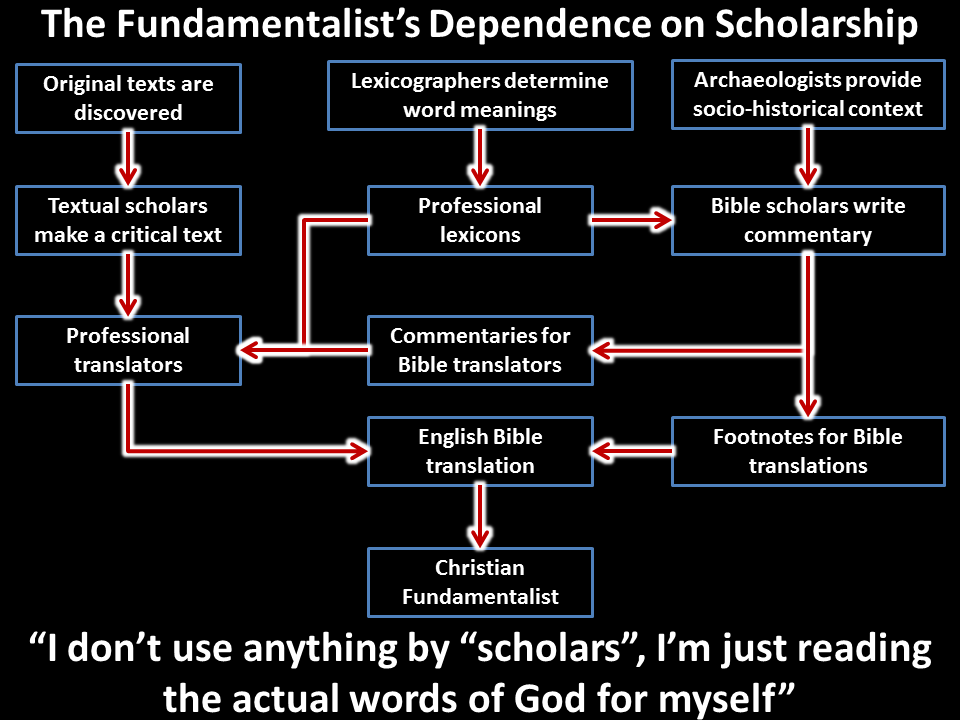
Reading biblical text within its historical, social and literary contexts places it where it was always intended to be, thus bestowing upon it the highest possible honor. Some, who are unacquainted with this as proper treatment of text, choose rather to label it “scriptural elitism” and thereby uncharitably disregard the valiant efforts of multitudes of scholars from varieties of disciplines, stretching years into the past, whose life mission has been to better understand this priceless treasure.

John Walton summarized it well, 

"God is not superficial, and we should expect that knowledge of him and his Word would be mined rather than simply absorbed. This means that all of us will be dependent on others with particular skills to help us succeed in the enterprise of interpretation. This is not elitism; it is the interdependence of the people of God as they work together in community to serve one another with the gifts they have." Walton, The Lost World of Genesis One; Ancient Cosmology and the Origins Debate (IVP Acedemic, 2009), 171.

I have posted this quotation in the past, but James McGrath was also spot on when he said,

"Does someone claim that they simply read the Bible and have no need for scholars, when they are reading the Bible in translation, or reading critical editions of the texts in the original languages, or using manuscripts copied by scribes, having learned Hebrew and Greek with the help of textbooks and lexicons? That person is a liar, plain and simple."

This is not to say that there haven't been or are not irresponsible conclusions or distortions (whether intentional or not is not for me to say). Brent Sandy perhaps has a balanced perspective,

"Evangelicals who support the concept of inerrancy have undoubtedly been guilty at times of claiming too much for the term and claiming that we know too much (e.g., about what historical accuracy demanded and about what authorship entailed). But critical scholarship is not innocent of similar unwarranted certainty and belief in 'assured results' as they apply the surgical knife to biblical books with such self-confidence." Walton and Sandy, The Lost World of Scripture; Ancient Literary Culture and Biblical Authority (IVP Academic, 2013), 276. 

Son of God Apologetics: Deity, Divinity and Blessed Ambiguity.

The New Testament's use of "son of god" has been the source of confusion, confrontation and conflict in times past and present. With the ever narrowing fields of scholarship regarding these subjects, it has become evident that earlier (mostly) dogma driven views that captivated the Church were incorrect.

What is overtly disturbing however, are the Christian apologists and zealous pew occupying Christians who still maintain the false notion that "son of god" is somehow an ontological category. Never-mind the ambiguities of what god, deity or divinity may mean to them, somehow the title - with its root in the Hebraic worldview from which the NT writers hail - still finds a way to "clearly communicate" to some that Jesus, as the Son of God, just is the God of Israel. This is not the story of the Synoptics, nor is it the Jesus they describe. 

The writer of the book of Luke in his genealogy of Jesus stated at the end of chapter 3 that Adam was the "son of god." What does that mean? What is this piece that Christianity has been neglecting? What does it mean to be a "son of god"? Apparently unbeknownst to some Christians is the fact that the title "son of god" is not exclusive to Jesus. Adam was the first human "son of God," so what is special about Jesus' connection to this title?

There has been great progress in recent years on this subject, and scholars continue to investigate as more evidence comes to light. It is a wide, intriguing and important field of study, but suffice it to say, son of god is not tantamount nor synonymous to the later innovative title "God the Son."

Son of god does not point to a metaphysical or numerical identity with God, but rather a relational one. 

Far too many Christians are under the mistaken notion that the title son of god implies some strange metaphysical existence. This has large traces of Gnosticism present. This conclusion is unwarranted when deriving information from the Gospels. It severely distorts the context, reads external, anachronistic events into it and abolishes the meaning of the original authors/hearers by introducing categories alien to their worldview. Son of god was not a title reserved for Jesus alone. One need only read the rest of the Bible to know this is not the case. The real kicker is that this fact is not reliant on views of high or low Christology, liberal, conservative, Trinitarian scholars or not, but rather on its context. It was not firstly a theological title. 

"We must stress that in the first century the regular Jewish meaning of this title [Son of God] had nothing to do with an incipient trinitarianism; it referred to the king as Israel’s representative." N.T. Wright, Jesus and the Victory of God, 485-86.


"The psalms speak of the king as son of God, and say he is begotten, not adopted. This language is mythical and metaphorical rather than philosophical. It does not employ ontological categories. But it should not be dismissed as ‘mere’ metaphor. It was a powerful way of shaping perceptions about the special relationship between the king and his god." Collins, Son of God, 204.

"But when the One who set me apart from birth and called me by his grace was pleased to reveal his Son in me so that I might preach him among the Gentiles, I did not immediately thereafter consult with anyone . . . " Gal 1:15-16

"ἀποκαλύψαι τὸν υἱὸν αὐτοῦ ἐν ἐμοί, 'to reveal his Son in me.' The language of v 16a raises a number of difficult questions and has caused a great deal of speculation. The Christological title 'Son of God,' 'his [God’s] Son,' or simply 'the Son' appears in Paul’s writings fifteen times ('Son of God': Rom 1:42 Cor 1:19Gal 2:20; “his Son” or “the Son”: Rom 1:395:108:329321 Cor 1:915:28Gal 1:164:461 Thess 1:10), which warrants Werner Kramer’s comment: 'In comparison with the passages in which the titles Christ Jesus or Lord occur, this is an infinitesimally small figure' (Christ, Lord, Son of God, 183). Furthermore, in that all of these fifteen instances are in Paul’s earlier letters (i.e., the Hauptbriefe and 1 Thessalonians, but none in the Prison or Pastoral Epistles), it can be argued that “Son of God” as a Christological title was derived by Paul from his Jewish Christian heritage (cf. ibid., 185). During the first half of the twentieth century, of course, scholars influenced by G. H. Dalman and W. Bousset tended to separate “Son of God” from its Jewish roots and to see it as a Hellenistic epiphany accretion. Of late, however, the title is being increasingly related to Jewish messianology (cf. 4QFlor on 2 Sam 7:144 Ezra 7:28–2913:32375214:9) and seen as a feature of early Jewish Christian Christology (cf. my The Christology of Early Jewish Christianity, 93–99). In Galatians the title “Son of God” or “his Son” appears elsewhere at 2:20 and 4:46, with each of these occurrences situated in a confessional or quasi-confessional portion. . . . So it may be claimed that “Son of God” is a title carried over from both Paul’s Jewish and his Christian past, and that he uses it here as a central Christological ascription because (1) it was ingrained in his thinking as a Jewish Christian, and (2) it was part of the language of his opponents, who were also Jewish Christians." R. N. Longenecker, vol. 41, Word Biblical Commentary : Galatians, Word Biblical Commentary,  (Dallas: Word, Incorporated, 2002), 30.


"'Son of God' is perhaps the single most familiar christological title. Indeed, it is so familiar that many people think it is the 'real' one, with the others perhaps being metaphorical. Tracing its development illuminate the meaning of the phrase. It has a history in the Hebrew Bible and the Jewish tradition. 'Son of God' could refer to Israel. In the story of the Exodus, Moses is told to say to Pharaoh: 'Thus says the Lord: Israel is my firstborn son. . . . Let my son go that he may worship you.' Hosea says in the name of God, “When Israel was a child, I loved him, and out of Egypt I called my son.' 'Son of God' could also refer to the king of Israel. Speaking in the name of God, Nathan the prophet said about the king, 'I will be a father to him, and he shall be a son to me.' In a psalm probably used in a coronation liturgy in ancient Israel, the divine voice addresses the king and says, 'You are my son; today I have begotten you.' In the book of Job, angels or perhaps members of the divine council are referred to as sons of God: 'One day the sons of God came to present themselves before the Lord, and Satan also was among them.' One further use of the metaphor in the Jewish tradition is also worth noting. Near the time of Jesus, other Jewish Spirit persons were sometimes called 'son of God.' What do Israel, the king, angels, and Jewish religious ecstatics have in common? All have a close relationship with God. That is, “Son of God” is a relational metaphor, pointing to an intimate relationship with God, like that of beloved child to parent.” N.T. Wright, The Meaning of Jesus, pg. 151.

Dr. Colin Brown, who was senior Professor of Systematic Theology at Fuller Theological seminary (also lexicographer of NIDNTT) wrote, 

“Indeed, one may well ask whether the term ‘Son of God’ is in and of itself a divine title at all. Certainly there are many instances in biblical language where it is definitely not a designation of deity. Adam is called "the son of God in Luke's genealogy of Jesus (Luke 3: 38). Hosea 11:1 (which is cited in Matt 2: 15) alludes to the nation of Israel as God's son. In Wisdom 2: 18 the righteous man is called God's son. Nathan's prophecy to David contains God's promise to David's successor: ‘I will be his father, and he shall be my son’ (2 Sam 714; cf. Psalm 89: 26-27). This passage also occurs in a collection of testimonies at Qumran (4QFlor IOf.), indicating that the messianic significance of this prophecy was a matter of continuing speculation in first century Judaism. In Psalm 2: 7 the anointed king is addressed at his installation: ‘You are my son, today I have begotten you’ (cited in Acts 13: 33; Heb. 1: 5; 5: 5; cf. 2 Pet 1: 17). This passage is the source of the identification of Jesus with God's Son by the Bat Qol (voice from heaven) after his baptism (Mark 1: 11; Matt 3:17; Luke 3: 22; cf. John 1: 34). The voice also identifies Jesus with the chosen servant in whom God delights (Isa. 42: 1; cf. also Matt 12: 18-21). In the light of these passages in their context, the title ‘Son of God’ is not in itself a designation of personal deity or an expression of metaphysical distinctions within the Godhead. Indeed, to be a ‘Son of God’ one has to be a being who is not God! It is a designation for a creature indicating a special relationship with God. In particular, it denotes God's representative, God's vice-regent. It is a designation of kingship, identifying the king as God's son… it seems to me that a complex structure has been erected upon the systematic misunderstanding of biblical language of sonship. What seems to have happened with a number of issues that we have been considering-various ways of understanding person- and Son-language, ‘eternal generation,’ kenosis, and indeed the social Trinitarian approach-is the evolution of a series interrelated protective lines of defence designed to safeguard central beliefs about God and Christ. In the course time these protective lines have come to be felt to be a necessary part of orthodoxy. Although justification was sought for them in biblical language, they moved progressively away from the testimony of Scripture.” Colin Brown, “Trinity and Incarnation: In Search of Contemporary Orthodoxy,” Ex Auditu, vol. 7 (1991), 88, 92.

Because I am in a small and conservative community, when discoursing on this issue (son of god), it often ends with accusations toward me as though I inhabit some "marooned islander" position. If the average Christian is convinced by apologists, pastors or other influential Church laity that scholarship is useless and liberal, seeking to subvert true Christianity, how can this topic even be engaged on those terms? Some Christians are convinced that the Bible was designed as a "living document" which has only to be read by them, under the illumination of the spirit and exposition of their pastor, to say everything it ever needs to say or was meant to say. What's the point of a discussion where logic, reason and authentic scholarship are forsaken in favor of tradition and dogma? 

This is the difficulty of Christians who take up the mantle of an apologist with little knowledge on a subject that has been studied by countless dedicated, qualified scholars who (have) document(ed) and discuss(ed) to gain a more complete understanding of what the intended phrase or passage meant/means. What's even worse is that many of these well-intending apologists have little desire to find out. These amateur apologists seek-out those - like ancient heresy hunters - who take a position different than what they identify as "orthodox" (although that almost always works itself out idiosyncratically) and attempt to bash them over the head with the hammer of orthodox hegemony.


Unfortunately, so many have been conditioned to think that the tradition they inhabit is the “right” and “true” perspective, the set of transcendent interpretations that can prove all others wrong, therefore there is no reason to ask questions or take other options into consideration.

Christian Know-It-Allism

Jon Pavlovitz on being a recovering Christian know-it-all.

"When they hear another follower of Jesus share their doubts or deviations, whether about theological concepts or Church doctrine or even regarding the fundamental issues of God and faith, they’re forced to consider their own questions, if even for a moment. They have to confront the things they may passionately argue, yet not be quite certain of—and that can be terrifying."

2016: The Year of Liberty and Justice for All

I don’t do election politics. I do little with prophecy and nothing with Pokémon. When Christians – through a contorted process of hermeneutical gymnastics – feel the need to combine contemporary political and world events with prophetic scriptural passages, it grinds me. I like history, as many do. But most people don’t learn anything from history, and even fewer learn from politics, amidst the screams of sanity being a rare commodity. I'm not sure where the Pokémon go. I'm also not sure what the plural is for Pokémon. 

As with most civilizations preceding us, all hit their strides, eventually began a decline (some quicker than others, and with or without outside help) and ceased as a civilization or recognizable entity. Undoubtedly, ours will someday follow a similar pattern. There will be a strong competent leader at the podium making grand speeches (or at least plagiarized ones), promises (meant to be broken) and waxing eloquent or shooting from the hip. But more than likely it will not be the election and subsequent administration of that individual alone to cause the decline and fall of the American Empire any more than one emperor of Rome was to blame.

By now, I’m sure everyone is aware that Obama was definitely the anti-christ or the messiah who was assuredly destined to usher in the age of desolation, culminating with the rapture of the saints or bring redemption and everlasting peace to this land. Yeah. Guess what, I still put my pants on the same way - most mornings. The point being, regardless which candidate is elected to this year’s puppet post, it will not be the single contributing factor to bringing our civilization to its knees or less likely, to usher in a new golden era. 

While the American public is entertained by this monstrosity of reality show (which once again highlights our pathetic outlook of reality), we are convinced once more (by some magical madness I can’t understand) that reform from Washington is even possible by any one candidate. Even if the perfect candidate did somehow make it to the Oval Office, it wouldn’t fix everyone’s problems any more than Bush’s or Obama’s administration did.

I am always encouraged with the progression of our species when I visit social media. Social media has become a central hub for the knowledgeable and savvy on any given situation or scenario. These wonders of the web serve up facts by the page-full, along with pointed YouTube links which bring otherwise productive internet discussions to an abrupt halt, refuting once and for all those who seek to overthrow their personal lack of self-confidence. If the Church, all branches of government and the academic world (including the sciences) could get their hands on these internet eggheads, perhaps we could see some real improvement in the world.

Of course my candidate is the best and the only hope for the world. Certainly my particular strand of religion and interpretation schema of the Bible is the only truth known to man. And who could doubt my view of the sciences, which are built on the right set facts and are in complete biblical harmony against the godless scientists and scholars. Why else would God favor me and my candidate?

Illusion dominates our culture. We spend a great deal of time trying to convince everyone else of many things and yet live with daunting reality that we have not convinced ourselves (or God). But we still try somehow to persuade ourselves that the illusion we are promoting is the truth, because the illusion has become much more appealing than the truth ever was. For what other reason has social media become so popular?

Note: This post is full of sarcasm.

The Divine, Inerrant, Infallible, Inspired Theory?

I have mentioned this from time to time and continue to do so for the simple reason of it being a misunderstanding that runs deep and wide within the minds of average church-going Christians as well as those who may be classified as post-Christian.

While the "word of God" is a prerequisite in the life a believer, perhaps we've gotten the "word of God" confused with "the Bible" or "the Scriptures." These are not synonymous terms, although the Scriptures do contain the words of people's interaction with God, and his direction to them. Many conservative Christian groups are guilty of creating their own definitions of inspiration, inerrancy and infallibility, then forcing the Bible into that framework. It is demanded that this alone is the way to view the Bible while all others are liberal attacks against God. 

I have seen the modern view of inerrancy shatter too many people's faith - specifically in relation to a failed fundamentalism experience - because it's a wrongly based faith. 

Craig Evans put it: 

"In reading some of the more radical books on Jesus, I find that a loss of confidence in the historical reliability of the New Testament Gospels is often occasioned by misplaced faith and misguided suspicions. By misplaced faith I mean placing one's faith in the wrong thing, such as believing that the Scriptures must be inerrant according to rather strict idiosyncratic standards and that we must be able to harmonize the four Gospels. If our faith depends on these ideas, especially in rigid terms, and scholarly study may well lead to a collapse of faith. . . . Observe the line of reasoning; it is so typical of brittle fundamentalism. I have heard fundamentalists say, 'show me one mistake in the Bible and I will throw out the whole thing'. . . . The truth of the Christian message hinges not on the inerrancy of Scripture or on our ability to harmonize the four Gospels but on the resurrection of Jesus. And the historical reliability of the Gospels does not hinge on the inerrancy of Scripture or on proof that no mistake of any kind can be detected in them." 


It amounts to this; the Bible is not where my my faith nor hope is based. The Bible helps to govern my faith and works in tandem with it by showing what God is like and how he interacts with and through people. We miss the point of the Bible when we make our faith about it. Even those who claim to hold the Bible in the highest regard forget that those very people of whom the Bible speaks had no such book. If no such book existed, how did their faith survive? Perhaps their faith was not textually based and instead reliant upon God. Can God exist without the Bible? It seems as though some Christians are dangerously close to not thinking so.

Believe it or not, there are readers of the Bible today who have been indoctrinated into accepting an unrealistic and uncritical view as to what the Bible is and often means, go figure. Far too many have been convinced that the Bible is incapable of containing even the slightest contradiction or infinitesimal discrepancy. Some have even been convinced that if such things existed to the slightest degree, none of the Bible could be trusted. I have personally heard this stated, "if every single word isn't accurate, none of it is." This is poor logic and entirely ignorant of the way texts were created, copied, dispersed and come to us in the modern era. It also shows an ignorance of the textual variation between the thousands of competing copies in possession today.  Armed with a presupposition of what God is like and concluding that since God is perfect and the ultimate source knowledge, the Bible therefore - through divine inspiration of the prophets - cannot contain "imperfections." 

While this theory is convenient and comfortable for some, forming a tidy and safe God box, it can only be kept intact for the reader who doesn't look too closely at the Bible itself. There have been many conservative Christians (young and old) who have had their Bible-based faith shattered into oblivion due to probing at a deeper level. This is entirely unnecessary not by virtue of shutting ones eyes and ears to the truth about the Bible, but by understanding what the Bible was, is and therefore what our relationship to it should be. Are we fundamentally interested in investigating and being liberated by truth, or rather in error grown old by perpetuating and reiterating a lie? 

Getting into the intricate details of the Bible may be scary for those whose faith has been placed in certain idiosyncratic concepts regarding the Bible's identity. The Bible is inspired and our rule of faith, but what "inspiration" means to some is entirely different than what it means to others. Also words such as "inerrancy" and "infallibility" are often harnessed as though they had a single authoritative standard of definition of unquestionable quality. This is subjectivism masquerading as objectivism. 

God used people to write the content of the Bible. The Bible is messy, written by messy people, about messy people in a messy world that continues to this messy day. It is a messy way to describe a very great God in the business of cleaning things up. They were not early, prehistoric ink-jet printers upon whom the spirit came and dictated the words of God verbatim. Dogmatic theories about who wrote, how they did it and why the Bible has to be this way or that way to be believed, is where the error lies.

A New Old Orthodoxy

"When the Jew said something was ‘predestined,’ he thought of it as already ‘existing’ in a higher sphere of life. The world’s history is thus predestined because it is already, in a sense, preexisting and consequently fixed. This typically Jewish conception of predestination may be distinguished from the Greek idea of preexistence by the predominance of the thought of ‘preexistence’ in the Divine purpose."

E.C. Dewick, Primitive Christian Eschatology, The Hulsean Prize Essay for 1908 (Cambridge University Press, 1912), 253f.

God is not a Hebrew, but has chosen to communicate to the world via the Jewish people (e.g. prophets and his son). Merely because something or other is Jewish does not mean it is inherently better or closer in proximity to God's heart. They were the conduit through whom God chose to tell his saving story. But to understand the story as it was originally intended, simply reading the Jewish message that was placed into their world and cultural context with any paradigm has often severely distorted that message. When the writers used words and definition, it cannot be supposed that what they meant means the same thing in a twenty-first century context. Language changes, cultures shift and what Paul really meant can get glossed by later explanations that would not have been indigenous to his historical context and theological edifice. With the rise of historical analysis, the new perspectives on Paul were inevitable and much needed. 

Being or thinking like a Greek (westerner) is not wrong. But to take the Greek worldview, definition or ways of thinking and impose it on what radically different Jewish writers were communicating is to do violence to the original message. For example, we cannot read Paul and assume that he was a Trinitarian. To go into the text with that anachronistic presumption and interpret his words through a fourth and fifth century filter is to miss what he actually was saying. We don't have to assume that Paul's idea of kenosis matches that of many modern interpreter's opinions regarding the Carmen Christi.

The Second Temple Jewish view of preexistence is virtually absent in our world of Christian congregants. When a post-modern interpreter thinks of preexistence, it is generally not with the opinion that God's foreknown purpose was thought to have preexisted the reality. Greeks (westerners) tend toward thinking in terms of abstract metaphysics and ontological categories. If Jesus preexisted (whatever that actually means), he must therefore of necessity have existed in some other form (i.e. logos theology) before entering the womb of Mary. 

When biblical titles like Son of God are redefined by using later definition, it is not difficult to see how the shift in this thinking occurred. With neo-Platonism governing the overall approach to biblical hermeneutics, and the spark of creativity in the air, the Patristics - and eventually the councils - replaced the NT (based on OT use) Son of God with a philosophically contrived God the Son. Thus, a new "orthodoxy" was born. It threatened - under the pain of excommunication and eternal damnation - that its definitions and dogmas must be unquestioningly accepted for salvation (Athanasian Creed). Jesus was subsequently torn out of his Hebraic world and placed into another. Geza Vermes put it well in The Authentic Gospel of Jesus

“Compared to the dynamic religion of Jesus, fully evolved Christianity seems to belong to another world.”

The use of Jewish foreknowledge and pre-ordination was ripped from its own context and sculpted around a twisted philosophical template of John's Gospel. 

"This man [Jesus], delivered over by the predetermined plan and foreknowledge of God" Acts 2:23 (c.f. 1 Peter 1:2).

 God already had it predetermined; the plan was there, but did not make its appearance upon the stage of humanity until it literally came into existence. It did, or was said to exist in a different way before its revelation.

The New Schaff-Herzog Encyclopedia of Religious Knowledge, “Revelation” says it well,

"God avails Himself of human thought and speech to make Himself known and His speech intelligible." 

He does not reveal himself in illogical or intangible ways. However, it must be qualified that just because traditional Christianity has based much of its belief on tradition and has muddied the waters, does not mean it was difficult and challenging to the original hearers. The NT and OT are thoroughly Jewish collections of writing. Its writers were Jewish, and most of its audience was Jewish (obviously there are intended Gentile recipients within the Pauline corpus). Post-modern readership has approached their interpretive reading with a Greek (western) perspective, this cannot be helped. It has been handed down from the church and early post-biblical creeds which neglected the context and cultural significance of utmost importance, that Jesus was a Jew who thought and taught in Rabbinical Jewish ways with Jewish interpretations, hermeneutics and categories. It is a person of ignorance who claims that they can close their eyes and ears to this reality. Our savior was a Jew and came into existence by birth, not, as Irenaeus has it: 

"This Christ passed through Mary just as water flows through a tube." 

This is something radically different from Matthew and Luke’s description that Jesus was brought into existence inside Mary, by the power of God. Greg Deuble in his book, They Never Told Me This in Church noted that 

"Protestants who deplore tradition-bound Roman Catholics because they revere Church tradition above the Scriptures fail to see that in some areas they are just as bound to tradition, i.e. to long held interpretations of Scriptures."

J. R. D. Kirk I believe summarized it well, 

“We sometimes see divinity where the text doesn’t require it because that is the theology we bring with us to the text.”

The God We Want to See

There are many who hold to the mantra of the reformation, sola scriptura (Scripture alone), but also insist that “one specific” translation of the Bible is a prerequisite to one’s faith and spiritual well-being - God’s only authorized version.

How can it be suggested that a specific translation is alone “God ordained” if one sincerely holds to "Scripture alone"? In order to make the argument of God’s choice of translation being made manifest to man, post-biblical revelation is the only option due to the fact that the Bible (regardless of translation) says nothing of the sort. It also implies that not only is Christianity text-centric, but God is as well. 

The only argument that can be made is entirely outside of Scripture. Hence, the staunchly held belief is not based on Scripture alone, but rather opinion.

They that approve a private opinion, call it opinion; but they that dislike it, heresy; and yet heresy signifies no more than private opinion." Thomas Hobbes

Translation onlyists need to take a little stroll down the textual and manuscript history path. Those who cling earnestly to this mistaken paradigm for a "biblical worldview" seem to be ignorant regarding the logical fallacy of attempting to authenticate a book by quoting from it (done almost exclusively in an anachronistic way). It would be like me quoting myself as proof for why I am correct.

It does not take an experienced historian to make the observation that God is not a patriotic American affiliated with a certain denomination or demographic. He does not have a political designation (save the theocratic party) or a fascination with the English language. He is not a KJV onlyist and certainly does not dislike all the people we do. Re-think what it means to create god in our image and after our likeness.

"Is the inspired Bible the one that we actually use? The King James Version? Some people continue to insist so, even if it does seem to be a rather silly view: do you mean that for all those centuries before the King James translators got to work, Christians did not have access to God’s inspired word? What was God thinking? Some other modern translation then? The Hebrew and Greek texts from which these English translations are made? If one chooses the last option, what does one do about the fact that we don’t have the original Hebrew and Greek texts of any of the books of the Bible, but only later copies of these texts, all of which have mistakes?" 

Bart Ehrman, Jesus Interrupted: Revealing the Hidden Contradictions in the Bible (and Why We Don’t Know About Them) (2009 Harper Collins), 182.

Liberal Scholarship

It is rather suspect that some Christians anathematize scholarship they deem as “liberal” when that scholarship undermines some of their traditional and cherished beliefs. These opinions are not generally an idiosyncratic or iconoclastic endeavor on the part of scholarship, but rather due to developments in textual understanding, manuscripts and greater availability of materials in the hands of more than just a few select individuals. Of course, those who maintain vigilance in their traditionalism amidst indisputable and insurmountable evidence suppose themselves to take their “just rendering” from Scripture itself all the while unaware that their understanding of the Scripture is anachronistic, having been influenced and formulated by reading later tradition and dogma into its actual content.

Discount Prophecy

I have a "rapture" post which will definitely appear anytime now, but until then enjoy this beautiful little gem collected via Facebook.


Be Not Drunk With . . . Grape Juice?

I am interrupting the salvation series to have a brief look at another topic of interest to many Christians. Recently someone asked my opinion as to what a Christian perspective toward alcohol might or should be. It’s been a topic I’ve wanted to discuss for a while, so here we go.

Within the Bible, Old and New Testaments, there are people who drink wine. What is to be made of such narratives and the wine they are consuming? I grew up in a fundamentalist environment where not only abstinence was “strongly encouraged,” but biblical interpretation mandated it.

There are numerous positions on this topic which various traditions take regarding the consumption of alcoholic beverage. Most however, I assume, would agree that being controlled and addicted to alcohol is forbidden in Scripture (e.g. Eph 5:18, 1 Tim 3:8). Let me summarize a few of these perspectives:

·        Some drink and have no problem getting a bit tipsy, others are fine with being intoxicated occasionally, but are not addicts (i.e. drunkards).

·        There are those who enjoy the occasional glass of wine or a beer, etc. but do not get intoxicated.

·         There are some who abstain from any form of alcohol due to preference, denominational allegiance, conviction etc., but not because they feel it is mandated by Scripture.

·         Then, there is a minority who believe that everyone biblically is prohibited from consuming any type of alcohol. Often this is linked to an interpretation of what “wine” is in the NT.  

I have personally heard it said, "the early Church didn't drink wine, they drank grape juice." "Ok, it was wine," others have conceded, "but its alcoholic percentage was extremely low, not like the wine today." I suppose this perfectly explains how the Corinthians were getting inebriated when consuming it? Let’s just get this out forth right: 

“All wine mentioned in the Bible is fermented grape juice with an alcohol content. No non-fermented drink was called wine.”[1]

While there are many examples that could be presented, Acts 2:13 is sufficient. When the spirit came upon these followers of Jesus on Pentecost (Shavuot) some strange things were happening. Some mockers proposed, “They are filled with new wine” (Act 2:13 ESV). Peter takes this as an insinuation of being drunk, “These men are not drunk, as you suppose” (Act 2:15 NAU). If this “new” wine contained no alcohol or fermentation and therefore cannot cause intoxication, then why do they imply intoxication and Peter infers it?[2] Perhaps some expositors want the Bible to say what they want it to say.

The popular text for addressing this topic is John 2 and Jesus’ involvement with providing “wine” (Gr. oinos) at a wedding (i.e. Jesus as a bartender). Some, who have taken issue with Jesus’ connection to alcohol, propose this “wine” was watered-down, unfermented or that it was merely grape juice. New wine – wine that was most recently harvested – was capable of intoxication, although it was not as strong as old wine – that from the previous year’s harvest. There is nothing in the culture or the text to lead to the conclusion that this wine failed to possess any amount of alcoholic content.

It may surprise some, but this sign Jesus performed at the outset of John’s narrative is not about wine, prohibition or indulgence. It’s not the point of the story. This story is loaded with nuance for John’s particular audience in Asia Minor and also an 

“implicit contrast between water used for Jewish purificatory rites and the wine given by Jesus; the former is characteristic of the old order, the latter of the new. There can be little doubt that the change of which the miracle is a sign is the coming of the kingdom of God in and through Jesus.”[3]

When serving the wine to guests, it may have been that the wine was watered down for the sake of preventing rapid inebriation, as Keener notes, 

“Sometimes at Greek parties drunkenness was induced through less dilution or the addition of herbal toxins, but Jewish teachers disapproved of such practices; that drunkenness is part of the celebration of Cana is unlikely. Yet one would normally serve the better wine first because, drunk or not, guests’ senses would become more dulled as the seven days of banqueting proceeded.”[4]  

There were those in the Bible that abstained from wine for various reasons. If nothing else, the example of abstinence by some (Nazarites, Rechabites, Daniel and company[5]) should alert us to the fact that they did so for a specific reason. What reason could there be to refrain from drinking merely grape juice, or unfermented wine?

“A careful examination of all the Hebrew words (as well as their Semitic cognates) and the Greek words for wine demonstrates that the ancients knew little, if anything, about unfermented wine.”[6]

Overall, the OT and NT look with favor toward drinking wine when done so in a responsible way.

“The evidence . . . suggests that wine in the OT was not mixed with water and was looked on with favor when taken in moderation.”[7]

Oinos (Gr. Wine) was definitely fermented; not merely grape juice. While they would indeed mix it with differing substances, in multiple ratios, for various times and purposes of drinking, this in and of itself provides no evidence to suggest they did so because of morality or ethical issues against it. Drunkenness was forbidden; excess, not the wine itself.

“Wine was consumed at daily meals (Gen 14:18; Judg 19:19; 1 Sam 16:20; 2 Chron 11:11; Is 55:1; Dan 1:5; Lk 7:33–34). It was customary in Greek, Roman, Jewish and early Christian cultures to mix wine (Jub. 49:6; 2 Macc 15:39; m. Ber. 7:5; 8:2; m. ˓Abod. Zar. 5:5; b. Šabb. 77a; Pesah 108b), usually with water (Is 1:22; cf. Ps 75:8[9]; Prov 9:2, 5; Is 65:11).”[8] 

The OT and NT are not against wine, whether it be old or new. There is no reason to think that Jesus did not drink fermented wine, and the NT makes no such distinction. Actually, according to his own admission he drank wine from which others abstained:

“For John the Baptist has come eating no bread and drinking no wine,[9] and you say, 'He has a demon!' The Son of Man has come eating and drinking, and you say, 'Behold, a gluttonous man and a drunkard, a friend of tax collectors and sinners!'” (Luk 7:33-34 NAU).

The best summary I can offer is that addiction, overindulgence, drunkenness or abuse of wine (or strong drink) is strictly forbidden. It is the conscience of the individual that must be taken into consideration. If you are among those who for various reasons are offended by it, don’t. Basically, love for your brothers and sisters and not wishing to cause them hardship should override your “need” for a drink. But having a conviction to abstain need not mean we twist the text in order to support that conviction.


[1] Joel B. Green, Scot McKnight and I. Howard Marshall, “Wine,” Dictionary of Jesus and the Gospels, (Downers Grove, Ill.: InterVarsity Press, 1992) 870.
[2] For a thorough treatment of wine in general, Christian attitude, first-century context and various other thoughts regarding wine, see Craig Keener, Acts: An Exegetical Commentary, vol. 1 (Baker Academic, 2012), 1:853-61.
[3] George R. Beasley-Murray, Word Biblical Commentary: John, vol. 36 (Dallas: Word, Incorporated, 2002), 36. Also see F.F. Bruce, The Gospel of John (Eerdmans, 1983), 70-1.
[4] Craig S. Keener, IVP Bible Background Commentary: New Testament, 268-9.
[5] Daniel and his little band of faithful Hebrews most likely refrained due to not wanting to participate in the king’s god-cult.
[6] Walter A. Elwell and Barry J. Beitzel, “Wine,” Baker Encyclopedia of the Bible (Grand Rapids, Mich.: Baker Book House, 1988), 2146.
[7] Ibid., 2147.
[8] Joel B. Green, Scot McKnight and I. Howard Marshall, “Wine,” Dictionary of Jesus and the Gospels (Downers Grove, Ill.: InterVarsity Press, 1992), 871.
[9] It is possible that John had a vow similar to that of a Nazarite (Luke 1:15).