Pages

Showing posts with label redemption. Show all posts

A Continuing Look at Hebrews

A Bit About the Creator

In this post, I am continuing on from a previous one where I began discussing the prologue of the book of Hebrews. 
In Acts 4, Peter and John were presenting their case. They were speaking about this “Jesus” and what they had “seen and heard.” In 4.24 “they lifted their voices to God with one accord and said, ‘O Lord, it is You who made the Heaven and the earth and the sea, and all that is in them.”
The creation of the world was unquestioningly accredited to Israel’s ancestral deity, Yahweh, as their Scriptures attested: Exod 20, Deut 4.32; Psalm 146; 148.1–6; Isa 42.5; 44.24; 45.11–12; Neh 9, Job 38.1–41; Matt 19.4. In this story, they quote “David” (who they call their father) from Psalm 2, who they credit as being the servant of Yahweh (the context of Psalm 2 shows Yahweh and the anointed, messiah): “Who by the Holy Spirit, through the mouth of our father David Your [the same God, Yahweh they attribute with the creation of the world] servant [someone different, who did not create the world], said, 'why did the gentiles rage, and the peoples devise futile things? 'The kings of the earth took their stand, and the rulers were gathered together against the LORD [Yahweh, the creator] and against his [Yahweh, creator] Christ [not Yahweh or creator]’” Acts 4.25-26.
They continue praying to God, the Father (Jesus himself taught them to pray in this manner, Matt 6.9) as verse 24 presents and the contexts of Exodus, Nehemiah, and Psalms bear out, “For truly in this city there were gathered together against Your [God, Yahweh, the creator] holy servant Jesus [someone different, not God, Yahweh the creator], whom You [Yahweh] anointed, both Herod and Pontius Pilate, along with the Gentiles and the peoples of Israel” Acts 4.27.
Jesus is clearly portrayed (Matt 27.46; Mark 15.34 from Psalm 22; John 20.17; Rev 3.12;) as having called Yahweh his Father and God. If I am processing this correctly, the disciples pray to God, called the Father (who is Yahweh in the Hebrew Bible– Deut 32.6; Jer 31.9, Isa 63.16, 64.8, Mal 2.10) and to whom they credit the creation of the world. They call David his servant, and then Jesus, as the one anointed by Yahweh.
A similar episode is found in Acts 17 where Paul spoke to the Stoic Philosophers in Athens. Paul declared to them that “the God who made the world [kosmos] and all things in it” (vs. 24) desires all to repent, because this God “has fixed a day in which he [the God] will judge the world in righteousness through a man [someone other than the God] whom he [the God] has appointed” and provided “proof to all men by raising him [someone other than the God] from the dead” (vs. 31). 
Paul did not say that the one raised was the creator of all (as John 1 and Hebrews 1 are often interpreted to say), or that Jesus was this “God.” Quite the opposite, he said that this man has been appointed to judge in righteousness and was raised from the dead by this “God,” as a testimony of that choice.
If Jesus was being communicated as the second member of the Trinity, then why wasn’t he given proper credit for the creation of the world (according to traditional John 1; Col 1; Heb 1 interpretation) in this text? It was the God, called Father who was instead credited with the material creative role. They were not praying to Jesus and certainly not to the spirit as a separate entity. What should a proper Trinitarian response be to these apparently confused disciples?
 Back to Hebrews 1, here is another thought that grabbed my attention. As a member of the human race, I am prone to reflect upon my own mortality. When reaching the phrase regarding those “who are about to inherit salvation” (v. 14), it reminded me of the larger NT theme of God’s restorative eschatology. It drew my attention back to how the writer began the chapter, “in these last days.” In the use of the word eschaton, the writer refers to the time but emphasizes the means by which God is communicating. Perhaps the author believes that these “last days” may continue for any length of time. The point is that God has now spoken through a son, in a way similar to what had been done through the prophets.

The whole point I saw being communicated was that as Christians, we have hope. This chapter seems set to that tune. The old saying goes, “hope is hearing the music of the future, and faith is dancing to it today.” The world is a mess and things are bad, but through this son, God has revealed more of the cosmic plan of remediation and justice than had been revealed before. 
The author of Hebrews continues to develop these themes throughout the book, and as we immerse ourselves in the message, it places our hope on the one for whom we wait. While today and tomorrow may not signify the end, that is not ultimately what matters. What matters is that he has been seated at the right hand of God and at the proper moment, the tide will turn and justice will be the order of the day. I like N. T. Wright’s exclamation in his book Surprised by Scripture, “Jesus is coming – plant a tree.”

Beam Me Up Scotty

It is my contention that rational dialogue and meaningful conversation are the lifeblood of truth pursuing activities within the diverse community of God. So therefore, I offer you the opinions of N. T. Wright (FYI, that is said with humorous intent, but seriously, I believe he’s right on track and far from alone in the world of NT scholarship regarding the opinion expressed here).

In his book Surprised by Scripture, N. T. Wright made the following comments pertaining to the perspective generically known as the “rapture,” which represents the belief of many Christians today:


“It isn't a matter of simply deconstructing the massive 'left behind' theology that has been so powerful in North America in particular, though we must do that if we are to think biblically. We must focus on one element of particular. The word parousia, 'royal appearing,' was regularly used to describe Caesar's 'coming' or 'royal appearing' when visiting a city, or when returning home to Rome. And what happened at such a parousia was that the leading citizens would go out to meet him, the technical term for such a meeting being apantçsis, The word Paul uses here for 'meeting,' as in 'meeting The Lord in the air.' But when the citizens went out to meet Caesar, they didn't stay there in the countryside. They didn't have a picnic in the fields and then bid him farewell; they went out to escort their Lord royally into their city. In other words, Paul's picture must not be pressed into the nonbiblical image of the 'Second Coming' according to which Jesus is 'coming back to take us home' – swooping down, scooping up his people, and zooming back to heaven with them, away from the wicked earth forever. Revelation makes clear in several passages, with echoes in other New Testament books, the point is that Jesus will reign on the earth, and at his royal appearing the faithful will go to meet him, like the disciples on the road to Jerusalem only now in full-blooded triumph, and escort him back into the world that is rightfully his and that he comes to claim, to judge, to rule with healing and wise sovereignty.” N. T. Wright, Surprised by Scripture: Engaging Contemporary Issues (HarperOne, 2014), 101-102.

Within the New Testament and the Hebrew Scriptures there are metaphors the writers used for communicating a picture. For example, in the NT – with regard to what is called “atonement theology” – Jesus is called a “Lamb” by John, a “High Priest” by the writer of Hebrews and referenced as the culmination of Israel and the Isaianic suffering servant in varying other places. Well, which is it? How can he be both the sacrifice (in some interpretations) and the priest who mediates it? Can both pictures be valid in different ways, without having to be harmonized? Did the writers have the literary freedom to choose their own illustrations, metaphors and have their own set of interpretations for the purpose of communicating to differing audiences and/or for different theological motifs? There are distinguishable reasons as to why they used the metaphors they did, and generally they are rooted in the Hebrew Scripture. 

Now back on topic. There are historical grids sometimes put in place for the sake of governing interpretations as to what the NT writers meant with respect to Jesus’ anticipated return. One such example is the somewhat elusive “Jewish wedding.” While the practice of betrothal, separation for a time, immanent appearance of the husband for his bride, then leading her from her father’s home to his may be evidenced somewhere, this does not mean it was by any means the predominant practice of all Jews everywhere for all time. Actually, it is attested to infrequently. 
(For more information, see Edersheim, Sketches of Jewish Social Life; The Life and Times of Jesus the Messiah, Hendrickson; The International Standard Bible Encyclopedia, v. I, Bride of Christ, Eerdmans; Evans and Porter, Dictionary of New Testament Background, Marriage, IVP; Metzger and Coogan, The Oxford Companion to the Bible, Marriage, Oxford; Werblowsky and Wigoder, The Oxford Dictionary of the Jewish Religion, Betrothal, Oxford; Baker Encyclopedia of the Bible, Marriage, Baker Book House). 

This particular custom has become a favorite of some due to its parallel in rapture interpretation: Jesus became betrothed to the Church, went away for a time and at some unknown point in the future, he will return to usher his people back to heaven (i.e. his home and now theirs for eternity, which will be consummated by the “Marriage Supper of the Lamb” found in Revelation).There is no question that the NT portrays an image of betrothal and marriage between God and his people, albeit in the NT, it is through Jesus as the intermediary. This is covenant speech, possessing the same imagery found in the Hebrew Scriptures, specifically in the Torah and Prophets. This imagery was used to describe the relationship between God and the covenant people (e.g. Hosea and Ezekiel). 

Merely saying something or other is the “Jewish” way (such as a wedding) may sound impressive but doesn’t mean anything. What “Jews”, where and when? Customs and practices changed and evolved throughout their history as surely as it has in our own. Having a model of betrothal or marriage that may have been used at a particular place or time is not justification for allowing it to govern our hermeneutics in relation to what the gospel writers or Paul was trying to communicate. 

I don’t have a problem with the term “rapture,” referencing a general “catching away,” but rather have difficulties in the sub-modern divorcement of it from the “day of the Lord” and the “resurrection,” both of which are found in the NT. If there is a rapture to catch away believers “somewhere else” before the restoration of the Kingdom of God upon the earth, it means that: 

1. Jesus must return twice, once to snatch away God’s people to “heaven” (i.e. somewhere other than earth) and also at his restorative coming. 
  
2. The saints have to be evacuated to some “other” place. Where do the Scriptures speak of going to heaven in an ethereal, quasi-spiritual existence or being anywhere but on earth, where we were created to inhabit? The rapture theology teaches that we are swept off “somewhere else” while the earth goes up in smoke, which is something other than a renewed, restored and declared good earth. This is akin to Gnostic doctrine. The popularized rapture theory (as commonly believed) does not square with the scriptural definition of resurrection. 

In addition to the Jewish perspectives, there is also evidence of varying points of view within the writings of the Church Fathers, such as Justin Martyr’s contention in Dialogue with Trypho (LXXX) saying: 

“For if you have fallen in with some who are called Christians, but who do not admit the truth of the resurrection and venture to blaspheme the God of Abraham, Isaac and Jacob; who say that there is no resurrection of the dead, and that their soul when they die are taken to heaven: do not imagine that they are Christians.”

To be clear, I have no difficulty with those who express this opinion, but am only pointing out that it does not hold up to a sound and thorough exegesis of NT literature with the OT framework the prophets had been declaring for ages. Regardless of what the Ante-Nicene and proto-orthodox apologists believed does not validate or invalidate what the NT documents describe on those merits. If a half-way thorough search of their (the patristic fathers) writings were done, it would reveal a disunity of opinions and beliefs that most Christians would no doubt find disturbing, even outrageous. This is why when scholars refer to those people groups and sects, they do so in a plural sense, “Judaisms,” “Christianites,” etc. 


“‘When Christ shall come,’ we sing in a favorite hymn, ‘with shout of acclamation, and take me home, what joy shall fill my heart.’ What we ought to sing is, ‘When Christ shall come, with shout of acclamation, and heal this world, what joy shall fill my heart.’ In the New Testament the Second Coming is not the point at which Jesus snatches people up, away from the earth, to live forever with him somewhere else, but the point at which he returns to reign not only in heaven but upon the earth.” N. T. Wright, Surprised by Scripture: Engaging Contemporary Issues (HarperOne, 2014), 102.


Don’t think that the story of the Bible is about abandonment and evacuation. Christianity has been falsely led to believe this. We are to be restorers, peace-makers, care-takers and stewards now, of this place with the hope of resurrection and ultimate renewal. Don’t be so heavenly minded that you are no earthly good. You were created to be good on earth, this is your home.

I did a podcast on this subject here.

I've also written on this topic before.

Pauline Psyche


Philippians is a phenomenal letter. Paul, even through the trial he faced, was able to reach out and minister to others as a channel of God's truth. 

Early on in the letter, he communicated (1:23) that he had a -

"desire to depart and be with Christ-- which is far better-but to remain in the flesh is more necessary for you."

The question is often asked, is Paul here speaking of being absent from the body in some sort of spirit state prior to the return of Messiah? Is he speaking of ascending to heaven, and there await the "rapture" as some theologians posit? What was the purpose of this statement within his letter to the believers in Philippi? (For any interested in this "rapture" question in Paul, please check out Kurt Willems' podcast episode, "The Resurrection - "Physical" or "Spiritual" Bodies.")

The Old Testament, or as I prefer to call them, the Hebrew Scriptures, are relatively silent on this matter. There are however, occasional hints. Jesus, when referencing the resurrection, used Exodus 3 (the “burning bush passage”) to say that his father was not the God of the dead but of the living. What expositor or theologian today would dub this as a resurrection passage? Jesus obviously had reasoning for making reference to this passage (which is another study). 

There are passages (however insignificant to our ways of thinking) that shaped the theology Paul shared in his writings, both in the Hebrew Scriptures and other literature. This other body of writing, to the consternation of some Christians, influenced Paul's theology, whether some like it or not. He was shaped in part by writings categorized as pseudepigraphic and apocryphal. Paul did not necessarily contradict Jesus' teaching on the matter, but merely expanded, expounded and midrash-ed it.

It may be news to some, but believe it or not, Jesus was not a Greek philosopher and neither was Paul. I don't think either of them taught the Pathagorean doctrine of afterlife with its disembodiment, reward and punishment. Psyche (Gk soul) did not mean the same for Jesus and Paul as it did for Pathagoras and Plato. God created man as a whole soul, and the body was not evil. While the Greek uses psyche where the Hebrew uses nephesh, this does not communicate that nephesh was the inward, immaterial, spiritual essence and counterpart in opposition of the body in a dualistic sense. Nephesh is rather the whole person, the entirely of what it means to be human.

Paul (in other passages, e.g. 2 Cor. 5:8) indicates two options, the first of which was being alive (absent from the body), and second, being with Messiah (present with the lord). It is important when we study, to try and not rely on any anachronistic doctrine, preconceived notion of what it means or what we have been taught it means.

We know what Jesus taught on specific matters, but with Paul, eisegesis has become a common practice (inserting ideas and propositions into his writing that would not have been indigenous). So naturally our reading of Philippians can be radically swayed by our worldview or foundation in determining what we think the Scriptures say versus what the author actually intended. We read far more into specific texts than most realize. Was Paul a Platonist? As a Jewish Rabbi, is he to be understood as proposing a cosmological dualism as propounded in Hellenistic Philosophy? Did Paul embrace the idea that the world was essentially evil and that the body was the prison of an internal (soon to be disembodied) soul?

If I held to a doctrine that declared an intermediate disembodied spirit domain or holding tank until the bodily resurrection, I would have to read such a thing into the Pauline corpus. The real question though becomes, is this view compatible with Paul's identity as a first-century, Jewish, Rabbinical sage and his Scriptures, or am I inserting my own preconceived and learned presupposition as to what he meant? Does it come from Pauline theology or has it developed in later tradition and then crept into the mainline stream of Christian thought? Does history give any evidence one way or another? There are all questions that scholars and historians have discussed and wrestled with.

As hard as it may be to believe, Greek philosophy played a significant role in the formation of Christian doctrine in the first few centuries as the "church" suffered an identity crisis, and became largely comprised of gentiles. Those responsible for shaping and molding Christian thought were converts from other religions and some were even trained philosophers. The great shift had begun and Christianity became a religious smoothie of blended belief containing ingredients entirely foreign to Jesus' and Paul's teaching.

Now, we know that Messiah will return (appear) in the same manner in which he left. We know there will be a resurrection of the righteous (and unrighteous). We know that the saints will be with him at some point and there will be a type of judgment (not of condemnation) and reward. We know that the ultimate “theocracy” and governing hand of God has been inaugurated and will come through “the one he anointed” for the task (Paul - Acts 17). We know that it is the “last day” on which the dead will be raised (even Daniel said something like that).

Paul began his letter to the Philippians by admonishing them regarding work that was being done in their lives. Paul seemed to think (in other places of his writing) that the Messiah’s return could readily be approaching, perhaps even in his lifetime. He said that he was confident that such work being done in and through these people would be “complete” on the day of Jesus, i.e. the Lord. He also referenced the anticipation of “Jesus’ day” that would accompany such a work. Paul then talks about his own matters and trials.

One of the key factors specifically in relationship to living and dying (although I do not pretend this thought is by any means original to me) is time. When a person (in Messiah) closes their eyes in death, the Scripture is quite clear about the status of that “soul." It is dead. The breath returns whence it came; to God. The hope of the believer is in resurrection (God did this for Messiah, he will also do it for us – Paul). It is quite evident that time is a unique phenomenon that can (even in our physical dimension) have unusual sensations. A simple example would be the quick passage of time when one is in a comma or deep sleep. In the same sense, (from the perspective of a believer who closes their eyes in death), time ceases for them. The next waking moment for them would literally be the call to awake or “come up here” (as seemingly suggested in Revelation 11). To them, no calculable time would have passed at all. As soon as they departed in death, all would be waking to their inheritance and experiencing being united in fullness with the Messiah.

From a corporeal perspective, those who have died await their calling, and the dead will rise first (on that day). With that said, I find Paul’s words in perfect alignment with this thought:


“But continuation of my natural life would mean productivity in my work. Therefore, I am in a quandary. I am mutually attracted, having a strong desire to graduate to be with Christ—a much better option. But to remain here in my physical state is what you need even more.”


We cannot say for certain what it was this particular group of believers were “in need of” (with Paul), but it is clear that his greatest desire was to be with his lord. Perhaps the next phrase is a key to understanding what he meant –

“staying on here in the flesh is more vital for your sake. Since I have been convinced of this, I know that I will remain here, and stay alongside all of you, to help you to advance and rejoice in your faith, so that the pride you take in King Jesus may overflow because of me, when I come to visit you once again.”


Paul wants to be with the Messiah, but realizes that they are still in need of him. Paul also has the mindset that he is a slave, a bondservant of Messiah. As such, his desire is for that of his lord/master. With that perspective he says,

“Christ will be held in high honor in my body, whether by my living or dying. For my life consists of Christ, and death would be to my advantage.” 


Of course he wants to be with Messiah, but not if it is against the Messiah’s wishes.

To take this passage out of the confines of Paul’s own definition and his theological context is to put words in his mouth and say something that was never intended. There is no sense that Paul spoke of dying and going to “heaven” as sometimes thought. To assume Paul was a Platonist and held contemporary Christian views of cosmology and dualism is to make him something he wasn't. There is much more that could be said in reference to the whole philosophical and abstract notion of “immortal souls" embodied in flesh, but that will have to wait for another time.

Even though I never did take the time to wright a review of his book “Paul” (which was a great read for the most part), I will leave you with a few words from N.T. Wright: 

“Much of the second-Temple literature is precisely concerned to tell the story again and again to show how the plot was progressing and, perhaps, reaching its climax. Unless we recognize this and factor it into our thinking about Paul and his Jewish world from the very start we will have no chance of grasping the fundamental structures of his thought. And if, as has so often been done, we substitute for his controlling narratives those of other traditions and cultures, we are asking for hermeneutical trouble” p. 12.

Why the Rapture isn't Biblical

Here is a great piece on the biblical absence of the modern rapture doctrine enthralling so many today by Kurt Willems.

"Christ will return to resurrect, to purge, to heal, and to establish the eternal kingdom of God on this earth. Heaven and earth will unite like a bride and husband – for all eternity. That’s it. The Bible teaches that when Christ comes back, it will be Good News!"

Storied Salvation

This Friday, April 29 at 1:30 I will be speaking at a theological conference in Atlanta. The presentation will be streamed live here.

My topic is salvation-history, and how the NT used the OT to show God's ultimate plan of redemption for humanity. My paper is available here.

Abstract: We’ve all heard the phrase, “I’m saved” or the question “are you saved?” or the declaration “they got saved!” The modern Church has become laden with so much terminology and cliché that we seemingly have lost sight of the message the NT writers intended to communicate.

In the centuries following Jesus’ ministry, the Greek paradigm began to pervade Christian thinking. The kingdom became spiritualized and salvation was ripped from its indigenous context and meaning. While there are passages used to support this “spiritualization” theory, the imagery drawn from the OT and its inherent theology (as well as the worldview of the NT writers) tell a different story.

Covenantal Soteriology

“It should be noted most emphatically that, although ‘resurrection’ is naturally something that individuals can hope for, for themselves or for those they love, the belief...is always focused on a general resurrection at the end of the present age and the start of the age to come. This will be a raising to life in which all Israel...will share. Seen from one angle, it will constitute Israel’s salvation: after the long years of oppression and desolation, she will be rescued at last. From another angle, it will constitute Israel’s vindication (or ‘justification’): having claimed throughout her history to be the people of the creator god, the resurrection will at last make the claim good. Creational and covenantal monotheism, and the eschatology to which they give birth, thus form a context within which what is sometimes called ‘Jewish soteriology’, the beliefs that Jews held about salvation, may be situated accurately and fruitfully...The word ‘salvation’ would denote, to a first-century Jew, the hope...seen particularly in terms of Israel’s rescue, by her god, from pagan oppression. This would be the gift of Israel’s god to his whole people, all at once. Individual Jews would find their own ‘salvation’ through their membership within Israel, that is, within the covenant; covenant membership in the present was the guarantee (more or less) of ‘salvation’ in the future.”

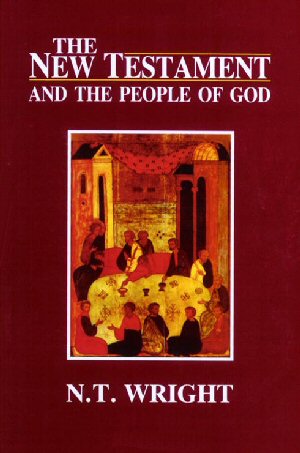
N.T. Wright, The New Testament and the People of God: Christian Origins and the Question of God, (Fortress Press, 1992), 334.

Preparing the Way

Today, Christians believe Jesus is the Messiah, it's right in the title, Christ-ian. Most have been taught this and believe it from tradition as much as anything.

The Scriptures - in first century life - were perhaps the most important thing to a Jew. The dedication to the Torah and willingness to die for their beliefs is exemplified in the accounts of the Maccabean revolts. They however, knew nothing of a New Testament, the first letters and narratives would not be penned until the later half of the first century at best.

The prophets, writings, and of course the beloved books of Moses - through whom God instructed them - were their priorities. Did they know of a coming messiah, absolutely, but there was also ambiguity that surrounded this eschatological figure: two messiahs, one priest and one king? How were some seemingly contradictory prophecies to be reconciled, and could or should they be?

“out of Egypt my son will be called” (Hosea 11)

“Bethlehem, in the land of Judah” (Micah 5)

and

“he will be called a Natzrati”?(cf. Matthew 2, Is 11, Zech 3)

Nonetheless, with strong messianic Psalms and prophetic texts they awaited the arrival of the one who would be chosen to redeem Israel from their long overdrawn exile.

Undoubtedly with the mention of messianic expectation there are some who chime, “well, the Jews missed it, rejected and killed him,” to which we must be fair and remember, not all of them did. "The Jews" trying to have him arrested and killed were a small percentage, and part of the leadership, who were trying to maintain control of the people so Rome would allow them to maintain their lucrative religious governorship.

Then, along came a Rabbi, of whom people were asking,

“is this possibly the Messiah?”

Believe it or not, preceding and following Jesus were other claimants to the messianic title. Eyes were watching, and ears were listening for the sound of revolution and promised redemption. It had been foretold that the lame would walk, the blind would see, the deaf would hear, prisoners would be set free and of course as always Israel's enemies would be driven away and they would once more be the head and not the tail. The messianic hope glistened upon news of this Galilean miracle worker,

“for when the Messiah comes, is he going to do more signs than this man has done?” (John 7).

Fast forward some years, Jesus was crucified by Rome for treason against the state, more than likely as a perceived revolutionary (messianism in any form was frowned upon). He was seen after his death, and spoke to his followers who then watched him ascend to heaven. They asked him plainly,

“is it at this time You are restoring the kingdom to Israel?” (Act 1:6)

He left it open and told them it wasn’t for them to know the time. The witnesses of his life's message and work continued disseminating oral stories, traditions, sayings and teachings and compiling various documents for differing reasons and regions. What was their primary objective? The answer is abundantly clear: to communicate to their world that the Messiah, the chosen and anointed of God, now seen as the suffering servant and the ultimate son of Israel who was spoken of by the prophets was Jesus of Nazareth. God had vindicated him by raising him from the dead and exalted him as the true king of Israel. He would return in a hail of victory and triumph to establish the kingdom he had just inaugurated and to sit on the throne of David and rule the nations with a rod of iron.

As Peter stated in Acts 10,

“All the prophets bear witness to him.”

And in chapter 13 Paul declared,

“As for us, we are bringing you the Good News that what God promised to the fathers.”


Interpretations and the theological edifice of who Jesus was, who he became, what he had done and what he was going to do had only begun.

Salvation Through Redemption

"God’s work as Creator (whether recognized or not) actually and always precedes God’s work as Redeemer. Moreover, God’s redemptive work does not put an end to God’s creative work; God’s work as Creator continues through and beyond such historical redemptive actions. The language of ‘salvation’ has reference to both the effects of redemptive actions as well as to the effects of distinguishable acts of continuing creation (e.g., healing; gifts of food and water in the wilderness). Redemption does not do away with the life-giving effects of the Creator but stands in the service of them. The objective of God’s work in redemption is to free people to be what they were created to be, the effect of which is named salvation."

Terence E. Fretheim, God and World in the Old Testament: A Relational Theology of Creation (Abingdon Press, 2005), 10.