Pages

Showing posts with label J.R.R Tolkien. Show all posts

Gospel as Peace: Part One

This post begins a short three or four part series on the Gospel as a source of peace in our world. 

“If more of us valued food and cheer and song above hoarded gold, it would be a merrier world.”[1]

To call oneself Christian implies a certain loyalty to the eponymous rabbi whence the title derives. His question still lingers in the ears of any would-be follower, “Why do you call me 'Lord, Lord,' and do not do what I tell you?” (Luke 6:46 NRS). He expected those who heard him, to take his words seriously.
Luke describes Jesus preaching the kingdom of God:[2] “I must proclaim the good news of the kingdom of God . . . I was sent for this purpose” (Luke 4:43 NRS).[3] The kingdom of God is the overarching theme of Jesus’ action and teaching.[4] This begs the question, if Jesus’ purpose was preaching the kingdom of God, what was he proclaiming? When posing the question “what is the gospel?” to modern Christians, I generally get an answer pertaining to Jesus’ death burial and resurrection. But according to the Synoptics, it was not until the last third of his ministry that Jesus revealed he was going to die. And when he did, he was met with opposition: “God forbid it, Lord! This must never happen to you.”[5] It’s not the response one would expect if the disciples had already been preaching that Jesus was going to die for the sins of the world and be resurrected. And indeed, the disciples had been preaching the gospel of the kingdom prior to Jesus revealing his death and resurrection, “he [Jesus] sent them [disciples] out to proclaim the kingdom of God and to heal” (Luke 9:2 NRS).[6] If Jesus’ death and resurrection were the central components of the gospel of the kingdom of God message, why didn’t they know?
John the Baptist had a similar message, “the kingdom of heaven has come near” (Matt 3:2 NRS). The interesting thing about John is that when in prison, he sent word to Jesus by his disciples asking, “Are you the one who is to come, or are we to wait for another?” (Matt 11:3 NRS, cf. Luke 7:19). This “coming one,”[7] according to some sources, was expected to be a liberator: giving sight to the blind, making the lame walk, cleansing lepers and causing the deaf to hear.[8] These were all actions that met chaos with shalom in the name of the Lord. Surely, if the death of Jesus was being preached as the “gospel of the kingdom,”[9]  John would have known. After all, it is he who baptized Jesus and had been preaching a similar message. But we get no such message from anyone.


[1] J. R. R. Tolkien, The Hobbit, revised ed. (The Random House Publishing Group, 1982), 290.
[2] Matthew 19:23 offers a parallelism showing kingdom of heaven and kingdom of God to be synonymous terms. Matthew is the only gospel writer to use kingdom of Heaven, meaning, the God of Heaven establishing a Kingdom. Heaven was a word that was used by the Jews as a replacement of God’s name. There is no sense of “going to heaven” in the use of kingdom of Heaven.  
[3] Other elements of his mission could be “sent to the lost sheep of the house of Israel” (Matt 10:6; 15:24); “calling sinners to repentance,” (Luke 5:32); “save that which was lost” (Luke 19:10); “destroy the works of the Devil” (1 John 3:8).
[4] Richard Bauckham, The Bible and Ecology : Rediscovering the Community of Creation (Waco, TX.: Baylor University Press, 2010), 164.
[5] Matt 16:23 cf. Mar 8:32; 9:31 “they did not understand”; Luke 18:34.
[6] Luke 9:8; 60; 10:9. 9:22 is the first mention of Jesus predicting his suffering in Luke.
[7] I. Howard Marshall, The New International Greek Testament Commentary : The Gospel of Luke : A Commentary on the Greek Text (Grand Rapids, MI.: Wm. B. Eerdmans Publishing Co., 1978), 287-90.
[8] Isa 35:5-6; 61:1-2. Jesus leaves out “freedom to prisoners” in his response to John, almost as if to say, “sorry John, you are not going to be released from prison.” He even adds, “blessed is anyone [John?] who takes no offense.”
[9] Matt 4:23; 9:35; 24:14; Luke 16:16; Mark seems to reduce to just “gospel.” (Bauckham 2010, 164).
Click here for part two.

Dwarvish Greed

In 1 Peter 3, the writer makes mention of certain “spirits” that were disobedient in the days of Noah, which of course takes us to Genesis 6, and the “sons of God” (a common Hebrew designation for angelic or spirit messengers/beings e.g. Job 1:6 2:1, 38:7, Dan. 3:25) who were disobedient then (according to pseudepigraphic literature;  Jubilees, Enoch) subsequently shut up and confined for a future judgment.

Peter also seems of this mind,

“For if God spared not the angels who had sinned, but having cast them down to the deepest pit of gloom has delivered them to chains of darkness to be kept for judgment;” 2 Pe 2:4.

The writer of the book of Jude (who quotes from Enoch) says,

“And angels who did not keep their own domain, but abandoned their proper abode, He has kept in eternal bonds under darkness for the judgment of the great day” Jud 1:6.

Is this the judgment to which Paul referred when he told the Corinthians that they would “judge angels”. Peter also says after the Messiah was resurrected (“made alive in the spirit”), he declared (proclaimed) it to them (these spirits). We are not told what he proclaimed, but since Jesus was the messianic king and rightful heir of the Davidic throne, the fulfillment of the “promises to the fathers”, the inheritor of the “first-born” son of God status and now the possessor of the kingdom (Daniel 7), we can assume he said something along the lines of “ha-ha”. Paul also stated that he was

“vindicated in the Spirit, Seen by angels” 1Ti 3:16.

In Revelation there is a character named Abaddon (“Apollyon in Greek”) Rev 9. His name means destroyer, destruction, place of destruction. He has shown up before (Job 26:6, 28:22, 31:12 Ps 88:11, Prov 15:11, Prov 27:20) and is sometimes used synonymously with “the grave”, Sheol. It is possible that the “destroyer” of Exodus in the killing of the first-born, is one in the same. 

Also the “lawless son of destruction” spoken of by Paul could possibly be related. Abaddon is called (in Revelation) the “angel, King of the Abyss”. In chapter 17 of Revelation the beast that

“was and is not [at the time of the writer it can be assumed] and is about to come up out of the abyss and go to destruction…the beast which was and is not…he goes to destruction.”

Is this the same one? Possibly.

I had a dream where I was spectator viewing the industrial revolution, specifically the newly formed quest for oil. Some feel that there is justification to do whatever to the earth, with no repercussions to be reaped. In the dream however, the greed of man was such that it was decided to probe deeper into the earth’s crust for the “liquid gold”. This is a real practice by the way, called “fracking”.

Technically it is called “Hydraulic fracturing”; it is the process of drilling and injecting fluid into the ground at a high pressure in order to fracture shale rocks to release the energies confined. These wells are quite a bit deeper than standard wells. Anyway, this was being done in my dream. All of a sudden, I found myself in Tolkien’s “mines of Moria” when the drums were beating, “doom, doom”.

I was looking into the blackness below from the bridge, and wondering what was happening. Then I heard Gandalf speaking about the Balrog, where greed had led, and what had become of the dwarves there because of it. For anyone privy to Tolkien’s Middle-Earth, they know that it was the greed of the dwarves of Khazad-Dum (later called Moria) and their deep delving for the much desired mithril that had roused the Balrog. This was the demonic creature of Tolkien’s world very akin to Apollyon described in Revelation. In The Fellowship of the Ring this demon afflicted the fellowship.

In my dream, I saw the “fracking” and the continued upsetting of the earth as a comparison (it’s one of those realizations that can happen in dreams).

In the deep delving by the greed of man, they awoke the creature of the abyss. There was much destruction and chaos that ensued. Earthquakes and multitudes of other “naturally appearing” phenomenon issued forth. That was pretty much the extent of it.

Now back to reality. I’ll be honest, I don’t know much about “fracking” or its implications, but I do know that there are plenty of concerned people wondering about the possible repercussions. One in particular that caught my attention is the fact that “fracking” is done below our water supply, and it appears that there is a possibility of contamination should fractures come up to it, and that which is being mined getting mixed into the water.

Either way, it was an interesting dream, and it sure seemed to take a lot longer to dream it than it did to tell it. Is there coming a day when there will be a beast coming up from his dark chasm? Some think so, but just like Gandalf pursued the Balrog and destroyed him, may it also be with the “sons of Light/God” who will accompany the king and take the kingdom and rid the world of the power of evil.

The Window on the West


Could this ever happen here, to America? Has this happened to America, or is this happening in America? Is this inevitably going to happen to America? If so, is this true for Church polity, the state or do I just repeat myself? What I am most adamant about is the separation of Church and hate. By caring more for the past than the present, we repeat the mistake of the past by damaging the future.

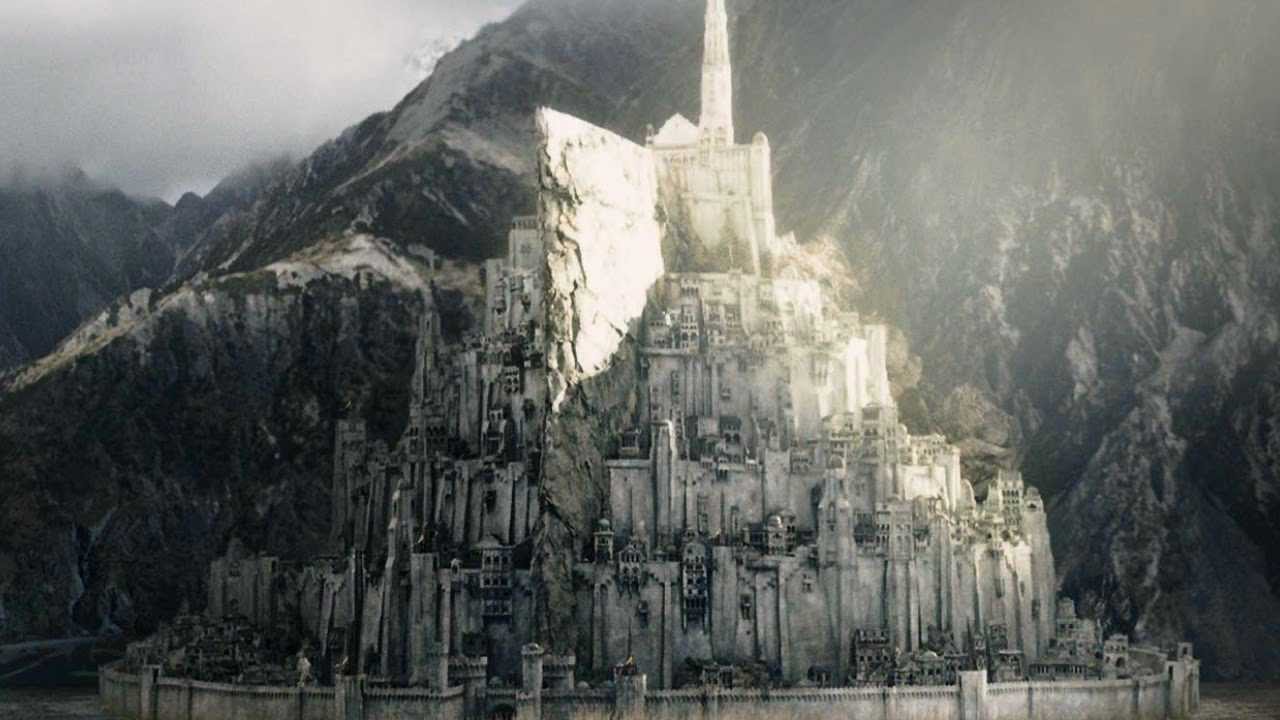
"...it was Gondor that brought about its own decay, falling by degrees into dotage, and thinking that the Enemy was asleep, who was only banished not destroyed. 'Death was ever present...as they had in their old kingdom, and so lost it, hungered after endless life unchanging. Kings made tombs more splendid than houses of the living and counted old names in the rolls of their descent dearer than the names of sons. Childless lords sat in aged halls musing on heraldry; in secret chambers withered men compounded strong elixirs, or in high cold towers asked questions of the stars." - J.R.R. Tolkien, The Lord of the Rings: The Two Towers, IV, V, 322.

Rejoice: Good News.


Sing and rejoice, ye people of the Tower of Guard,
For your watch hath not been in vain,
And the Black Gate is broken,
And your King hath passed through,
And he is victorious.

Sing and be glad, all ye children of the West,
For your King shall come again,
And he shall dwell among you
All the days of your life

And the tree that was withered shall be renewed,
And he shall plant it in the high places
And the City shall be blessed.

Sing all ye people!

J.R.R. Tolkien - The Return of the King, The Eagle's "Good News"


Middle Earth

For all those who enjoy such a thing, I created a wallpaper, which you are welcome to download.

The Road Goes Ever on...


In all honesty, my deepest desire is to seek truth with an honest and sincere heart. I want to be like the Messiah and long to walk in obedience in every way no matter the outcome. I continue to plead with the Father to show me truth in spite of what people may say. I ask Him for wisdom to help me, my family and whomever He brings on my path. I desire for eyes that see and ears that hear, and that He will continue to give greater sense to both. I want a humble and teachable heart, for without humility, learning is done the hard way. Why does it seem that egotism and pride get the best of us far too often? If I already have everything all figured out, what need have I of Him teaching me? God has been perfectly willing to contradict my understanding of Him in the past, but I also had to let go and allow Him to remove the error in my mind and the log from my eye. “So I was wrong”; what have I really lost? Lost? On the contrary, I have gained so much it is indescribable. It is only after my eyes were opened that I could describe what blindness was like. There are those who would say “I have become blind”. Can you tell a man who had darkened eyes that his darkness was light and his light is now darkness? Only from someone who themselves have had no experience with light could such an accusation come. As YHVH says through the mouth of Isaiah the Prophet, “Woe to those who call evil good and good evil, who change darkness into light and light into darkness, who change bitter into sweet and sweet into bitter! Woe to those seeing themselves as wise, esteeming themselves as clever” Isaiah 5) “And so the road goes ever on...”

Tolkien's Kingdom Talk - A Deep Yearning

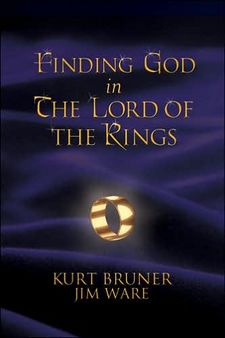
I am reading a book to my wife and children titled "Finding God in the Lord of the Rings". The authors make a connection that has long permeated through me as well, and is the very reason I find the trilogy such an amazing picture of the Kingdom of God (not that Tolkien was writing an allegorical tale). The chapters are very short. I wanted to post this as it draws on something that is inside all who wait for the revealing of the Messiah in order to "set things right".

"The world was fair, the mountains tall
In Elder Days before the fall"

(Gimli’s song—Book II, Chapter 4).

"There is a deep yearning among the Fellowship of the Ring, an unspoken longing for something long lost. None have known it in their lifetimes. Few can recite the tales of its splendor. But all desire its discovery and hope to play a part in its restoration. 
Throughout their adventure, characters from Bilbo to Treebeard recite verses of what they sense is an epic tale being told, a tale in which their lives somehow play a part. Each song seems to be merely a fragment of a majestic symphony being written and conducted by an all-knowing composer. But, as the chorus of Gimli reveals, something is wrong. Part of the harmony isn’t right, like a dissonant chord invading the sweet melody of life, refusing resolution. Middle-earth is in its third age as the adventures of the Fellowship begin. There is considerable history to this world, as revealed in the legends of Elder Days. Elves, dwarves, men, and hobbits alike know that theirs is a story that predates the present scene, preserved and passed in tales of ancient lore. Gimli’s chorus tells of life “before the fall” when the beloved homeland of his dwarf ancestors was full of splendor and light, not dark and foreboding as they find it now. Gimli’s heart pines for glories long past when his people knew better days, before the fall of their blessed domain.
A yearning heart is fitting. The wise know that before time was counted a rebellion occurred that brought evil into their world and introduced discord to the music of life. This rebellion was the driving force behind the song of the Dark Lord now heard in the march of orcs and the movements of the Black Riders. Awakened by the diminished sounds of beauty, honor, and goodness stubbornly pushing their way through the noisy clatter of evil, the inhabitants of Middle-earth hope for the day when all will again be set right.
You and I, like Gimli and others of Tolkien’s world, long for better days. We somehow know that our world is less than it was made to be. And we hope that it will one day be set right again. In short, we yearn for the goodness that was “before the fall.”
Why do we find it so difficult to accept the world as it is? Are we merely discontent, or is something more profound at work in our hearts? C. S. Lewis believed that our desire for something better is a gift, a way of reminding us of what it is we lost and what it is we hope to regain.
'Creatures are not born with desires unless satisfaction for those
desires exists,' Lewis explains. 'A baby feels hunger: well, there is such a thing as food. A duckling wants to swim: well, there is such a thing as water. Men feel sexual desire: well, there is such a thing as sex. If I find in myself a desire which no experience in this world can satisfy, the most probable explanation is that I was made for another world' Mere Christianity, pg 121.

What is the real thing our yearnings suggest? Put simply, it is goodness. We desire the kind of all-consuming goodness that we’ve never known but that once existed and will someday
be restored.
We live in a broken world. Death, pain, sickness, and suffering were not part of life’s original melody. These dissonant chords were first introduced when our race took the bait of temptation and fell from its former glory. Once upon a time, mankind was offered a choice. We could sing the good song of the great composer or follow the opposing melody of his enemy. We chose the latter. And when we rejected the good that God is, we embraced the bad that he isn’t. Evil entered Tolkien’s world before the dawn of time.
That story, told in the opening pages of The Silmarillion, sets the stage for choices later made by those who would inhabit Middle-earth. It starts with Ilúvatar, maker of all that would be. His first creations were Ainur, angelic beings described as 'the offspring of his thought.' To each Ainur, Ilúvatar assigned themes of music that would be sung for his honor and pleasure.

Then Ilúvatar said to them: 'Of the theme that I have
declared to you, I will now that ye make in harmony
together a Great Music . . . ye shall show forth your
powers in adorning this theme, each with his own thoughts
and devices, if he will. But I will sit and hearken, and
be glad that through you great beauty has been wakened
into song
' - J. R. R. Tolkien, The Silmarillion 
(Boston: Houghton Mifflin Company, 1977), 15.

The beauty of their music is that for which all creation yearns. It is the original chorus which “the morning stars sang together and all the angels shouted for joy” as revealed to a suffering Job (Job 38:7). It is the true melody, the 'good' that once was. It is the world as it was intended before the birth of evil. The story continues:

'But now Ilúvatar sat and hearkened, and for a great
while it seemed good to him, for in the music there were
no flaws. But as the theme progressed, it came into the
heart of Melkor to interweave matters of his own imagining
that were not in accord with the theme of Ilúvatar;
for he sought therein to increase the power 
and glory of the part assigned to himself'  
 J. R. R. Tolkien, The Fellowship of the Ring 
(New York: Quality Paperback Book Club, 1995), 58.

Sadly, the sound of Melkor’s evil theme increased as some 'began to attune their music to his rather than to the thought which they had at first.' Seldom have more graceful words been penned to reflect a Christian understanding of Satan’s revolt and its eventual impact upon God’s creation. Tolkien’s world, like ours, knows the dissonance of an opposing melody. It knows the insatiable appetite of a rebellion that seeks to destroy the good that should rightfully rule.
Tolkien saw our world as neither completely right nor completely wrong, but rather as a good that has been violated, a beauty marred. He realized that the only way we can understand that which occurs within time is to view it within the context of that which occurred before and beyond time. Though our world is broken, there is good news. It will not always be so. The story of history, like that of Middleearth, is progressing toward eventual redemption. Even that which seeks to undermine good will one day play a part in its restoration. As Ilúvatar foretold,

'And thou, Melkor, shalt see that no theme may be played
that hath not its uttermost source in me, nor can any alter
the music in my despite. For he that attempteth this shall
prove but mine instrument in the devising of things more
wonderful, which he himself hath not imagined'
 
Ibid., 17-18.

And so Ilúvatar, after the pattern of the biblical Jehovah, produces a drama performed in the theater of time. Its story will become the visible expression of the Ainur’s chorus, including the song of a simple hobbit and the discord of an evil rebel. And somehow, the former will resolve the latter."
"Our hearts yearn for the good that God is."

Is pillaging the earth a good thing?


To truly love God's good creation as He intended it, we must (as logic dictates) despise all that threatens and destroys it. At the risk of being hypocritical, where does that leave us with technology? Has the industrial revolution (the "engine" behind technology) been a beneficial thing for this good world? Professor J.R.R Tolkien frequently commented that the internal combustion engine was the greatest evil to ever be visited upon modern man. What did he mean in saying that? (Basically, he was not enamored with technology). He was discouraged with the reckless treatment and destruction of nature in pursuit of greedy gain (in its various forms). Did Prof. Tolkien have cause for concern? This belief and
strong conviction is reflected profoundly in his writings. The LOTR trilogy cannot be read (or watched) without coming to the realization that Tolkien's perspective of the destruction of nature for political and other forces was intricately connected to dark powers being work. Have we been good stewards of this marvelous earth? If your answer is yes, try again, but first open your eyes. Should it concern us that these things are not issues for most "followers" of God? The answer may not be as simple as it may sometimes seem. I am not advocating purchasing a "green" vehicle or hugging a tree. The green movement is about control and money, not about changing the habits of the planetary use or its restoration. Cities are still expanding at astounding rates. For us, it is as much about worldview as it is anything. We, who are supposed to be different, have adopted the paradigm that has been dictated to our generations for the treatment of all that is the Lord's. Does God "still" care for the earth? Should these atrocities happening before our eyes not cause us to be saddened? How will the Messiah handle such realities upon his return and subsequent rod of iron rule; "...the time has come to destroy those who destroy the earth" Rev 11.

Inklings: Lewis and "Tollers"

I love the works of not only Lewis, but his “inklings” companion Tolkien, to whom he owed a lot. So it was quite interesting to me when reading The Collected Letters of C.S. Lewis V. III, that I came upon a letter to Sir Stanley Unwin (the publisher of Tolkien’s "The Lord of the Rings"). A request had been made by Unwin for Lewis to write a “blurb” for its cover, because of the difficulty in describing it. Here is what he wrote. “It would be almost safe to say that no book like this has ever been written. If Ariosto rivaled it in invention (in fact he does not) he would still lack its heroic seriousness. No imaginary world has been projected which is at once so multifarious and so true to its own inner laws; none so seemingly objective, so disinfected from the taint of an author’s merely individual psychology; none so relevant to the actual human situation yet so free from allegory. And what fine shading there is in the variations of style to meet the almost endless diversity of scenes and characters – comic, homely, epic, monstrous, or diabolic!” Then in a letter to Tollers (Tolkien), about what he had written said, “I wrote what I could to Unwin. Even if he and you approve my words, think twice before using them: I am certainly a much, and perhaps an increasingly, hated man whose name might do you more harm than good. In festina lente [make haste slowly].” Lewis also remarked in a letter to Mrs. Farrer (about "The Fellowship of the Ring"): “wouldn’t it be wonderful if it really succeeded (in selling, I mean)? It would inaugurate a new age. Dare we hope?” It is amazing to see the impact both of these literary greats have made in the world of imagination and fantasy.

Strength in adversity


"'I wish it need not have happened in my time,' said Frodo. 'So do I,' said Gandalf, 'and so do all who live to see such times. But that is not for them to decide. All we have to decide is what to do with the time that is given, us. And already, Frodo, our time is beginning to look black. The Enemy is fast becoming very strong. His plans are far from ripe, I think, but they are ripening. We shall be hard put to it. We should be very hard put to it, even if it were not for this dreadful chance...' 'I am not made for perilous quests. I wish I had never seen the Ring! Why did it come to me? Why was I chosen?' 'Such questions cannot be answered,' said Gandalf. 'You may be sure that it was not for any merit that others do not possess: not for power or wisdom, at any rate. But you have been chosen, and you must therefore use such strength and heart and wits as you have.'" J.R.R. Tolkien ~ Fellowship of the Ring