Pages

Showing posts with label language. Show all posts

Review of Aviya Kushner's "The Grammar of God"

"A Hebrew Speaker's Response to the Bible in English." xxxii.

It is important to note that most of the reading I do is in biblical academia, so my judgment of this book is not based on the same criterion. The reason I mention it is because I read some other reviews of this book in which they were quite unfair, attempting to judge it as a work of biblical or linguistic scholarship. That is not what this book is, nor does the author claim this (see Introduction xxxii); reading the book you will find that to not be the point.

This book was recommended to me and now I am so glad it was; what a fantastic work! I appreciated her insights and background of having been raised in a Jewish home where speaking and reading Hebrew was at the center of the family life.

Again, while it is not a scholarly work, The Grammar of God does contain many trails for the chasing, if the reader possesses the notion. This book will thrill both the grammarian and lover of the Bible, as it is written beautifully and is full of heart. She investigates the histories of English translational difficulties and tells the story of her own personal journey with the realization that "some of the most politically charged issues of our time are rooted in biblical translation." xxiii

Here is one of my favorite quotes from the book:
"It [the Bible] is a story that is part of every man and woman who has ever felt the need to claw against destiny, to insist on a different future than what God appears to be offering. And sometimes, in the Bible, what man wants so passionately is unacceptable to God. What man wants is so destructive that is is a threat to the earth, to the creatures that live on it, to other humans." 114.

Also, the book is available in multiple formats and editions, including audiobook.

Grammar Devil

I don't know why I came up with this today, it kind of just happened. For what it's worth, I think it's pretty clever.

Ad Hominems and False Prophets

False prophet is a label haphazardly thrown around far too frequently in Christendom today. When I hear someone use this derogatory phrase, I find it to be approximately the equivalent of that individual picking up a megaphone and announcing, "I don't read my Bible closely!" Presuppositions regarding the biblical text abound today, but I'm sure I didn't need to tell you that. This practice of "calling names" with Bible words exemplifies the pervasive attitude which seeks to provide scriptural support for an ad hominem against "them," "those people," the ones who, "obviously," have it wrong. "The Scripture couldn't be more clear," the mantra goes.

A "prophet" (in biblical lingo) is an individual commissioned by the God of Israel (Yahweh) to deliver a given message, verbal or otherwise. This is by no means an individual who is merely "telling the future." Actually, prophets do far more forth-telling (delivering a relevant message to their contemporary hearers), than foretelling (giving a message that means nothing to their contemporaries and is only relevant many years in the future). Therefore, a "false prophet" is one who purports to speak on behalf of or deliver a message for Yahweh (Deut. 18) but rather speaks from himself, "presumptuously."


Regardless of "Christian speak," "Christianese," or whatever we want to call the catch phrases that roll off Christian lips today, a "false prophet" is NOT someone who my spiritual guru or I ascertain to hold heretical or heterodoxical (opposite of my own orthodoxy) views, and/or fails to accept doctrines I may believe to be "soteriologically" (a fancy way of speaking about salvation) essential.

If I were a coach, I would challenge the call, and ask for an instant replay. Listen, if there would ever happen to be someone you know of, or God forbid, someone in your life who holds a view different than your own, it does not mean they are claiming to speak in the name of or on behalf of the God of Israel, hence making them a false prophet; there is a big difference. 

Jesus' use of "false prophet" in the Synoptics (all the Gospels but John) is not what many today may think he meant. He was referring to actual prophets, not renegade pastors or teachers from other denominations, with differing points of view. Even the epistle of Peter makes a distinction: 

"But false prophets also arose among the people, just as there will also be false teachers among you, who will secretly introduce destructive heresies, even denying the Master who bought them, bringing swift destruction upon themselves" (2 Pe 2:1 NAU).

A false prophet, a false messiah (christ) and a false teacher are not all synonymous.

A prophet is also NOT someone who may believe - through either discernment and other pieces of evidence - that certain events may be about to unfold, false or not. An example could be a stockbroker at the New York Stock Exchange, who observes a shift or evidence in numbers that there may be an imminent, economic bubble-burst (see The Big Short, 2015). This however, has nothing to do with prophecy, a word from Yahweh (aka. the LORD, God of Israel). Jesus referenced this when speaking to his followers about recognizing the "signs of the times" (Matt 16; Luke 12). 

Christians need to stop inventing definitions for the express purpose of smearing others with whom they may disagree. Someone who has a theological or doctrinal position other than your own does not make that individual a false prophet. It does, however, reveal the ignorance of the accusing individual(s) with the ad hominem baton. 

Resources for Educational Purposes

I have benefited greatly in the past from the generosity of various professors and institutions of higher education, who have made resources freely available to those who may otherwise never have the opportunity.

With the rise of the internet has come a tool of incredible power to share and learn, but with it comes the danger of widely disseminating falsehood as well. There are endless circular quotations and content that is taken as legitimate but is often not the case. Fake news, propaganda, falsified information and amateurs purporting to be experts can find unsuspecting audiences, unaware of what they are consuming. As individuals, it is our responsibility to be prudent with the information we take as "truth" and "fact." This is where reputation can play a large factor; find it in a book.

One particular tool that has been useful is iTunes University. It is like podcasts or video-casts provided by Colleges, Universities and Seminaries. There is an incredible amount of classes able to be taken on your own and at no expense. Many even contain the handouts and syllabi to provide the full experience. I have utilized this resource on many occasions including (but not limited to) classes from Yale, AMBS and Fuller Theological Seminary. The disadvantage is that it is limited to Apple users, but it has been worth it to me to have an Apple device for this reason alone.

Another option is "The Great Courses." Some of the most well-known teachers from respected institutions have lectures covering any range of topics and areas of study. These can be downloaded, or (my personal favorite) found in your local library system. If you have not been a regular patron of your local library, you are missing out on an incredible resource with dedicated people possessing an extraordinary knowledge for aiding you in your quest. As Matt Damon's character Will said in Good Will Hunting,

"You wasted $150,000 on an education you coulda got for $1.50 in late fees at the public library."
  
There are other options as well, such as reputable professors making their classes available on a site like YouTube. One in particular I will note is Craig Keener. He has magnanimously made various of his lecture series available to all, such as Romans and Matthew. Dr. John Walton has similar lectures: Job.


There are lectures given in a series, such as those the Lanier Theological Library in Houston has done at regular intervals. They host various scholars giving talks on a variety of topics. Their videos are archived on Vimeo

For someone who may be interested in learning a foreign language, I highly recommend Simon and Schustler's Pimsleur (and Little Pim for Children). Again, these are resources that will be readily available at most local libraries. 

Mueller's Hebrew

“I now studied much, about 12 hours a day, chiefly Hebrew … [and] committed portions of the Hebrew Old Testament to memory; and this I did with prayer, often falling on my knees … I looked up to the Lord even whilst turning over the leaves of my Hebrew dictionary.”

George Mueller, Autobiography of George Mueller (London: J. Nisbet and Co., 1906), 31.

Supercilious Scripture Snobs or Careful Custodians


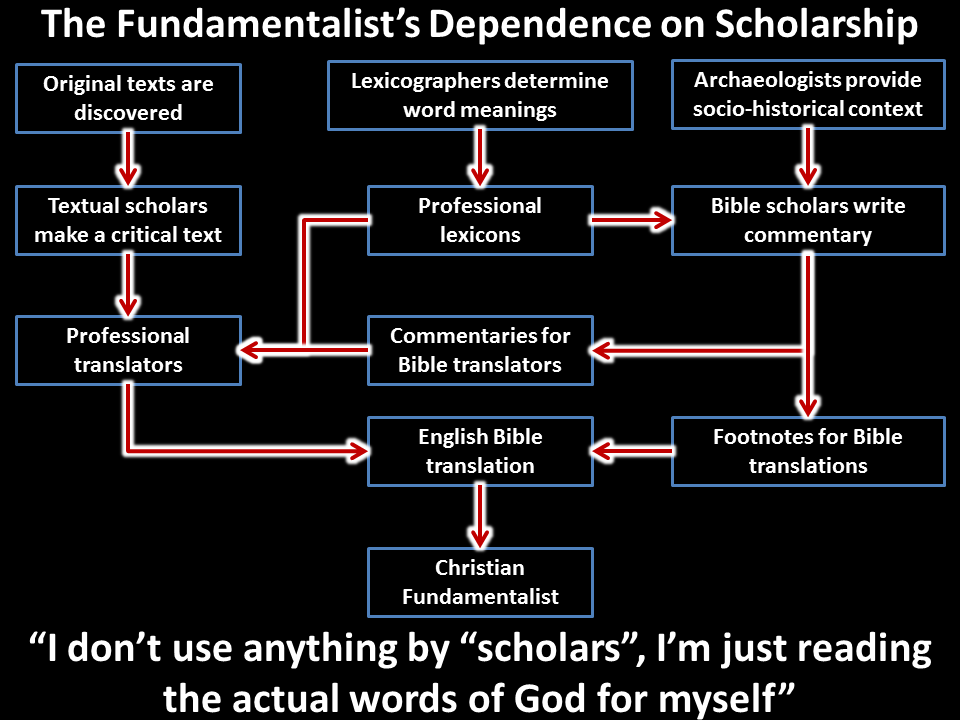
Reading biblical text within its historical, social and literary contexts places it where it was always intended to be, thus bestowing upon it the highest possible honor. Some, who are unacquainted with this as proper treatment of text, choose rather to label it “scriptural elitism” and thereby uncharitably disregard the valiant efforts of multitudes of scholars from varieties of disciplines, stretching years into the past, whose life mission has been to better understand this priceless treasure.

John Walton summarized it well, 

"God is not superficial, and we should expect that knowledge of him and his Word would be mined rather than simply absorbed. This means that all of us will be dependent on others with particular skills to help us succeed in the enterprise of interpretation. This is not elitism; it is the interdependence of the people of God as they work together in community to serve one another with the gifts they have." Walton, The Lost World of Genesis One; Ancient Cosmology and the Origins Debate (IVP Acedemic, 2009), 171.

I have posted this quotation in the past, but James McGrath was also spot on when he said,

"Does someone claim that they simply read the Bible and have no need for scholars, when they are reading the Bible in translation, or reading critical editions of the texts in the original languages, or using manuscripts copied by scribes, having learned Hebrew and Greek with the help of textbooks and lexicons? That person is a liar, plain and simple."

This is not to say that there haven't been or are not irresponsible conclusions or distortions (whether intentional or not is not for me to say). Brent Sandy perhaps has a balanced perspective,

"Evangelicals who support the concept of inerrancy have undoubtedly been guilty at times of claiming too much for the term and claiming that we know too much (e.g., about what historical accuracy demanded and about what authorship entailed). But critical scholarship is not innocent of similar unwarranted certainty and belief in 'assured results' as they apply the surgical knife to biblical books with such self-confidence." Walton and Sandy, The Lost World of Scripture; Ancient Literary Culture and Biblical Authority (IVP Academic, 2013), 276. 

Storied Salvation: Assurance

Salvation According to Paul: Assurance


“Paul would certainly see 'salvation' as secured through 'belief in the Lord Jesus', however much such belief would have to be spelled out in any particular case.”[1]

The book of Jude with its unique content and non-canonical citations contains a noteworthy warning to its readership:

“Now I desire to remind you, though you know all things once for all, that the Lord, after saving a people out of the land of Egypt, subsequently destroyed those who did not believe” Jud 1:5.

The idea that belief and obedience are mutually exclusive or autonomous is not found in the OT or apostolic tradition. God does indeed secure his people, but not without their consent or cooperation. Security and safety are found in continual obedience to God; it’s his word not ours. Once the later idea that grace and obedience are separate from each other is removed – one being accomplished by God’s fiat alone and the other optional by us – Jude’s warning is perfectly appropriate. “Those who did not believe” are not those who wandered into heresy,[2] but rather those who after participating in God’s renewing and restoration power refused to participate and act in the obedience required to be part of that kingdom. This is not a matter of maintaining proper theology, but rather a failure to put into action God’s commands. There are numerous examples of faith as obedience, where those who were once obedient but did not continue on that path were subsequently judged by God.
The psalmist wrote:

“The salvation of the righteous is from the LORD; He is their strength in time of trouble. The LORD helps them and delivers them; He delivers them from the wicked and saves them, Because they take refuge in Him” Ps 37:39-40.

There is no question that Yahweh is the source, character, nature, substance, and reality of salvation. It depends on his faithfulness, consistency and reliability, not our wavering attempts. Does this then describe our eternal security; are we eternally secure? I believe that is the wrong question to ask. A better question is, “Who are the righteous,” which the passage describes? This passage (and others like it) is about the righteous, a topic about which the OT (especially the Psalms) has a lot to say. Jesus came teaching Israel what the actions of a righteous (kingdom citizen) look like. God himself is our guarantee, as Paul said, “by whom you were sealed for the day of redemption” Eph 4:30.[3]

Within the idiomatic way biblical language works, salvation can be spoken of as an accomplished action, although in modern ways of reckoning it causes substantial confusion regarding that from which we are being “saved.”

The proof of spiritual transformation in the Gospels is the confirmation of the people and the spirit of God. There is a sense in which the principle, first taught in the OT, and taught also by Jesus with the witness of at least two, is appropriate. It’s not a matter of self-confirming statements, but rather community affirmation. Obedience is obvious.

“The sorrow that is according to the will of God produces a repentance without regret, leading to salvation, but the sorrow of the world produces death” 2 Cor 7:10.

The declaration by many dedicated men of God should ring in our ear; hineni, “here I am,” your servant waits for your instruction. Obedience is the best gauge in the present regarding one’s salvation being a reality in the future.

“The righteous dead still await the promised resurrection, 'God' has singled out Jesus, bestowing on him, uniquely, resurrected existence and making him thereby the exemplar of what believers can hope for and the assurance that their hope in 'God's' readiness and power to raise the dead is not in vain (esp. 1 Cor 15:20-58; Heb 2:5-18; 1 John 3:1-3). Resurrection, thus, is presented as the essential means by which ‘God’ will demonstrate faithfulness to believers, and their hoped-for salvation/vindication is directly patterned after what 'God' did in/for Jesus. . . . So, 'God' in the NT is emphatically known as the deity who raised Jesus from the dead and exalted him to glory, which justifies and even demands now that Jesus be proclaimed as 'Lord' (e.g., Phil 2:9-11). But God's resurrection of Jesus also serves to signal incomparably this God's great power and purpose, which are to eventuate in a personal/bodily glorification of believers that is patterned after that given to Jesus.”[4]


[1] J. D. G. Dunn, Beginning from Jerusalem, Christianity in the Making, vol. 2 (Erdmans, 2008), 674.
[2] 1 Tim 4:16.
[3] Eze 9:4; Eph 1:13-4; 4:30; 2 Cor 1:21-2; 5:5; 2 Tim 2:19; Rev 7:3; 9:4.
[4] L. W. Hurtado, God in New Testament Theology (Abingdon Press, 2010), 42.

Storied Salvation: Part XVIII

Salvation According to Paul: Present

“The word of the cross is foolishness to those who are perishing, but to us who are being saved it is the power of God” 1 Co 1:18.

The NT sometimes indicates that salvation, justification, redemption, adoption, glorification, and resurrection are both past and present realities.[1] However, the larger scope of salvation is indeed God's rescue operation for all humanity from sin and death through messiah, which culminates in resurrection where death is destroyed for those who sleep in the dust. It cannot be ignored that this is also an eschatological final deliverance of Israel and the saints from their physical enemies.

“Jesus believed that there was one God who had made the world, and who had called Israel to be his people; that this one God had promised to be with his people, and guide them to their destiny, their new exodus; that his presence, guidance and ultimately salvation were symbolized, brought into reality, in and through Temple, Torah, Wisdom, Word and Spirit. He was a first-century Jewish monotheist.”[2]

Along with the role of God as savior and deliverer, Scripture also places an emphasis on the role his people play in the present, as it is the present that determines the future. Endurance, persistence, determination, tenacity, patience, and ultimately obedience are all intimately connected as actions of the faithful. Faith is an action-oriented dynamic based on God’s covenant-keeping character, not something I retain as a medallion.

Participation is the reality. Faith without action has no validity. Upon consideration of the Shema one will discover that hearing, as a Jew would describe it, is done in ones “feet,” meaning it is action-based, hearing that immediately translates into action, a.k.a. obedience.

“Theologically, salvation depends to some extent on the individual's faith in Yahweh. Ps. 37:40 affirms that Yahweh saves ‘because they take refuge in him’ (cf. 13:5[6]; 25:5; 42:5[6]; 65:5[6]; 78:22; 86:2; 119:94; Lam 3:26; et al.). Ps 119:146 appeals your personal deliverance to achieve a purpose – ‘I will keep your statutes.’”[3]

When Paul wrote in Romans 10:17 that “faith comes from hearing, and hearing by the word of Christ,” he no doubt had the Shema in mind. While the “word of Messiah” is without question the Good News about the Kingdom of God which he proclaimed, in Paul’s mind faith, i.e. action/obedience, results in salvation. We have been conditioned far too long to think that salvation is an object of our possession that can exist independent of our behavior. Yahweh, the covenant-keeping God, is secure; it is us, when un-faith-ful, who have no salvation. If we choose to act as though we possess a free pass and nothing more is required, we have chosen to abandon the relationship and the means by which we are made righteous.

It is in this present time – while we wait, train for service and live as citizens of a kingdom to come – that we can say with Paul, that we too are working out our salvation with fear and trembling.[4] Deliverance is the result of our dynamic interaction with him through his promise. Salvation exists by God’s grace towards his people and the obedience on their behalf with his assistance. Our work is God’s work too. In the NT, the work in and through a believer is an expression of God’s renewing, restoring and salvific action. Salvation is not about going to heaven, but rather being raised from death for life on God’s renewed earth. We anticipate in the present what will become full reality in the future.


[1] Rom. 3:24; Eph. 1:7; Col. 1:14.
[2] Wright, Victory, 652.
[3] William A. VanGemeren, “ישע,” New International Dictionary of Old Testament Theology and Exegesis (Grandrapids, MI.: Zondervan, 1997), 2:560.
[4] Phil 3:20; 2:12, 

Storied Salvation: Part XVII

Salvation According to Paul: Past

Paul occasionally uses the past tense when referring to salvation: 

I. “For in hope we have been saved” (Rom 8:24, cf. Tit 2:11).

Although the verb used is in the aorist tense – denoting something that has been done – for Paul the nature of hope is anticipation,

“We . . . groan within ourselves, waiting eagerly for our adoption as sons, the redemption of the body” (Rom 8:23).

The adoption for which believers long for is their final salvation. The “inward groaning” experienced by believers and creation (8:22) is as Dunn describes,

“the inward sense of frustration of individual believers (as a whole) at the eschatological tension of living in the overlap of the ages seems the most obvious reference, not least in view of the parallel with v 26 and 2 Cor 5:2, 4.” J. D. G. Dunn, Word Biblical Commentary: Romans 1-8 (Dallas: Word, Incorporated, 2002), 38A:474.

It is the redemption of the body, i.e. resurrection which is to be fully realized. This is evident in what the apostle explains,

“hope that is seen is not hope; for who hopes for what he already sees . . . if we hope for what we do not see, with perseverance we wait eagerly for it” (Rom 8:24-25, cf. 2 Cor 5:7).

“Hope in the NT is always future oriented, and unseen in the sense that the object of hope is yet to be revealed. Yet hope is not wishful thinking, but what the writer to the Hebrews describes as both ‘sure’ and ‘certain’ (Heb 11:1).” Colin G. Kruse, The Pillar New Testament Commentary: Paul’s Letter to the Romans (Grand Rapids, MI.: Wm. B. Eerdmans, 2012), 350. [1] 

II. “For by grace you have been saved through faith” (Eph 2:8).

In the context of this passage there are clues that through Paul’s strong use of metaphor and the use of the past tense, he alludes to a future reality. Paul’s wording “made alive” (v. 5) and “raised us up and seated us with Him in the heavenly places” (v. 6) seems to specify “so that in the ages to come” (v. 7) a reference to glorification that awaits the saints. 

It is also possible that Paul sees believers being represented in heaven, Christ having been seated at the right hand of God (cf. Rom 8:16-24). [2]

III. “He [God our Savior] saved us, not on the basis of deeds” (Tit 3:5).

Here, the mention of “saved” although past, is tied to the hope of future life in the age to come (v. 7).

IV. “He [the Father] rescued us from the domain of darkness” (Col 1:13).

The context in Paul’s greeting is the inheritance that is being shared with the saints. Through the spirit, the guarantee, the first-fruits of what is to come, was given. This is sometimes called “now and not yet.”

Regardless of one’s eschatological orientation, it seems most are agreed that this present age – with its domain of darkness – is not as it should be and as it will be in the age to come. What is ahead, how to fix the problems now, and what God intends are usually where debate centers. Paul, though, envisions the people of God connected with the Messiah and saved in the manner which he described in detail to the Corinthians, “first-fruits.”

“The Messiah has been raised from the dead, as the first fruits of those who have fallen asleep” 1 Cor 15:20 (Wright, KNT).

First-fruits was an offering of the first-ripened grain, harvested and presented to God in celebration and thanks for the whole harvest which would follow.

“‘We were saved,’ says Paul in Romans 8:24, ‘in hope.’ The verb ‘we were saved’ indicates a past action, something that has already taken place, referring obviously to the complex of faith and baptism of which Paul has been speaking in the letter so far. But this remains ‘in hope’ because we still look forward to the ultimate future salvation of which he speaks ‘in (for instance) Romans 5:9, 10. This explains at a stroke the otherwise puzzling fact that the New Testament often refers to salvation and being saved in terms of bodily events within the present world.” Wright, Surprised by Hope, 210-11.
____________________________
[1] See also J. D. G. Dunn, Neither Jew nor Greek: A Contested Identity, Christianity in the Making, v. 3 (Erdmans, 2015), 714.
[2] See F.F. Bruce, The New International Commentary on the New Testament, The Epistle to the Colossians, to Philemon, and to the Ephesians (Grand Rapids, MI.:William B. Eerdmans Publishing Company, 1984), 287.

Storied Salvation: Part XVI

Salvation According to Paul

Introduction.

Paul had a resurrection based soteriology. Paul and Luke are both most interested in salvation along with its progression. Paul used the verb sōzō (to save) twenty-nine times, topping anyone else in the NT. He makes up for half of the twenty-four times the noun sōtēr (savior) is used in the NT. Eighteen times he employed sōtēria (salvation) and singularly used sōtērion (salvation) and sōtērios (bringing salvation). He also used the verb rhuomai (deliver, rescue) eleven times.

When speaking of saving some of his fellow Israelites (e.g. Rom. 11:14), Paul did not intend that his own actions would effect salvation, but rather he provided them with the message given him by God, thereby causing them to turn and enter into the deliverance to be provided by God in Christ.

“Knowing the time, that it is already the hour for you to awaken from sleep; for now salvation is nearer to us than when we believed” (Rom 13:11).

“In popular evangelicalism salvation is constantly spoken of as something only in the past: ‘when I got saved . . .’ In the NT the balance of the salvation statements is in favor of a yet future final salvation. The NT says too that we ‘are being saved.’ (1 Cor. 1:18; 2 Cor. 2:15).” [1]

Paul used the word egeiro (to wake), which can have no connection to asking Jesus to be a personal savior. Otherwise Paul could have not said salvation was still before us, and nearer than before, when we first believed. If the “day of salvation” (1 Cor 6:2; Isa 49:8) is the day I “made a decision” for Jesus, then that day is behind me and getting further every day. Paul undoubtedly had something else in mind.

Ergo, it should not come as a surprise that Paul was thinking much larger. The word egeiro is the same word used for the raising of the dead, no doubt making connection with the LXX. Passages such as Daniel 12 could be recalled, 

“those who sleep in the dust of the ground will awake, these to everlasting life, but the others to disgrace and everlasting contempt. . . . you will enter into rest and rise again for your allotted portion at the end of the age” v. 2, 13.

“The day of salvation” points toward a time of full restoration of cosmic proportions, the arrival of the long-awaited rule of God and the triumph over his enemies. This includes the enemy of death. This is vital within Paul’s soteriology, e.g. 1 Cor 15, possibly even relating to the exodus and the personal force, the destroyer. The entire order of the cosmos is about to be overturned and Yahweh – through his anointed, established and declared regent-king Jesus – will at last deliver his people from not only their present enemies, but the enemy that has plagued humanity all throughout history.

This is not a matter of a “personal rescue” operation (although that is not excluded). It’s much larger. Jesus’ death, burial and resurrection became the first-fruits of a larger harvest in the garden of God. In the OT God is sometimes a farmer/gardener and Israel is a tree, vine whose purpose is to yield fruit. In Jesus parables, the same metaphor is used. Even after Jesus’ resurrection, he is mistaken for a “gardener.” There can be little question that an allusion to God’s garden (Eden/restoration) and Jesus’ role as caretaker is being communicated. 

The seeds have been planted and life will come shooting out of the ground at God’s timing. The re-establishment of God’s divine order will be underway, and creation will revert to its original intent for which it was designed.   

 “This inaugurated eschatology is the primary driver for Paul’s redefinition of what it means to be God’s people (which is what he is still talking about, rather than any abstract scheme of ‘how people get saved’ which ignores the Israel dimension). If the end has come forward into the present—if the Messiah has arrived in the middle of history—if resurrection itself has happened in one case while death still appears to reign all around—then the verdict of the last day is already known, and the careful eschatological schemes by which various quite different groups of Jews had organized themselves, their lives and their soteriologies must be seen in a different light.”[2]

For Paul, deliverance from sin is important because it affects one’s relationship to the “wrath or judgment of God,” although it is more common for him to simply speak of “salvation” rather than that from which one is saved. However, being “saved from sin” for Paul is tantamount to being released from the implications of God’s active justice which inevitably culminates in death. The Messiah Jesus, the man whom God has raised in declaration of divine appointment as judge, will enact God’s justice and reform. While being “saved from sin” manifests itself in corporeal and temporal benefits, Paul’s larger emphasis is eschatological when surveying the usage alongside his proclamation of the Gospel of the kingdom and parousia language.


[1] A. Buzzard, “Romans 13:11,” The One God the Father, One Man Messiah Translation (Restoration Fellowship, 2015), 403.
[2] Wright, Justification, 148.

Storied Salvation: Part XV

Salvation From Sin


While salvation from sin is a theme, the priority and later focus of the Church on this aspect – as though it encompassed the greater meaning of Jesus mission – misses the point. Jews in the first-century were not concerned about forgiveness and God’s dealing with their sin because God had already made provision for this.

“There is no sign that first-century Jews were walking around gloomily wondering how their sins were ever going to be forgiven. They had the Temple and the sacrificial system, which took care of all that. If Jesus had only said what a lot of Western Christians seem to think he said, he would have been just a big yawn-maker. What he in fact said was so revolutionary that it woke everybody up.”[1]

Disease in the Gospels is often equated with sin. By forgiving sin and/or delivering one from the stated affliction, salvation had come. This was salvation from the certain death which would have ensued had there not been direct intervention.

“In the healings of both the woman with the hemorrhage (Mark 5.84 par.) and the blind Bartimaeus (Mark 10.52 par.), Jesus proclaims that their faith has ‘saved’ them; most recent translations correctly render the Greek verb sōzō ‘has made you well’; cf. Mark 3.4; 5.23, 28; 6.56; Luke 17.19; Matt. 27.42 par.) Likewise, sōzō is used by the disciples when they thought they were drowning (Matt. 8.25; cf. 14.30) and (in a compound form) of Paul's escape from shipwreck (Acts 27.44; 28.1).”[2]

The works Jesus did correspond to the greater theme of his eschatological motif which pointed to the signs given by the prophets as to what Yahweh would do when he ushered in this “age to come.”

“Mostly, Jesus himself got a hearing from his contemporaries because of what he was doing. They saw him saving people from sickness and death, and they heard him talking about a salvation, the message for which they had longed, that would go beyond the immediate into the ultimate future. But the two were not unrelated, the present one a mere visual aid of the future one or a trick to gain people’s attention. The whole point of what Jesus was up to was that he was doing, close up, in the present, what he was promising long-term, in the future. And what he was promising for that future, and doing in that present, was not saving souls for a disembodied eternity but rescuing people from the corruption and decay of the way the world presently is so they could enjoy, already in the present, that renewal of creation which is God’s ultimate purpose—and so they could thus become colleagues and partners in that larger project.”[3]

The metaphorical use of salvation is often applied to the present:

“The death and resurrection of Jesus are the inauguration of the promised new age; and this ‘age to come’ is the long-awaited time of deliverance. The Jewish metaphorical meaning (resurrection as the rescue and restoration of Israel after exile and oppression) is retained but transformed: the divine rescue operation through Jesus is for all people, and delivers Jew and Gentile alike from the present evil age.”[4]

Jesus actively intervened in the chaos (“destroying the works of the Devil”)[5] of peoples’ lives, making the lame walk, the blind see, the deaf hear, and the mute speak. In this manner, he brought the salvation of the future, when all will be right, into a small geographical region and to a relatively small number of people (cf. Luke 4:23-27) as a taste of what Yahweh would do on a grand scale. The prophets had foretold these things were to happen. 


[1] N.T. Wright, Who was Jesus (William B Eerdmans Publishing Co., 1992), 98.
[2] Meier and Metzger, Oxford Companion to the Bible, 670.
[3] Wright, Surprised by Hope, 204.
[4] Wright, Resurrection, 220
[5] 1 John 3:8.

Heiser Videos on The Gods of the Bible

I have posted articles and content from Dr. Mike Heiser before containing numerous links. Here are a couple more videos recently done, and well done, I should add. These are short and to the point, covering an area of study that most Christians are unaware exists.

It is a subject of utmost importance to me, on which I have spent a great deal of time and energy because of its contribution to misunderstanding what the ANE context reveals and does not teach about God. Misunderstandings and misguided hermeneutical approaches have crept into Genesis and even transformed themselves into bad trinitarian apologetics (and really bad christological ones for the particularly uninformed and overzealous apologist) via linguistic sophistry.


Storied Salvation: Part XIV

John

This Gospel is interested not only in OT fulfillment but showing Jesus as the climax which scriptural history has pointed. Within salvation-history, John highlights the respective roles of Abraham, Moses and Isaiah as particularly important. In John, Jesus indicates that these individuals were pointing towards him as the fulfillment in God’s final redemption of Israel (salvation is of the Jews), and the gentiles by way of inclusion.

"In the gospel of John not only is Jesus identified as ‘savior,’ an interpretation of his name . . . but the object of salvation is frequently identified as ‘the world’ (Grk. kosmos) the created order now at enmity with God and therefore in need of salvation through Jesus (John 8.16-17; 12.47; cf. Rev. 12.10-12). A large number of personal names are derived from the Hebrew root yš, including those of Moses' successor Joshua, the prophets Hosea, Isaiah, and probably Elisha, the Moabite king Mesha, and Jesus (a Grk. form of Hebr. yēšûa; see Matt. 1.21 John 4.42; Acts 5.3 1; Phil. 3.20; Eph. 5.28; Titus 1.4; 2 Pet. 1.1); in all of these names God rather than the person with the name is explicitly or implicitly the agent of salvation. The exclamation transliterated ‘Hosanna’ is also from this root.”[1]

Dualism

It is also worth noting that the Platonic view of dualism,[2] where one’s “soul is saved,” does not have its root in OT or NT theology. A passage used to support this theory is Luke 21:19, 

“By your endurance you will gain your souls” (NRS). 

Within this paradigm, the soul is separate from mortal existence; therefore it’s the soul that is saved. The body is left behind upon death and replaced with a new “resurrection” incorporeal body. In this view, a redefinition of “you,” is essential. Here the individual is the combination of the soul (immaterial) and the mortal tent, i.e. the human shell (material), in which they dwell. One of the problems with this is that only part of you is delivered upon death, not all of you. 

Other translations correct this issue by rendering the verse similar to the NASB, “you will gain your lives.” In Hebraic understanding, the Greek concept of “soul” is impossible. The Greek word in question, psyche has historically been translated soul, no doubt from its use in Greek philosophy. In context, “salvation of life” is what is being presented. God is the God of the living (cf. Matt 22:32; Mk 12:27; Lk 20:38) and it is lives not souls that are in need of deliverance.[3] The Platonic and Augustinian idea of soul is in need of correction.

“For the first Christians, the ultimate salvation was all about God’s new world, and the point of what Jesus and the apostles were doing when they were healing people or being rescued from shipwreck or whatever was that this was a proper anticipation of that ultimate salvation, that healing transformation of space, time, and matter. The future rescue that God had planned and promised was starting to come true in the present. We are saved not as souls but as wholes.”[4]


[1] Meier and Metzger, Oxford Companion to the Bible, 669-70.
[2] This is the popular view that human beings are compartmentalized into body and soul (sometimes with a side of spirit).
[3] For a short treatment of this see in OT John Walton, Ancient Near Eastern Thought and the Old Testament: Introducing the Conceptual World of the Hebrew Bible (Baker Academic, 2006), 210-14.
[4] Wright, Surprised by Hope, 211.

The Divine, Inerrant, Infallible, Inspired Theory?

I have mentioned this from time to time and continue to do so for the simple reason of it being a misunderstanding that runs deep and wide within the minds of average church-going Christians as well as those who may be classified as post-Christian.

While the "word of God" is a prerequisite in the life a believer, perhaps we've gotten the "word of God" confused with "the Bible" or "the Scriptures." These are not synonymous terms, although the Scriptures do contain the words of people's interaction with God, and his direction to them. Many conservative Christian groups are guilty of creating their own definitions of inspiration, inerrancy and infallibility, then forcing the Bible into that framework. It is demanded that this alone is the way to view the Bible while all others are liberal attacks against God. 

I have seen the modern view of inerrancy shatter too many people's faith - specifically in relation to a failed fundamentalism experience - because it's a wrongly based faith. 

Craig Evans put it: 

"In reading some of the more radical books on Jesus, I find that a loss of confidence in the historical reliability of the New Testament Gospels is often occasioned by misplaced faith and misguided suspicions. By misplaced faith I mean placing one's faith in the wrong thing, such as believing that the Scriptures must be inerrant according to rather strict idiosyncratic standards and that we must be able to harmonize the four Gospels. If our faith depends on these ideas, especially in rigid terms, and scholarly study may well lead to a collapse of faith. . . . Observe the line of reasoning; it is so typical of brittle fundamentalism. I have heard fundamentalists say, 'show me one mistake in the Bible and I will throw out the whole thing'. . . . The truth of the Christian message hinges not on the inerrancy of Scripture or on our ability to harmonize the four Gospels but on the resurrection of Jesus. And the historical reliability of the Gospels does not hinge on the inerrancy of Scripture or on proof that no mistake of any kind can be detected in them." 


It amounts to this; the Bible is not where my my faith nor hope is based. The Bible helps to govern my faith and works in tandem with it by showing what God is like and how he interacts with and through people. We miss the point of the Bible when we make our faith about it. Even those who claim to hold the Bible in the highest regard forget that those very people of whom the Bible speaks had no such book. If no such book existed, how did their faith survive? Perhaps their faith was not textually based and instead reliant upon God. Can God exist without the Bible? It seems as though some Christians are dangerously close to not thinking so.

Believe it or not, there are readers of the Bible today who have been indoctrinated into accepting an unrealistic and uncritical view as to what the Bible is and often means, go figure. Far too many have been convinced that the Bible is incapable of containing even the slightest contradiction or infinitesimal discrepancy. Some have even been convinced that if such things existed to the slightest degree, none of the Bible could be trusted. I have personally heard this stated, "if every single word isn't accurate, none of it is." This is poor logic and entirely ignorant of the way texts were created, copied, dispersed and come to us in the modern era. It also shows an ignorance of the textual variation between the thousands of competing copies in possession today.  Armed with a presupposition of what God is like and concluding that since God is perfect and the ultimate source knowledge, the Bible therefore - through divine inspiration of the prophets - cannot contain "imperfections." 

While this theory is convenient and comfortable for some, forming a tidy and safe God box, it can only be kept intact for the reader who doesn't look too closely at the Bible itself. There have been many conservative Christians (young and old) who have had their Bible-based faith shattered into oblivion due to probing at a deeper level. This is entirely unnecessary not by virtue of shutting ones eyes and ears to the truth about the Bible, but by understanding what the Bible was, is and therefore what our relationship to it should be. Are we fundamentally interested in investigating and being liberated by truth, or rather in error grown old by perpetuating and reiterating a lie? 

Getting into the intricate details of the Bible may be scary for those whose faith has been placed in certain idiosyncratic concepts regarding the Bible's identity. The Bible is inspired and our rule of faith, but what "inspiration" means to some is entirely different than what it means to others. Also words such as "inerrancy" and "infallibility" are often harnessed as though they had a single authoritative standard of definition of unquestionable quality. This is subjectivism masquerading as objectivism. 

God used people to write the content of the Bible. The Bible is messy, written by messy people, about messy people in a messy world that continues to this messy day. It is a messy way to describe a very great God in the business of cleaning things up. They were not early, prehistoric ink-jet printers upon whom the spirit came and dictated the words of God verbatim. Dogmatic theories about who wrote, how they did it and why the Bible has to be this way or that way to be believed, is where the error lies.

Storied Salvation: Part XIII

Mark


When Jesus came on the scene preaching and inaugurating the kingdom of God, a conflict was presented between the forces of good and evil, of God’s kingdom and the anti-kingdom. Jesus’ message, authority, and his substantial role in salvation-history are derived from God. Mark’s emphasis on various elements of the story offered a nuanced telling of the stunning proclamation of Jesus’ authority and lordship for his audience.[1]

“The adherence to Jesus remains a precondition for eschatological salvation during the post resurrection period. . . . In the face of persecution and affliction during Jesus' absence the precondition for participation in the eschatological salvation is faithfulness to Jesus and the Gospel: whoever denies inherence to Jesus or the gospel (Mk 8:38 parentheses) forfeits salvation (Mk 8:34, 38; cf. Mk 4:16-19). . . . For Mark, salvation first of all means participation in God's eschatological reign (Mk 1:14-15; 9:47; 10:24-25), which will be brought about finally when the Son of Man returns (Mk 8:38-9:1; 13:24-27). The coming of the Son of Man is depicted as God’s final judgment and is understood as the destruction of God's enemies. Salvation therefore entails being saved from God's final judgment administered by the Son of Man (Mk 8:34-9:1; 13:24-27; 14:62).” [2]

Luke

It is Luke’s Gospel that has Simeon declaring that the salvation Jesus brings into history will be a “light of revelation for the gentiles” (2:32). This theme is realized in the mission portrayed throughout Acts. 

“Luke’s massive two-volume work can be read as claiming, among many other things, that this status ought now to belong to the Christians. They are the ones who have inherited the Jewish promises of salvation; they are the ones to whom accrues the status proper to a religion of great antiquity.” [3]

 “Luke clearly grasped the equally important Jewish belief that when Israel was redeemed the whole world would be blessed. Israel’s salvation was not to be a private affair only: it was to be for the benefit of all. The good news of the established kingdom would have to impinge on the Gentile world. Since, therefore, he believed that this good news had taken the form of the life, and particularly the death and resurrection, of one human being, and since this was a Jewish message for the Gentile world, Luke blended together two apparently incompatible genres with consummate skill. He told the story of Jesus as a Jewish story, indeed as the Jewish story, much as Josephus told the story of the fall of Jerusalem as the climax of Israel’s long and tragic history. But he told it in such a way as to say to his non-Jewish Greco-Roman audience: here, in the life of this one man, is the Jewish message of salvation that you pagans need.”[4]

“‘Salvation’ is a particularly Lukan theme whose thesis is that ‘the idea of salvation supplies the key to the theology of Luke’ but familiar in (in verb or noun) in all strands of early Christianity.”[5]

At the circumcision of John the Baptist, Zacharias prophesied concerning not only John, but regarding Luke’s greater message of God’s eschatological salvation-history:[6]

“Blessed be the Lord God of Israel, For He has visited us and accomplished redemption for His people, And has raised up a horn of salvation for us In the house of David His servant-- As He spoke by the mouth of His holy prophets from of old-- Salvation FROM OUR ENEMIES, And FROM THE HAND OF ALL WHO HATE US; To show mercy toward our fathers, And to remember His holy covenant, The oath which He swore to Abraham our father, To grant us that we, being rescued from the hand of our enemies, Might serve Him without fear, In holiness and righteousness before Him all our days” Luke 1:68-75. 

Notice that the wording of this prophecy is in the past tense, “visited,” “accomplished,” “raised,” but yet Jesus hadn’t even been born at this time. Speaking in the past tense of something that is assured is an idiomatic expression common throughout biblical and Hebraic literature.


[1] For example see Thomas Schmidt, “Jesus Triumphal March to Crucifixion: The Sacred Way as Roman Procession” Biblical Review (Feb. 1997), 30.
[2] Joel B. Green, “Salvation,” Dictionary of Jesus and the Gospel's, Second Ed. (Downers Grove, Ill.: InterVarsity Press, 2013) 827.
[3] Wright, People of God, 376-7.
[4] Ibid., 381. (cf. Acts 17).
[5] J. D. G. Dunn, Beginning from Jerusalem, Christianity in the Making, v. 2 (Erdmans, 2008), 672.
[6] In Acts 28, verse 28 appears to equate the gentiles listening to the “salvation of God” with Paul’s preaching the Kingdom of God in verse 31.

Storied Salvation: Part XII

Matthew


Matthew 2 tells the story of Joseph, Mary and Jesus’ flight into Egypt. The writer is explicit in his use of the phrase “out of Egypt I called my son”, but much less so in what he intends by it. His citation relates to fleeing into Egypt, not from it. The exodus out of Egypt[1] resonates profoundly within the identity of Israel, so much so that Matthew is able to say a lot about Jesus at the outset of his narrative without spelling it out.[2]

“On the surface it is of course not at all obvious how Hosea 11:1 is fulfilled in Jesus escaping from Egypt. But as one reflects more deeply on Jesus relationship to Israel one starts to see how profound the sense might be in which Jesus, fulfills God’s call of his people out of Egypt. Out of Egypt is this useful shorthand for evoking the challenges and the richness of biblical theology.”[3]

Matthew’s soteriology is saturated with hints of resurrection, not only of Jesus but a wider resurrection of the saints.[4] Matthew is the only Gospel to use the phrase “parousia of the son of man.”[5]

Matthew 19:25 and parallels must refer to ‘final salvation.’ It is about a future state of being saved as opposed to being lost, and in the imagery of the Gospels signifies entry to the heavenly banquet instead of exclusion, a welcome by the Son of man and entry to the heavenly kingdom instead of rejection and consignment to eternal fire. . . . This raises the question whether ‘being saved’ refers exclusively to a future state in the next world, or whether it can also refer to those who are already sure of entry to the kingdom.”[6]

Matthew also adopts the other strand of Mark's soteriology: sōzō designates the saving of life within an eschatological horizon (Mt 16:25; 19:25; see also Mt 10:22, 24:13, 22) or salvation from God's final judgment and eternal punishment (Mt 13:41-43; 16:27-28, 19:28, 24:29-31, 37-41; 25:31-46; see also Mt 8:11-12; 10:28)-that is, eschatological life (Mt 7:14; 10:39, 16:25-26; 18:8-9; 19:16-17, 29; 25:46) and participation in the kingdom of heaven (Mt 5:20; 7:21; 13:43; 18:3-4; 19:23-24; 21:31; see also Mt 5:3-12; 19:12).”[7]

Recognition that it is the judging acts of God from which we are saved – to be poured-out in its time at the “end of the age” – is a crucial distinction to make in the NT’s treatment of salvation.

“It is ecclesiology (membership in God’s people) as the advance sign of soteriology (being saved on the last day). It is 'justification' in the present, anticipating the verdict of the future. God will declare on the last day that certain people are 'in the right,' by raising them from the dead; and that verdict has been brought forward into the present, visibly and community-formingly.”[8]

So we are “saved” from a day yet unseen. It is very much akin to the exodus from Egypt. The Hebrews were not “saved” until the death angel “passed over,” but they were marked for salvation when they believed and acted in obedience (a byproduct of belief). Today, salvation has been reduced to “a decision for Jesus” which is shallow and biblically non-existent.

“The majority of occurrences in the New Testament of the Greek verb sōzō (‘to save’) and its derivatives, especially the noun sōtēria (‘salvation’) have to do with the ultimate salvation of believers in Christ Jesus. The same phrase used in the stories of healing is also used of forgiveness of sin (Luke 7.48-50 cf. 18.52), and in the account of the paralytic (Matt. 9.2-8 par.) forgiveness of sin is a spiritual kind of healing concomitant with the physical restoration of health. For the one forgiven this spiritual healing is thus ‘salvation,’ in the sense of admission into the kingdom of God understood as both a present and a future reality. The salvation of individuals is the principal focus of the earlier New Testament writings. In Paul this salvation is both present and future; the two are closely linked in part at least because of Paul's expectation of a prompt Second Coming (Rom. 5.8-11 8.18 1; 25; 18.11). So Paul can speak of those ‘who are being saved’ (1 Cor. 1.18; 15.2; 2 Cor. 2.15), as well as those who will be ‘saved in the day of the Lord’ (1 Cor. 5.5), both Jews (Rom. 11.26) and gentiles (1 Thess. 2.16). This same kind of realized eschatology’ is also found in the synoptic Gospels and in Acts, though in both it is a future salvation that dominates (Mark 8.35; 13.13 par.; Acts 15.11; contrast Luke 19.9: ‘Today salvation has come to this house’ and cf. Acts 47).”[9]


[1] Exo 13:9, 14, 16; 18:1; 19:4, Num 23:20; 24:8; Deut 9:26; 16:1; 26:8; Jos 24:6; Jdg 6:8-9; 1 Sam 12:1.
[2] In context (of Hosea 11), it is obvious that God had called his “son,” Israel, out of Egypt (Exo 4:22-23). The Matthean author does not make mention of this passage blindly or in an unjustifiable out-of-context use, he is far more sophisticated than that. Matthew (and other gospels) makes it clear to his readers that Jesus is undeniably the prophet like Moses from Deut 18. The details given (even numbers) of how Jesus did almost exactly as Moses did, even down to the way he divided the people to feed them (something Moses did in the wilderness) are to take the reader back to the Torah in subtle ways. Most of what he did and said comes right out of the OT. We have (in general) failed to recognize it or make the connections because we don’t know the OT well. As the “new Moses” and ultimate representative of Israel, Jesus relives many of the same experiences described in the Torah that happened to Israel (God’s first-born: Then you shall say to Pharaoh, 'Thus says the LORD, Israel is my firstborn son” Exo 4:22): Jesus survives a gruesome infanticide by a wicked king, has compassion on the people, divides them in groups of hundreds and fifties, in the wilderness alone for 40 days (Israel 40 years), instructed people on a mountain, climbs a mountain with only his closest companions and has visions of glory and light, chooses twelve disciples (12 tribes), offers himself in the peoples stead among many other nuances. In this knowledge it should not be surprising that Matthew makes Jesus appear as the ultimate son who is a firstborn, as he does with Mary as the ultimate “virgin Israel.”
[3] Out of Egypt: Biblical Theology and Biblical Interpretation, ed. Craig. G. Bartholomew (Grand Rapids, MI.: Zondervan, 2004), xxiii.
[4] Matthew is the only Gospel to report the open graves of “saints who had fallen asleep” (27:52-3).
[5] Matt 24:3, 27, 37, 39.
[6] Joel B. Green, Scot McKnight, I. Howard Marshall, “Salvation,” Dictionary of Jesus and the Gospels (Downers Grove, Ill.: InterVarsity Press, 1992), 722.
[7] Joel B. Green, “Salvation,” Dictionary of Jesus and the Gospel's, 2d ed. (Downers Grove, Ill.: InterVarsity Press, 2013), 828.
[8] Wright, Justification, 146-7.
[9] Meier and Metzger, Oxford Companion to the Bible, 669.