Pages

Showing posts with label Torah Studies. Show all posts

True Blue Jew

In Matthew 9, Mark 5 and Luke 8 there is somewhat of an odd story involving a woman who after having suffered for twelve years comes into miraculous contact with Jesus for healing. This story takes place while Jesus is assisting Jarius’ twelve year old daughter. Is this double-mention of twelve coincidence, a number used to relate context to the tribes of Israel? Is it also by chance that the author uses δώδεκα (dodeka, twelve) twelve times in Luke, but not once in Acts? Both stories also have the victims as “daughter.”

Matthew and Mark have the woman saying to herself,

“If I just touch His garments, I will get well [lit. I will be saved, Hagner, WBC]."

Luke however does not mention this, instead it is stated that she had a twelve year issue of blood and

“came up behind Him and touched the fringe of His cloak, and immediately her hemorrhage stopped.”

In Luke, the reader is not given the woman’s thoughts as to why she took such action,

“she devises a plan of secretly touching his garment. Her reasoning and simple faith find articulation in v 21. It will suffice to touch the garment of this very special person. This strategy may well have been dictated by her ritual uncleanness and her sense of the holiness of Jesus as a divinely empowered healer. τοῦ κρασπέδου τοῦ ἱματίου αὐτοῦ, ‘the fringe of his garment,’ probably refers not simply to the edge of Jesus’ garment but to the tassels (Hebrew צִיצִת, ṣîṣit’) required by Num 15:38–41 and Deut 22:12 for the four corners of one’s outer garment (cf. 23:5). Jesus is thus faithful to the Torah in his dress. The idea of being healed through even the garments worn by a holy person was not so unusual in that culture (cf. 14:36; Mark 6:56; Acts 19:12)."1

This is a tough situation for the woman, more than the text lets on for most of the readers in our culture. This woman was perpetually unclean, meaning she was an outcast, completely cut-off from everyone; no human contact. It is obvious that she approaches Jesus in this stealthy manner because she believes that he would not come close due to her impurity, she would be rendering him unclean. Keener remarks,

“this woman’s sickness was reckoned as if she had a menstrual period all month long; it made her continually unclean under the law (Lev 15:19–33)—a social and religious problem in addition to the physical one. If she touched anyone or anyone’s clothes, she rendered that person ceremonially unclean for the rest of the day (cf. Lev 15:26–27, [m. Ṭoharot 5:8]). Because she rendered unclean anyone she touched, she should not have even been in this heavy crowd. Many teachers avoided touching women altogether, lest they become accidentally contaminated. Thus she could not touch or be touched, she had probably never married or was now divorced, and she was marginal to Jewish society.”2

Matthew and Luke have a word Mark does not in the telling of this particular story; fringe (kraspedon). In a recent blog post, Gerald McDermott explores this briefly, but in my opinion leaves the best part out.

The word kraspedon is used few times in the NT, but there is a lesser mentioned portion of text in Matthew 14 and Mark 6, when Jesus was in Gennesaret, and the same word is employed:

“when the men of that place recognized Him, they sent word into all that surrounding district and brought to Him all who were sick; and they implored Him that they might just touch the fringe of His cloak; and as many as touched it were cured” Mat 14:35-36.

Why were people drawn to Jesus’ fringe or hem?

“The LORD also spoke to Moses, saying, ’Speak to the sons of Israel, and tell them that they shall make for themselves tassels on the corners of their garments throughout their generations, and that they shall put on the tassel of each corner a cord of blue. It shall be a tassel for you to look at and remember all the commandments of the LORD, so as to do them and not follow after your own heart and your own eyes…” Num 15:37-38.

The covenant people of God were commanded to sew tassels (tsitsith) on the “corners” of their garments. The word corner in Hebrew is kanaph and can also be translated as wing or extremity as in the passage where Yahweh - extending protection and covering over Israel - says,

“I spread the corner of my garment over you and covered your nakedness” Eze 16:8 ESV.

It is used of wing in the sense of protection, as a mother bird spreads her wings over her chicks and the wings of the Seraphim which covered the Ark, their face, “feet” (euphemism for something else) and were used for flying.

In the Septuagint, the word corner (kanaph) is translated kraspedon; the same word Matthew and Luke use in these narratives (cf. Mat 23:5). Why then does Jesus credit the woman with an exercise of faith for touching his tassel?

Possibly because of a messianic prophecy in Malachi that stated,

“But to you that fear my name shall the Sun of righteousness arise, and healing shall be in his wings [Heb. kanaph, where the tassels or tsitsith were sewn]…” Mal 4:2 LXE.

Jesus as the Jew of Jews or the true blue Jew (blue cord in tassel joke there cf. Nu 15:38) of course would be wearing tassels. If he was not, he was a disobedient Jew. When I was in Israel, the historian R. Vanderlaan - who was teaching - made the comment in regard to this narrative,

“every piece of art we have shows Jesus breaking God’s law, and we want Jews to take seriously that he is the messiah.” 

Prof. Anthony Buzzard appropriately asks,

“Have we forgotten that our Savior was a Jew?” Jesus Was Not a Trinitarian, 9.

McDermott, as well as Keil and Delitzsch mention the Pharisaic superfluous attitude in commands such as Nu. 15:38,

“The size of these tassels is not prescribed. The Pharisees liked to make them large, to exhibit openly their punctilious fulfillment of the law.” Kiel and Delitzsch, 1:721.

Mark describes the woman as having

“endured much at the hands of many physicians, and had spent all that she had and was not helped at all, but rather had grown worse.” 

Ironically, Luke the doctor left that part out. The woman’s faith is exemplified - according to Matthew and Luke (12 x 12) - by pointing to her action upon the belief that by “touching” (hapto, “lay hold of”) the symbol of God’s protection for his people and the messianic characteristic of healing, she would be a recipient of that promise. Instead of Jesus becoming unclean from her, she became clean and was “saved” because of him (8:48). Jesus said of the little girl,

“Do not be afraid any longer; only believe, and she will be made well [lit. saved]" (v. 50).

This theme of Jesus as the truest Jew bringing salvation is the larger picture Luke wants to give his audience.


1. Donald A. Hagner, vol. 33A, Word Biblical Commentary : Matthew 1-13, Word Biblical Commentary, 248 (Dallas: Word, Incorporated, 2002).

2. Craig S. Keener and InterVarsity Press, The IVP Bible Background Commentary : New Testament, Mt 9:20 (Downers Grove, Ill.: InterVarsity Press, 1993).

Externals

The sacred/divine name movement is not so different from the KJV onlyism nonsense. It is all geared toward focusing on externals: "Say it this way...Only read this...” And the list goes on.

God is not and has never been into mysticism! He's after the heart.

God's message, his name, what he represents and his son transcends speech, language, phonetics, translation and pronunciation

People today (mostly western Christians, and some Messianic branches - did you catch that pun?) actually fight over whether or not the spelling/pronunciation should be Jesus, Yeshua, Yahoshua, Yahushua, Yahushooahiuawaeezah or whatever creative minds can produce! There have been people re-baptized because of this stuff.

The starting place of such preposterous notions is the assumption that God is caught-up with the English language, and its transliterations. As much of a mess as this language is, I can assure you, it's not a divine one.

Ironically, what is being debated is not even what "name" represents in Hebrew. The greater meaning of "name" has nothing to do with spelling or phonetics. For example, “calling upon the name of...” has nothing to do with how it's pronounced. It has to do with representation, authority, reputation or character. The Hebrews did not think of their scriptures in the same confined manner as most Christians do today. Authority was in their God and individuals in whom he vested his name, not in spellings, parchment, papyrus, codices, scrolls, ink or quills.

Furthermore, to replace the personal name Yahweh with Lord, Adonai etc. was not seen as a distortion, because it was the same God still being referenced, not a name change. For example, someone may reference me as “bro, man, dude, Mr. Rufener, S. Edwin, etc.," and all the above when directed toward me speak of the same person, Shaun Edwin Rufener. None of the titles or descriptions alter me, or somehow diminish who I am.

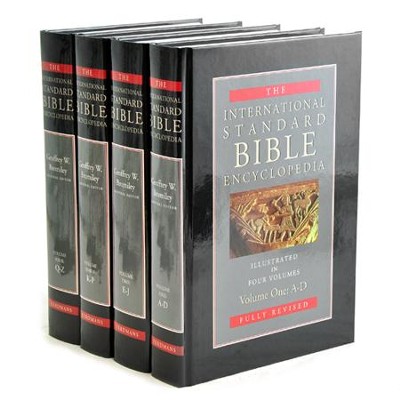
Here is an excerpt from The International Standard Bible Encyclopedia (ISBE) that may help give some insight:

"it would be quite incorrect to say that in the OT a name was just an identity tag and no more. There, as in other ancient literature, the name of a person sometimes revealed his character, his personality, even his destiny. In fact, a person’s name was often considered to be but an expression, indeed a revelation, of his true nature, as the many popular etymological explanations of names given to people in the OT makes clear OT Old Testament...Because a person’s name is so closely related to what he is, šēm comes also to mean “fame,” “renown,” “reputation"...God sent people to speak “in his name” (Jer. 11:21; 14:14f; etc.).

This sharing of His name with others meant that the message they spoke was spoken under inspiration, with authority, by divine appointment, and thus was to be heard as the word of the Lord and responded to accordingly. “To blaspheme the name of Yahweh” does not mean that someone uses the divine name in a thoughtless oath or expletive. Rather it means that the proud and arrogant and strong intentionally abuse the people of God, those people who bear His name (Ps. 74:10, 18; Isa. 52:5; Jas. 2:7). It means, therefore, that whenever persons revile the people of God, they revile the name of God, and thus revile God Himself (cf. Mt. 25:40).

It is also possible for the people of God themselves to blaspheme the name of God by living in a way contrary to the nature of God, whose name they bear. If the name of God is the revelation of the nature of God, and if the nature of God is characterized by compassion, grace, forgiveness, lovingkindness, truth, justice, etc. (cf. Ex. 34:6f), and if those who carry that name live in a way opposite to that name, to the nature of God, then that name is reviled by the scandal of inconsistency (Ezk. 36:20; Rom. 2:24)."

G. W. Bromiley, "Name; OT," The International Standard Bible Encyclopedia, Revised (Wm. B. Eerdmans, 1988; 2002), 3:481-482.

Passion

Hutzpah is a Yiddish word known to some, stemming from the Hebrew hatzaf (חצף), a verb meaning to bare.  Perhaps the best descriptions of hutzpah are insolence, impertinence or in proper English, cheekiness because it brings out a physical aspect of what is being defined. Today its meaning often times has an aggressive, pushy or arrogant connotation. Hutzpah is often portrayed as a passionate, persistent, won’t quit, in your face type of an attitude or characteristic. Its root can also be connected with faith(fullness).1 It is also a word used in many pieces of Jewish literature such as the Mishna, in Masechet Sota, and the Talmud.  The Masechet Sota, 9:15 states that, 

“in the messianic period [the kingdom] hutzpah will prevail” (בעקבות משיחא חוצפא יסגא).  

In the Talmud (Masechet Sanhedrin 105a), it also is stated, 

“hutzpah, even against heaven, serves some good” (חוצפא אפילו כלפי שמיא מהני) 

and 

“hutzpah is dominion without a crown” (חוצפא מלכותא בלא תאגא היא).

Though we don’t find the word directly stated in the New Testament, we do find the attribute. The Hebrew Scriptures also show many places where various men “contend” with God, the Master of the Universe. Passages such as Jeremiah 20:9:

“But if I say, "I will not remember Him or speak anymore in His name," then in my heart it becomes like a burning fire shut up in my bones; and I am weary of holding it in, and I cannot endure it.” 

You can feel the intensity and the passion being communicated, this takes hutzpah. Perhaps it may be considered inappropriate or politically incorrect in our twenty-first century mindset of who God is and what he ultimately desires, but could we be possibly mistaken?

Abraham was an obedient man and did whatever God asked of him.  Because of his obedience, he was declared righteous.  In Genesis 13,  Abram is told that God - 

“will give you and your offspring forever all the land that you see”

and God would make Abram’s offspring

“like the dust of the earth, so that if one could count the dust of the earth, then your offspring could be counted.” 

In Genesis 15 God then speaks again and Abram in so many words demands, “where’s my kids you promised!?” Abraham displayed tremendous hutzpah. Speaking this way to God almost seems unimaginable.  

The exact amount of time elapsed after God’s promise of children is unknown, but it is fairly obvious it had been on Abram’s mind.  Abram was not young to begin with and God barely had spoken when Abram blurted out his contention.  There are other examples as well, but a favorite is when the Lord tells Abram He is going to destroy Sodom. Abram steps up and speaks his mind to the Lord (Genesis 17:23-25)

“You could not possibly do such a thing: to kill the righteous with the wicked, treating the righteous and the wicked alike. You could not possibly do that! Won't the Judge of all the earth do what is just?" 

Abram is demanding that God “do what is right" and "he should know better!" Abram then goes through an elaborate bartering process for the sparing of the “righteous” (aka “Lot”- 2 Peter 2:6-9) found in Sodom.  Abram intercedes and has the “guts” or huztpah to tell God “you can’t do that”.

Jacob, the grandson of Abraham had left Laban and was going to meet his brother.  An interesting scene is there depicted. Jacob wrestled or "contended" with an unknown individual for some time and when the man was unable to triumph, Jacob's hip socket was struck. As morning was dawning the man demanded to be let go and even with the hip issue Jacob said, 

“I will not let you go unless you bless me." 

The man asked Jacob his name, and proceeded to rename him Israel, meaning the one who “contends” or “wrestles” with God and prevails. That took some huztpah!  Why did/does God honor this type of “contention” or hutzpah?  What does God want from his people? 

Elijah, also a man with intense passion, or full of hutzpah became the mold for passionate individuals and in one sense set the bar for all those who would follow. Unless we are prepared to put ourselves in his sandals and immerse ourselves into the story, it becomes just that, a story.2 When Jesus asked, 

"Who do people say that I am?"

He was given the response that some thought he was Elijah. Why would people think that?  In the mind of the first century Jews at least, Elijah was the model for intense passion and commitment. What does that tell us about Jesus?3

Elijah knew his Scriptures (Torah) and he knew that God had said numerous times to 

“be careful not to let yourselves be seduced, so that you turn aside, serving other gods and worshiping them. If you do, the anger of the LORD will blaze up against you. He will shut up the sky, so that there will be no rain. The ground will not yield its produce, and you will quickly pass away from the good land the LORD is giving you” (Deut. 11:16-17). 

Elijah prayed in harmony with the scriptures against all the abomination that was being committed in the land of Israel and he was even attacked for this: 

“When Ahab saw Elijah, Ahab said to him, "Is that you, you destroyer of Israel?" Elijah replied, "I have not destroyed Israel, but you and your father's house have, because you have abandoned the LORD's commandments and followed the Baals (1 Ki. 18:17-18).

Elijah now demonstrated more hutzpah when proposing a contest of monstrous proportions between the pagan prophets and the God of Israel. He suggested that they each prepare a bull and 

"'you call on the name of your god, and I will call on the name of Yahweh. The God who answers with fire, He is God.' All the people answered, 'That sounds good.'"  

Was this putting God to the test? Wasn't it Jesus who said this should not be done? Was Elijah testing or partnering with God to show the world that there was “a God in Israel” who was above all other gods (1 Kings 8:60, 1 Sam 17:46)?  Elijah gave every fiber of his being to this contest. After his proposal, he climbed a huge mountain (Carmel, about a 2400 ft climb), harassed the prophets of Baal, built an altar with giant boulders, killed and prepared a bull, prayed and when fire came down, went down the mountain and destroyed the prophets.  He then went back up the mountain and prayed, then once again, came down the mountain and ran an eighteen and a half mile marathon ahead of a horse and chariot to Jezreel. That is hutzpah.

Moses was also a good example of huztpah. He stood in front of the people when God was ready to destroy them and in essence said, 

"Why are you so angry at the people that you brought out of Egypt?  Do you want to give the Egyptians the right to say ‘their God took them out to the mountains in order to kill them all’? Don’t do this!  Change the plans that you have mind!  Remember the promise that you made swearing to our fathers Abraham, Isaac and Israel by telling them they would have children as many as the stars in the sky, and the land was ours as an inheritance forever" 

That took some serious huztpah.  Was Yahweh really like this, or was he looking for some participation from Moses? Maybe God wanted this old man to use some hutzpah and thus be a reflection of His own nature of compassion that would later be further revealed in the “prophet like Moses”.4 Perhaps there is more to a relationship with God than we realize.

The following parable that Jesus told illustrates this further. Jesus’ disciples had just asked him to teach them to pray. He proceeded to tell the following parable in Luke 11. 

“A man had a friend who came over at midnight with this request, 'Friend, lend me three loaves of bread because my friend has just come off the road to my place, and I do not have food to set before him.' But from inside he answered, 'Do not make it difficult for me. The door has already been barred for the night and my children are all bedded down with me. I cannot get up and supply you.' I tell you, even if he will not get up and give it to him on the basis of friendship alone, on the basis of the man's undaunted persistence, he will get up and give him as much as he needs. Moreover, I say to you: Ask, and (what you need) will be given. Seek, and you will find. Knock, and you will get an opening. For everyone asking receives, the seeker finds, and the one who knocks gets entry.” 

The actions taught in this story are akin to much of Jesus’ message: asking, seeking, knocking.

In modern thought, it might seem inappropriate to question or “confront” God.  However, in this parable God is the Father already in bed and because of the undaunted persistence (huztpah) of the friend; God grants his request. This is not to suggest that the parable is to be taken as the describing in a complete sense the nature or character of God any more than other parables do.5 But the context of this parable is the disciples requesting Jesus to teach them how to “ask” of God.

There was a woman to whom Jesus said, 

“your faith has healed you” 

This happened as he was in a crowded place and this woman grabbed his tassel or "hem".6 There can be little doubt that her grasping at his hem/corner/tassel was an expression of her belief in Jesus as the "sun of righteousness," but there is also a sense that her “faith” is expressed in her willingness to be shameless, persistent and not quit until she had grasped onto that for which she strove. Because of this, she was made well.

Yet another example is found in Jesus' meeting with a foreign woman (Matt 15, Mark 7). She begged him to help her daughter. Jesus explains how he was sent to the house of Israel, and does not want to overstep the mission God gave him. She falls down before him and continues to beg for help. He tells her that it is not right to give her that which is meant for another.7 She agrees but still continues to persist until he relents and helps her. Jesus commended her saying that her “faith” was great and at this her daughter was healed. Was Jesus referring to her great theology and understanding of deep mysteries of God, or her regular attendance of a specific religious organization? I think not. If she would have quit after Jesus’ first response 

“I was sent to the house of Israel”

would her daughter have been healed? Or what about his second response that the 

“little dogs are not to be given the food intended for the children” 

would her daughter have been made well? Her hutzpah, the persistent drive and passionate exercise of faithfulness to see her daughter made well is what Jesus credits this act of healing.

The examples seem to indicate that God desires his people to come with persistence, confidence and passion. For what other reason would the prophet Isaiah say in relation to the restoration of the Kingdom of Israel, 

“You, who remind the LORD, no rest for you[DON’T QUIT!]! Do not give Him rest until He establishes and makes her Jerusalem the praise of the earth” (Is 62:6-7). 

God wants passionate, persistent people who are willing to wrestle with him, giving him every ounce they have until their strength is spent. This is not an exercise but rather a result of passionate people as evidenced in the Scriptural story of our patriarchal forefathers. This is probably the backdrop for the statement the book of Jacob (James) gives, 

“The intense prayer of the righteous is very powerful. Elijah was a man with a nature like ours; yet he prayed earnestly that it would not rain, and for three years and six months it did not rain on the land. Then he prayed again, and the sky gave rain and the land produced its fruit” (James 5:16-18).

How badly do we want wisdom from God? How often do we ask? How much do we plead with God and remind him of the promises he made that are left unfulfilled? How much do we know about what he promised? Are we ready to stand in the Name of Yahweh like Elijah? Do we have the hutzpah to wrestle with God?

Notes:

1. see Brad Young, The Parables, Jewish tradition and Christian Interpretation, pp. 45-65
2. John the Baptist was a man who came in the “power and spirit of Elijah.” Imagine how intense and powerful of an individual he would have been.
3. Additionally, the prophet Malachi prophesied that “Elijah” would be sent “before the coming of the great and terrible day of the LORD” (Mal. 4:5).  This is a good indication that Jesus stood out for his intensity and passion alone, not to mention his teaching and signs. 
4. Deut. 18:18-19 
5. E.g. - the parable of the Rich man and Lazarus used to support a “heaven” doctrine.
6. Matt. 9:20, 14:36 - The Greek word used is kraspedon, translated hem, fringe, border where the tassels were to be sewn (cf. Num. 15:38, Deut. 22:12). This is the word in the Septuagint that is translated from the Hebrew kanaph (corner, wing) containing the imagery of the prophet Malachi saying, “the sun of righteousness will rise with healing in its wings (corners, where the tassels were sewn)” Mal. 4:2.
7. Jesus is not calling this woman a dog, nor is this what this woman would have heard. Rather, he is saying each is to be given that which they were intended to receive.

Who is My Neighbor?

Christians know the two greatest commandments as loving God with all your heart and loving your neighbor as yourself. These two commands were Jesus’ summation of the whole Torah (Matt. 22, Mk 12, Lk. 10). Of course, if these were summations of the Torah, they must be derived from there.

The first comes from Deut. 6 and is called sh’ma by Jewish people to this day, meaning to hear. It is an active, participatory hearing, a calling to action. The second comes from Leviticus 19 and verse 18. While these may seem a bit obscure, the link between the two is the same Hebrew word v'ahavta meaning, you shall love.

"you shall love the LORD your God with all your heart and with all your soul and with all your might" Deut. 6:5

"you shall love your neighbor as yourself" Lev. 19:18

What I find interesting is that Christianity often interprets these passages through the scope of post-modern, western individualism. It is perhaps perceived that when the word you is employed, it is talking to me or them on an individual basis. While it is true that a community is made up of individuals, the context of the passage is the Lord speaking to Moses and telling him:

Speak to all the congregation of the sons of Israel and say to them, 'You'… Lev. 19:2

“You” here refers to all the congregation (v. 2) This was not about the individual. You (cumulative Israel) shall love your (cumulative Israel) neighbor (someone other than cumulative Israel) as yourself (cumulative Israel).

Why does this matter? It matters because of what they were being told in verse 18, love your neighbor as yourself. Meaning, to love those who were not part of the congregation of Israel, as they loved their own people. While in rabbinic usage neighbor most often refers to a fellow Israelite, I don’t think the cumulative you of the context supports this. Jesus even made mention of this elsewhere:

"You have heard that it was said, 'YOU SHALL LOVE YOUR NEIGHBOR and hate your enemy. But I say to you, love your enemies and pray for those who persecute you…For if you love those who love you, what reward do you have? Do not even the tax collectors do the same? If you greet only your brothers, what more are you doing than others? Do not even the Gentiles do the same?" Matt. 5

This is a big deal, loving people who are not one of us or like us is not an easy thing. If Jesus’ response to the question Who is my neighbor? were examined in its rabbinic context, you would hear Jesus’ in brilliant rabbinic methodology say through story (parable, Lk. 10) that everyone is your neighbor, your worst enemy and even the person who you may despise the most. In their case it was a Samaritan, and in the story it was he who was doing the right thing, while the Priest and Levite who were supposed to be the representatives of the God of Israel were disregarding the weightier matters of the Torah.

They were more concerned about keeping lesser commands of cleanliness than the second greatest, loving the neighbor, who in the story was a fellow Israelite, maybe even a fellow priest or Levite. The priest was going down to Jericho, meaning away from Jerusalem, which of course meant that becoming defiled (coming into contact with a dead or dying person) would not have interfered with the priestly roles. The laws of mercy were not enough in Jesus’ story to persuade a helping hand, as also goes for the Levite, who was even in a lower position. Jesus’ answer would have offended his audience and struck at the heart of Jewish patriotism.

For Jesus’ listeners, those despised included the Romans, who oppressed and ruled over them, the Hellenists who were trying to bring in Greek culture, education, entertainment etc. and eradicate the traditionalist ideology, the Zealots who were consumed with revolt and revolution who used whatever means necessary to bring it about (terrorists) and the Samaritans, the hated rivals who would kill Jews (and vice versa). All fall within the interpretation of those who Jesus said one must love. Of course, this comes down to an individual level, but the context of Lev. 19 and Jesus’ words in Luke 10 are a group of people (in this case Jews) loving other peoples (nationalities, nations, gentiles) outside of their own ethnicity or culture. This would have been an immensely hard saying for his listeners considering the atrocities perpetrated on the Jews.

I’m not much into politics, although almost everything is political in nature. But does this sound like anything we have been hearing in the news recently? What is the response from the people of God?

Does Christianity which stems from Judaism and the teachings of this Jewish Rabbi really adhere to the words of its progenitor? What is the Christian response to people who may be culturally different than us, or even a perceived threat? Do we love them like we love those who are one of us? Christians are either living according to the words of Jesus or not, there is no middle ground. People are watching the actions of many who claim to be in Christ and are realizing that they don’t believe it at all. It’s no wonder the younger generation wants little or nothing to do with it, they have little to no example. Love. No exceptions.

John Walton's "The Lost World of Genesis One" - Review

John H. Walton, The Lost World of Genesis One: Ancient Cosmology and the Origins Debate.
Downers Grove: InterVarsity, 2009.

The Torah is fascinating to me. The more one digs and investigates, the greater the rewards. I love the Old Testament, these sacred texts work as building blocks; the poetic books, prophets and historical books are based and have their foundation on the Torah. If my understanding of the Torah is tainted, there is a good chance that somewhere down the line I will draw some wrong conclusions.

With my love of the Old Testament, Ancient Near Eastern cosmology (a more specific area of study) caught my attention and subsequently expended much of my scholastic activity. Needless to say, this is a major contributor to understanding the text in its ancient cultural context, i.e. the way the original audience would have heard (and later read) it.

A student who seriously endeavors to “take on” this investigative effort can hardly do so without coming across the volumes of scholarship by Dr. John Walton, a giant in this field of study. Dr. Walton is professor of Old Testament at Wheaton College. His specialty of study has largely included the book of Genesis and naturally Ancient Near East (ANE) literature. He relates the culture of the times to the interpretation of the OT to bring further insight to the authorities and audience behind the sacred texts, resulting in a better understanding and appreciation among believers.

I had the privilege of meeting Dr. Walton when attending a short seminar he did at a university in a neighboring city. I was impressed with the extent of his knowledge and the earnest desire he portrayed in being as true to the original intent of the textual authority as possible. I then picked up numerous of his works and have continued to examine them as time permits. Having recently finished reading his 2009 work in the “Lost World” series entitled “The Lost World of Genesis One”, I wanted to share some of his intriguing challenges to the traditional interpretations of Genesis.[1]

He begins with an interpretational fundamental, of which I heartily concur,

“The Old Testament does communicate to us and it was written for us, and for all humankind. But it was not written to us. It was written to Israel. It is God’s revelation of himself to Israel and secondarily through Israel to everyone else…when we read a text written in another language and addressed to another culture, we must translate the culture as well as the language if we hope to understand the text fully…It is far too easy to let our own ideas creep in and subtly (or at times not so subtly) bend or twist the material to fit our own context…[2] Much to our dismay then, we will find that the text is impervious to many of the questions that consume us in today’s dialogues. Though we long for the Bible to weigh in on these issues and give us biblical perspectives or answers, we dare not impose such an obligation on the text.”[3]

Inevitably, it is not just about translation, he offers,

“The minute anyone (professional or amateur) attempts to translate the culture, we run the risk of making the text communicate something it never intended. Rather than translating the culture, then, we need to try to enter the culture. When people want to study the Bible seriously, one of the steps they take is to learn the language. As I teach language students, I am still always faced with the challenge of persuading them that they will not succeed simply by learning enough of the language to engage in translation.”[4]

If we are to be serious students of the text, we have to deal justly with the ancient nature of the biblical documents. This does not have to scare us or threaten to undo all in which we believe, but rather is freeing from defending the biblical narrative of something it never intended to communicate.

“If we attempt to commandeer the text to address our issues, we distort it in the process…we must be aware of the danger that lurks when we impose our own cultural ideas on the text without thinking. The Bible’s message must not be subjected to cultural imperialism.”[5]

In this book, Dr. Walton succinctly presents eighteen easy-to-comprehend propositions detailing a

“careful reconsideration of the nature of Genesis 1”[6]
that does not involve 1) promotion of evolution,[7] 2) undermining scriptural authority,[8] or 3) exegetical elitism,[9] but rather affirms adamantly that

“God is the one responsible for creation in every respect. He has a purpose and a goal as he creates intentionally. The mechanisms that he used to bring the cosmos into material existence are of little consequence as long as they are seen as the tools in his hands.”[10]

“Face-value” and “literal reading”[11] of the text are stressed throughout the propositions. The problem with our modern view of Genesis (as presented in this work) is we overlay our ideas of ontology and force a material creation interpretation upon the text, when such questions would never have been asked or understood by the original hearers. For instance, Walton states,

“God has communicated through human authors and through their intentions. The human author’s communication is inspired and carries authority. It cannot be cast aside abruptly for modern thinking.”[12]

His point is that it was not the intention of Genesis to provide us with a sound scientific telling of material origins.

“There is not a single instance in the Old Testament of God giving scientific information that transcended the understanding of the Israelite audience. If he is consistently communicating to them in terms of their world and understanding, then why should we expect to find modern science woven between the lines? People who value the Bible do not need to make it ‘speak science’ to salvage its truth claims or credibility.”[13]

In Proposition 1, Walton details the problem of making Genesis 1 about science. The ancient world’s thought about origins and the universe (cosmology) is nothing like our perspectives today.

“What did it mean to someone in the ancient world to say that the world existed? What sort of activity brought the world into that state of existence and meaning? What constituted a creative act?...I propose that people in the ancient world believed that something existed not by virtue of its material properties, but by virtue of its having a function in an ordered system.”[14]

He goes into great detail as to what he means by “ordered system” here. The opposite of this view being investigated is called “concordism.”[15]

“All of this indicates that cosmic creation in the ancient world was not viewed primarily as a process by which matter was brought into being, but as a process by which functions, roles, order, jurisdiction, organization and stability were established.”[16]

In the Genesis worldview, something was thought to “exist” when it had functionality. Material existence did not equate “existence” in the ANE. This concept is foreign to our worldview.

“In the ancient world, what was most crucial and significant to their understanding of existence was the way that the parts of the cosmos functioned, not their material status.”[17]

Walton gives multiple citations from ancient literary works for the purpose of illustrating the ANE worldview that

“to create something (cause it to exist) in the ancient world means to give it a function, not material properties...it is from this reading of the literature that we may deduce a functional ontology in the ancient world – that is that they offer accounts of functional origins rather than accounts of material origins.”[18]

He also states, 

"we [as moderns] tend to think of the cosmos as a machine and argue whether someone is running the machine or not. The ancient world viewed the cosmos more like a company or a kingdom.”[19]

“If God were intent on making his revelation correspond to science, we have to ask which science…it would neither correspond to last century’s scientific consensus nor to that which may develop in the next century…what is accepted as true today [in science], may not be accepted as true tomorrow, because what science provides is the best explanation of the data at the time…if God aligned revelation with one particular science, it would have been unintelligible to people who lived prior to the time of that science, and it would be obsolete to those who live after that time. We gain nothing by bringing God’s revelation into accordance with today’s science. In contrast, it makes perfect sense that God communicated his revelation to his immediate audience in terms they understood.”
[20]

The communication proposed is order and function against chaos and meaninglessness.

“Functions are far more important than materials.”[21]

To summarize the propositions designated as the “cosmic temple inauguration view”[22] he features:

· The Hebrew word bārā ברא (“create”) is a verb, and is functional. He supplies tables as evidence showing its lexicographical nature and orientation.[23] It does not describe a creation of material origins out of nothing (ex nihilo), but rather deals with assigning functions and order to God’s creation.

· In Gen. 1:2 a material state of chaotic cosmos is introduced that is ordered and given functionality throughout the creation week.

· Throughout the first three days, the functions of life are provided; time, weather and food.

· On days four to six, the assignments pertaining to the cosmos’ functionary roles and spheres are discussed. There are material components involved, but the text only deals with them on a functional level (celestial bodies for signs, seasons, days an years; human beings in God’s image, male and female, with the task of subduing and ruling).[24]

· “It is good” is continually reiterated as a result of God’s work being functional in relation to mankind.

He touches on the Hebraic component of re-creation during the Genesis flood where the world returns temporarily to a primordial state of chaos, disorder and nonfunctional state of turmoil.

“What follows is a re-creation text as the land emerges again from the waters and the blessing is reiterated.”

This proves functionality at work in this creation as well. As a result God makes a promise as Creator (Gen. 8:22). In that promise,

“we find the same three major functions in reverse order: food, weather and time, never to cease. The author is well aware that these are the main categories in the operation of this world that God has organized.”

Proposition 7 discusses the Sabbath. The presentation provided here gives an alternative way to view it. What constitutes as “rest”? He ties the “rest” to his presence in the newly ordered and functional cosmic temple in the way a king “rests” on a throne and runs his kingdom from it.

“Obviously, God is not asking us to imitate his sabbath rest by taking the functional controls. I would suggest that instead he is asking us to recognize that he is at the controls, not us. When we ‘rest’ on the sabbath, we recognize him as the author of order and the one who brings rest (stability) to our lives and world. We take our hands off the controls of our lives and acknowledge him as the one who is in control.”[25]

“He continues to sustain the functions moment by moment…Creation language is used more in the Bible for God’s sustaining work (i.e., his ongoing work as Creator) than it is for his originating work…He is not only the Creator of the original state of affairs but of all present and future realities.”[26]

He makes a great observation that in contrast to other ANE creation accounts, creation is for humanity’s benefit, not humanity for the benefit of the deity. This is not unlike Jesus’ words in Mk 2:27, 

“The sabbath was made for man, and not man for the sabbath…”

Day seven climaxes with the resting of God from his activity of assigning functionality. Resting is an action that happens (as discussed) in the temple of a deity (well known and exemplified in the culture).

“Deity rests in temples, and only in a temple.”[27]

God takes control of his newly ordered and now functional cosmological temple.

“The account can then be seen to be a seven-day inauguration of the cosmic temple, setting up its functions for the benefit of humanity, with God dwelling in relationship with his creatures.”[28]

He further concludes that the proposed interpretation of Genesis 1 communicates:[29]

· That the world operates expressly by Yahweh’s design, fiat and under his constant supervision for the accomplishment of his purposes (as deity was always the express causation of cosmology in the ancient world).

· The ordered and functional cosmos orchestrated by Yahweh is his temple from where he rules. This

“temple was seen as being at the center of the ordered world as God established and preserved order in the world from the temple.”[30] 

“The most central truth to the creation account is that the world is a place for God’s presence…”[31]

In Proposition 8, Walton gives this summary:

· In the Bible and in the ancient Near East the temple is viewed as a microcosm.

· The temple is designed with the imagery of the cosmos.

· The temple is related to the functions of the cosmos.

· The creation of the temple is parallel to the creation of the cosmos.

· In the Bible the cosmos can be viewed as a temple.

“When this information is combined with the discoveries of the last chapter – that deity rests in a temple, and that therefore Genesis 1 would be viewed as a temple text – we gain a different perspective on the nature of the Genesis creation account.”[32]

Everything in the cosmos functions on behalf of mankind who are his image bearers.

“A very clear statement must be made: Viewing Genesis 1 as an account of functional origins of the cosmos as temple does not in any way suggest or imply that God was uninvolved in material origins – it only contends that Genesis 1 is not that story. To the author and audience of Genesis, material origins were simply not a priority. To that audience, however, it would likewise have been unthinkable that God was somehow uninvolved in the material origins of creation.”[33]
I love his comment,
“This is not a view that has been rejected by other scholars; it is simply one they never considered because their material ontology was a blind presupposition for which no alternative was ever considered.”[34]

In Proposition 10 he succinctly states,
“The Seven Days of Genesis 1 Do Not Concern Material Origins.”[35]

Of the traditional view he states,

“the comfort of our traditional worldview is an insufficient basis for such a conclusion. We must be led by the text. A material interest cannot be assumed by default, it must be demonstrated, and we must ask ourselves why we are so interested in seeing the account in material terms…it is difficult to sustain a case that the account is interested in material origins if one does not already come with that presupposition.”[36]

Walton also stresses that Genesis contributes nothing to the discussion about the age of the earth, but also points out,

“The point is not that the biblical text therefore supports an old earth, but simply that there is no biblical position on the age of the earth.”[37]

I appreciated his mention of mankind being stewards of God’s ordered cosmos, 

“it is not ours to exploit. We do not have natural resources, we have sacred resources…the blessing he granted was that he gave us the permission and ability to subdue and rule. We are stewards.”[38]

Walton also writes,

“All of the rest of creation functions in relationship to humankind, and humankind serves the rest of creation as God’s vice-regent. Among the many things that the image of God may signify and imply, one of them, and probably the main one, is that people are delegated a godlike role (function) in the world where he places them.”

This concept is replete throughout the Hebrew Scriptures.Our modern way of viewing the cosmos tends to compartmentalize spiritual and physical as being mutually exclusive. This is not the way the audience of Genesis would have thought or understood it.

“A biblical view of God’s role as Creator in the world does not require a mutually exclusive dichotomy between ‘natural’ and ‘supernatural,’ though the reigning paradigms are built on that dichotomy.”[39]

“Mostly people use the word [literal] to express that they want to understand what the text ‘really says.’ The question is, what criteria make that determination?..Usually our search to find out what a text ‘really says’ must focus on the intended communication of the author and the ability of the audience to receive that same intended message.”[40]

He summarizes that a “face-value” reading:

· Recognizes Genesis 1 for the ancient document that it is;

· Finds no reason to impose a material ontology on the text;

· Finds no reason to require the finding of scientific information between the lines;

· Avoids reducing Genesis 1 to merely literary or theological expressions;

· Poses no conflict with scientific thinking to the extent that it recognizes that the text does not offer scientific explanations.[41]

In Proposition 10, he brings up the issue of death. He points out,

“Human resistance to death was not the result of immortal bodies…no, the reason we were not subject to death [before the fall] was because an antidote had been provided to our natural mortality though the mechanism of the tree of life in the garden…without access to the tree of life, humans were doomed to the natural mortality of their bodies and were therefore doomed to die. And so it was that death came through sin.”[42]

There are many other things that could be said about this book. This would be a good read for many of my generation, who because of interest in science have rejected the Bible for having been taught that it is either Genesis’ version of material origins or science.

“One of the sad statistics of the last 150 years is that increasing numbers of young people who were raised in the environment of a biblical faith began to peruse education and careers in the sciences and found themselves conflicted as they tried to sort out the claims of science and the claims of the faith they had been taught. It seems to many that they have to make a choice: either believe the Bible and hold to a young earth, or abandon the Bible because of the persuasiveness of the case for an old earth. The good news is that we do not have to make such a choice. The Bible does not call for a young earth. Biblical faith need not be abandoned if one concludes from the scientific evidence that the earth is old.”[43]

What if Genesis is not speaking to post enlightenment scientific readers? What if it is an ancient book speaking as an ancient book with ancient cosmology? What if we could speculate “how” the world began, but rest on the fact that no matter the “how”, we know the “who,” and it was not a matter of chance, but a purposeful, intelligent designer? Walton draws the conclusion on the matter stating,

“Science cannot offer an unbiblical view of material origins because there is no biblical view of material origins aside from the very general idea that whatever happened, whenever it happened, and however it happened, God did it.”
[44]

“The principle factor that differentiates a biblical view of origins from a modern scientific view of origins is that the biblical view is characterized by a pervasive teleology: God is the one responsible for creation in every respect.”[45]

I will close with this last quotation:

“God did not give Israel a revised cosmic geography – he revealed his Creator role though the cosmic geography that they had, because the shape of the material world did not matter. His creative work focused on functions, and therefore he communicated that he was the one who set up the functions and who keeps the operations going, regardless of how we envision the material shape. This creation account did not concern the material shape of the cosmos, but rather its functions.”[46]

“They [Israel] thought about the cosmos in much the same way that anyone in the ancient world thought, and not at all like anyone thinks today. And God did not think it important to revise their thinking…God did not deem it necessary to communicate a different way of imaging the world…but was content for them to retain the native ancient cosmic geography…we can conclude that it was not God’s purpose to reveal the details of cosmic geography…God could communicate what he desired regardless of one’s cosmic geography.”[47]

I highly recommend this book. It was insightful, carefully researched and elegantly communicated.
________________________________

End Notes:
[1] I say intriguing due to the fact that those who are unfamiliar with the ANE or ancient literary works, may find it difficult to accept some of his conclusions. This only shows how far we have moved away from the original intention of the book of beginnings (Genesis).
[2] Introduction, pg. 7
[3] pg. 19
[4] Introduction, pg. 9
[5] pg. 19
[6] pg. 161
[7] pg. 164
[8] pg. 167
[9] pg. 171
[10] pg. 117
[11] “Someone who claims a ‘literal’ reading based on their thinking about the English word ‘create’ may not be reading the text literally at all, because the English word is of little significance in the discussion.” pg. 169
[12]pg. 105
[13] Ibid
[14] pg. 24, He discusses the “ordered system” in Proposition 2.
[15] He discusses this topic in Proposition 11 (pp. 103-106)
[16] pg. 52
[17] pg. 24
[18] pg. 33
[19] Ibid
[20] pg. 15
[21] pg. 58
[22] pg. 161
[23] These are located on pp. 40-41 in Proposition 3.
[24] pg. 94
[25] pg. 146
[26] pp. 120-121
[27] pg. 71
[28] pg. 162
[29] pg. 150
[30] pg. 147
[31] pg. 83f
[32] Ibid
[33] pg. 95
[34] pg. 42 The FAQ section in the back of the book contains some questions that may frequently be asked about this book. One of which Dr. Walton plays the advocate and asks, “If this is the ‘right’ reading, why didn’t we know about it until now?” This is a fair enough question, to which he responds, “The worldview of antiquity was lost to us…with the decipherment of the ancient languages and the recovery of their texts…windows were again opened to an understanding of an ancient worldview that was the backdrop of the biblical world. This literature and the resulting knowledge has made it possible to recover ways of thinking that were prominent in the ancient world…” pg. 170
[35] pg. 92
[36] pp. 93, 94
[37] pg. 94
[38] pg. 145
[39] pg. 139
[40] pg. 101
[41] pg. 106
[42] pp. 99-100
[43] pg. 95
[44] pg. 112
[45] pg. 117
[46] pp. 60f
[47] pp. 14, 16


Plain words


"Things which are hidden belong to the LORD our God. But the things that have been revealed belong to us and our children forever, so that we can observe all the words of this Torah.” Deut. 29:28

From a biblical standpoint, there are both “secret things” and “revealed things,” the latter being things that are subject to human understanding, the former being things that are not. There are many things that God has not chosen to reveal to us, these are the “secret things”, and it is foolish speculation to venture there. For God being Holy, or “other,” does not limit himself to either our human language, or our human understanding. On the other hand, when human tradition or analysis attempts a futile systemization of God, we are bound to get it wrong, especially when our ways of thinking about God contradict or depart from what we has already clearly “revealed” about himself. Hence, we cannot put those things in the category of “hidden”, “secret” or even “mysterious” when the matter of confusion is a result of human tampering (e.g. latter doctrinal developments). It can be very hard for us who have been conditioned to thinking in a certain pattern for so long to rethink some of these things and understand that the biblical revelation of God was never meant to be metaphysical or philosophical. Rather, the Torah was God’s plain revelation of himself given in intelligible speech for us to “teach diligently to your sons and shall talk of them when you sit in your house and when you walk by the way and when you lie down and when you rise up.” Deut. 6:7

Glory of God


I was doing some reading in Corinthians and also read the book of Exodus a couple days ago. I am always looking for connections that the NT authors make about Jesus to Moses (Deut. 18). I have not been keeping count, but there are a lot of them. Many of them are very subtle and in order to see them, you must know the passage being referenced. Here is one that Paul makes. This is one of the first I have found by Paul. I am sure there are others, but Paul did not seem to make the connection as often as the Gospel writers. Either way it is quite genius on his part. What follows is an excerpt from a (for now) document I am about finished writing:
Paul states in 1 Cor. 11 that man “is the image and glory of God.” It is no secret that it is Jesus who reflected(s) God’s glory with perfection, so in NT prose, to be in Jesus' presence, was also to be in the presence of God. Paul stated this very thing in 2 Cor. 4, “For God, who said, "Light shall shine out of darkness," is the One who has shone in our hearts to give the Light of the knowledge of the glory of God in the face of Christ.” Can you guess where Paul makes reference? This is yet another example (very subtle at that) where Jesus is compared to Moses. Moses spent 40 days in the presence of the Glory of God. During that time on the mountain Moses requested of God, “I pray You, show me Your glory” (Ex. 33:18). God consented, although He did so with a caveat (33:20), “You cannot see My face, for no man can see Me and live!” Moses then, came out to the people (Ex. 34:29-35), “when Moses was coming down from Mount Sinai…[he] did not know that the skin of his face shone because of his speaking with Him [YHVH]. Paul gives us a huge clue to this context in “chapter 3”[1], “But if the ministry of death, in letters engraved on stones, came with glory, so that the sons of Israel could not look intently at the face of Moses because of the glory of his face…, and then in chapter 4, “the light of the gospel of the glory of Christ, who is the image of God.” Paul knows this passage well and is making a stunning point from it. Moses could not see the face of God, but merely the “glory” of His presence, or the trail that followed God, where He just was, “His back”. That was enough to need a veil. Jesus however, reflects the glory of God “in his face” according to Paul. Could people look upon Jesus? John (1:18) picks up on this as well, “God has never been seen by anyone. God divulged himself in the one uniquely born, the one embraced by the father” (cf. 1 John 4:12).[2] 
The point of the matter is that God showed the world His glory through Jesus His servant (cf. Ex. 14:31). This is communicated in many different and very Jewish ways. The prophecies concerning this “servant” even declare it extensively. An excellent example is the suffering servant passage of Isaiah 49 where YHVH says to this servant, “You are My Servant, Israel, In Whom I will show My glory.” The writer of Hebrews (1:3) also gives insight, “He [Messiah] is the radiance of His [God’s] glory and the exact representation of His [God’s] nature”.


[1] I intend this facetiously because chapter markings only make an interruption to the letter that is meant to be read as a complete unit. Chapter 4 is part of the same letter as 3 and should not be interpreted any other way. It bothers me to no end that Christians read and interpret the Bible in this manner. 
[2] MacDonald, William Graham, The Idiomatic Translation of the New Testament (MIT), 2012, Electronic edition, BW8