Pages

Showing posts with label Word of God. Show all posts

The Divine, Inerrant, Infallible, Inspired Theory?

I have mentioned this from time to time and continue to do so for the simple reason of it being a misunderstanding that runs deep and wide within the minds of average church-going Christians as well as those who may be classified as post-Christian.

While the "word of God" is a prerequisite in the life a believer, perhaps we've gotten the "word of God" confused with "the Bible" or "the Scriptures." These are not synonymous terms, although the Scriptures do contain the words of people's interaction with God, and his direction to them. Many conservative Christian groups are guilty of creating their own definitions of inspiration, inerrancy and infallibility, then forcing the Bible into that framework. It is demanded that this alone is the way to view the Bible while all others are liberal attacks against God. 

I have seen the modern view of inerrancy shatter too many people's faith - specifically in relation to a failed fundamentalism experience - because it's a wrongly based faith. 

Craig Evans put it: 

"In reading some of the more radical books on Jesus, I find that a loss of confidence in the historical reliability of the New Testament Gospels is often occasioned by misplaced faith and misguided suspicions. By misplaced faith I mean placing one's faith in the wrong thing, such as believing that the Scriptures must be inerrant according to rather strict idiosyncratic standards and that we must be able to harmonize the four Gospels. If our faith depends on these ideas, especially in rigid terms, and scholarly study may well lead to a collapse of faith. . . . Observe the line of reasoning; it is so typical of brittle fundamentalism. I have heard fundamentalists say, 'show me one mistake in the Bible and I will throw out the whole thing'. . . . The truth of the Christian message hinges not on the inerrancy of Scripture or on our ability to harmonize the four Gospels but on the resurrection of Jesus. And the historical reliability of the Gospels does not hinge on the inerrancy of Scripture or on proof that no mistake of any kind can be detected in them." 


It amounts to this; the Bible is not where my my faith nor hope is based. The Bible helps to govern my faith and works in tandem with it by showing what God is like and how he interacts with and through people. We miss the point of the Bible when we make our faith about it. Even those who claim to hold the Bible in the highest regard forget that those very people of whom the Bible speaks had no such book. If no such book existed, how did their faith survive? Perhaps their faith was not textually based and instead reliant upon God. Can God exist without the Bible? It seems as though some Christians are dangerously close to not thinking so.

Believe it or not, there are readers of the Bible today who have been indoctrinated into accepting an unrealistic and uncritical view as to what the Bible is and often means, go figure. Far too many have been convinced that the Bible is incapable of containing even the slightest contradiction or infinitesimal discrepancy. Some have even been convinced that if such things existed to the slightest degree, none of the Bible could be trusted. I have personally heard this stated, "if every single word isn't accurate, none of it is." This is poor logic and entirely ignorant of the way texts were created, copied, dispersed and come to us in the modern era. It also shows an ignorance of the textual variation between the thousands of competing copies in possession today.  Armed with a presupposition of what God is like and concluding that since God is perfect and the ultimate source knowledge, the Bible therefore - through divine inspiration of the prophets - cannot contain "imperfections." 

While this theory is convenient and comfortable for some, forming a tidy and safe God box, it can only be kept intact for the reader who doesn't look too closely at the Bible itself. There have been many conservative Christians (young and old) who have had their Bible-based faith shattered into oblivion due to probing at a deeper level. This is entirely unnecessary not by virtue of shutting ones eyes and ears to the truth about the Bible, but by understanding what the Bible was, is and therefore what our relationship to it should be. Are we fundamentally interested in investigating and being liberated by truth, or rather in error grown old by perpetuating and reiterating a lie? 

Getting into the intricate details of the Bible may be scary for those whose faith has been placed in certain idiosyncratic concepts regarding the Bible's identity. The Bible is inspired and our rule of faith, but what "inspiration" means to some is entirely different than what it means to others. Also words such as "inerrancy" and "infallibility" are often harnessed as though they had a single authoritative standard of definition of unquestionable quality. This is subjectivism masquerading as objectivism. 

God used people to write the content of the Bible. The Bible is messy, written by messy people, about messy people in a messy world that continues to this messy day. It is a messy way to describe a very great God in the business of cleaning things up. They were not early, prehistoric ink-jet printers upon whom the spirit came and dictated the words of God verbatim. Dogmatic theories about who wrote, how they did it and why the Bible has to be this way or that way to be believed, is where the error lies.

The God We Want to See

There are many who hold to the mantra of the reformation, sola scriptura (Scripture alone), but also insist that “one specific” translation of the Bible is a prerequisite to one’s faith and spiritual well-being - God’s only authorized version.

How can it be suggested that a specific translation is alone “God ordained” if one sincerely holds to "Scripture alone"? In order to make the argument of God’s choice of translation being made manifest to man, post-biblical revelation is the only option due to the fact that the Bible (regardless of translation) says nothing of the sort. It also implies that not only is Christianity text-centric, but God is as well. 

The only argument that can be made is entirely outside of Scripture. Hence, the staunchly held belief is not based on Scripture alone, but rather opinion.

They that approve a private opinion, call it opinion; but they that dislike it, heresy; and yet heresy signifies no more than private opinion." Thomas Hobbes

Translation onlyists need to take a little stroll down the textual and manuscript history path. Those who cling earnestly to this mistaken paradigm for a "biblical worldview" seem to be ignorant regarding the logical fallacy of attempting to authenticate a book by quoting from it (done almost exclusively in an anachronistic way). It would be like me quoting myself as proof for why I am correct.

It does not take an experienced historian to make the observation that God is not a patriotic American affiliated with a certain denomination or demographic. He does not have a political designation (save the theocratic party) or a fascination with the English language. He is not a KJV onlyist and certainly does not dislike all the people we do. Re-think what it means to create god in our image and after our likeness.

"Is the inspired Bible the one that we actually use? The King James Version? Some people continue to insist so, even if it does seem to be a rather silly view: do you mean that for all those centuries before the King James translators got to work, Christians did not have access to God’s inspired word? What was God thinking? Some other modern translation then? The Hebrew and Greek texts from which these English translations are made? If one chooses the last option, what does one do about the fact that we don’t have the original Hebrew and Greek texts of any of the books of the Bible, but only later copies of these texts, all of which have mistakes?" 

Bart Ehrman, Jesus Interrupted: Revealing the Hidden Contradictions in the Bible (and Why We Don’t Know About Them) (2009 Harper Collins), 182.

Liberal Scholarship

It is rather suspect that some Christians anathematize scholarship they deem as “liberal” when that scholarship undermines some of their traditional and cherished beliefs. These opinions are not generally an idiosyncratic or iconoclastic endeavor on the part of scholarship, but rather due to developments in textual understanding, manuscripts and greater availability of materials in the hands of more than just a few select individuals. Of course, those who maintain vigilance in their traditionalism amidst indisputable and insurmountable evidence suppose themselves to take their “just rendering” from Scripture itself all the while unaware that their understanding of the Scripture is anachronistic, having been influenced and formulated by reading later tradition and dogma into its actual content.

Hope

"Plato has taught us to be suspicious of claims of hope. In the Greek world, hope is merely the projection of desired ends in order that I may survive the current trauma. Hope is not real. It is merely psychologically necessary, a convenient crutch to support my battered psyche until I can return to a more rational state of mind. So when the psalmist declares that I can hope in God’s word, my good Greek training whispers, 'Well, if you need to believe this, go ahead, but you know that things don’t turn out that way in the end, do they? You don’t really think God’s goodness will show up, do you? After all, how could the world be in such a mess if what God says is really true?' Ah, the wonders of paradigmatic assumptions. If I listen to all that good training, I will stay in the dark, brooding over the lie of fate." 

Messianics, Scripture and the Trinity

Here is a great article by Paul Sumner from Hebrew Streams on the inner workings of the doctrine of the Trinity. He makes some crucial observations:

"...the lack of resonance with the Trinity Model among many Western Christians is because they can't "find" it when they read the Bible. It isn't native to the Jewish, Semitic, Hebrew Scriptures — or to the Judaic New Testament. It breathes another mind, from outside."


"Theologians tell us the Doctrine is unfathomable. But their oft-used expression "the mystery of the Trinity" wasn't coined by slow-witted Galilean fishermen or earth-bound shepherds in the hills above Bethlehem or bemused shopkeepers in ancient Jerusalem. It was coined by theologians themselves who speculated about the Godhead and literally didn't understand what they and their colleagues had concocted. Yet they were very sure everyone had to say they believe in the unfathomable doctrine."

"Eventually, you will hear an intimidating — but faux — argument: 'Dear brother, so you think 2,000 years of Christian history have been wrong? And you know better than all the great spiritual leaders of the Church?' That's a piercing but irrelevant and inquisitorial taunt. In response, it's fair to ask whether theologically pristine leaders of the Church were doing God's will when they dethroned Jesus as "the one Mediator between God and men" (1 Tim 2:5) and enthroned Mary in his place, and repeatedly preached Jew-hate and incited violence and mass murder against the Jewish people. Did their orthodox doctrine of the Godhead prevent them from descending into apostasy and blasphemy?"

For I Tell the Bible So

Pete Enns made some great points worthy of consideration and contemplation. While I agree with much of what he states, I can’t help but think he is at least being slightly arcane when defining “trust.”

No doubt it could depend on how “trust” is used in relation to the sacred texts (e.g. transmission, historicity, etc.) but it seems that I would have a difficult time taking seriously what the Bible has to say about God, thereby establishing a trust in him, without first having at least a basic epistemological “trust” in the source that informs as to “who he is” and tells his story.

With that said, the perspective embraced by some today, or perhaps more flagrantly described as the dogma which binds many today - that of inerrancy - is purported as having the highest degree of honor or regard for the Bible. This however, is not the case. Treating the Bible other than it actually is makes it something it is not, nor was ever intended to be, which inevitably ends in erroneous distortions. This has driven some interpreters to preposterous theories and disastrous conclusions in attempt to maintain their worldview. As an extreme example, would it shock you to know there is a group zealously attempting to defending a "flat earth" because their biblical paradigm dictates it? When all reason, logic, science, facts and evidence point in another direction, shouldn't an intelligent human being reconsider their premise?

Creating a idiosyncratic perspective of the Bible, with hermeneutical autonomy — twisting and distorting to suite a desired paradigm — has allowed cliques of theologically driven hegemonic bulldogs to masquerade as defenders of the pure faith against an affront by “liberals” whose perceived objective is to undermine the authority of the sacred text. While I don't disregard such assaults existing, it must be understood that those who deny the doctrine of strict inerrancy (as usually observed in fundamentalist camps) are not guilty on these grounds.

James McGrath, I believe, captured it well,

"Sometimes Biblical scholars are accused of attacking the Bible, or of attacking “believers,” or both. But the truth is that most Biblical scholars love the Bible, and are defending it from the distortions, misrepresentations, and lies that are committed by people who praise the Bible, but either don’t know or ignore what it actually says."

Here are some excerpts from Enns:

"Maybe the Bible isn’t something that should be the object of our trust. Maybe — as the Bible repeatedly says — the object of our trust is God.God and the Bible aren’t the same thing. Calling the Bible 'God’s word' doesn’t not elevate it to an object worthy of trust.

I agree with those who say that the Bible bears witness to what God has done. And saying so is a confession of faith. Specifically, for Christians, the Bible bears witness ultimately to what God has done in Christ.

The Bible doesn’t say, 'Look at me and trust me!' It says, 'Look through me so you can learn what it means to trust God.' The Bible, if we are paying attention, behaves in such a way that it decenters itself and drives us to center our trust in the living God, whose actions are neither restricted nor fully described in these ancient and diverse writings that bear witness to God’s actions.

The Bible is, however, worthy of serious reflection precisely because of its diverse and ancient ways. That is why the interpretation of the Bible and Christian theology are hard work and not simply a matter of leafing through the Bible or expecting things to line up a handy index of topics we can point to to get the right answers.

We just need to accept the Bible for what it is, not for what we would like it to be. The Bible bears the marks of messiness. Christian theology, if it wishes to be compelling and speak into people’s lives, needs to incorporate that fact, not shy away from it."

One Great Tri-Personal Book - Part V

On page 10, Irons briefs his interlocutors and readers with reasoning as to how Jesus’ deity is found in expressions of “revealing the Father” and exalted terminology such as “image of the invisible God,” which in his opinion is why 

“the church fathers took up this theme and made it one of their key arguments for the deity of Christ.” 

I heartily concur that it is indeed Jesus, the son, who most fully and adequately reveals the Father, but Jesus was not the first to be (in) “the image of God.” Adam (humanity) was created in the image of the invisible God and this in no way necessitated an argument for Adam’s deity. An attempt to prove a divine nature or ontological oneness with the Father based on him being the “true revealer” was (in my opinion) rather weak.

On page 12, Irons – interpreting John 17 – spoke of the conscious state of Jesus reflecting on his past glory with the Father.

“There is only one center of consciousness, one ‘I’ of the Son, as he speaks of his relationship with the Father as man and as he looks back upon his preincarnate life with the Father ‘before the foundation of the world.’ It strains credulity to interpret these straightforward vignettes of the pretemporal, interpersonal relationship between the Father and the Son as mere hyperbole of a personified divine attribute.”

First, his reference to “before the foundation of the world” is a line found in Revelation (as well as other places), and is telling because this phrase speaks to notional or ideal preexistence and foreknowledge not literal eternal existence with the Father (cf. Acts 2:23; 1 Pet. 1:19-20; Rev 13:8; 17:8).

My question is, if I am to believe that as the human, yet incarnate son, who - in kenotic form - set aside his divinity (which orthodoxically included omnipotence, omniscience and omnipresence), how then was he unable to access divine knowledge of the Father’s plans vis à vis the timing of the future, but able to access divine son knowledge about the eternal glory he shared with the father before assuming mortal flesh? In other words, if the son laid it all aside (kenosis), that knowledge should have been off limits, rendering him incapable to reminisce of the eternal state alongside his Father prior to his birth/incarnation. This seems to me an irreconcilable double-standard which does not square with either the Biblical account or Chalcedon.

The “two tests of ontological deity” proposed by Irons to prove Jesus’ identity were:

(1) He used “all things were created through him” (based on John’s prologue, statements in Paul’s letters and Hebrews) and argued that “all things” need refer to the corporeal universe. Utilizing the creator/creature distinction, he surmised that Jesus cannot possibly be on the creature side of the juxtaposition, but mentioned nothing of "in heaven and on earth," “rulers and thrones,” as speaking to authority, rather than material creation. 13-14.

(2) Aseity. I was a bit confused in his presentation of this, as he used passages that - in context - suggest that the authors were speaking of Jesus in his humanity rather than divinity, otherwise I am left to read the texts in a nebulous of weaving curiosity as to which of Jesus’ two natures were being referenced.
For instance, he wrote, 

“The New Testament predicates aseity, and therefore ontological deity, of Jesus. The Father has granted the Son to have ‘life in himself’ (John 5:26) and therefore he possesses the uniquely divine attribute of aseity” 15. 

This is somewhat of a non sequitur, for on the same page Irons defined a se as: 

“a Latin phrase which means that one has one’s being ‘from oneself’ and not from another. Only God has aseity.” 

Therefore, if Jesus – whether as divine or human son - had to be “granted” aseity, it is by definition not aseity! There was a time when the son was not a se. The Father alone is a se, so it does not follow that because the Father granted the son “life in himself,” this is somehow synonymous to aseity.

He wrote, 

“Jesus is unchanging.” 

What did he mean by this, the divine or human? When “Jesus” is referenced, is this his humanity (which was born) or the preexistent logos? Jesus - the man - grew, learned (obedience) and upon his resurrection and subsequent glorification was changed. In my opinion, Irons did not prove Jesus’ ontological deity, and further arguments contingent upon this unproven premise were nullified because they were begging the question.

In his comments on the Johannine Prologue, Irons made the claim that the 

"logos existed as a divine being distinct from God the Father." 

While many read it this way, it is a bit presumptuous to build a Christological stronghold around its “personhood.” It rather says the logos was “with” God. It is the logos (word) in the prologue that finds expression and fulfillment (becoming flesh, manifested) in Jesus of Nazareth, who was born to Mary, not “the logos born and assuming flesh as a pre-existent entity.” The logos was always with God, in this way of speaking, but does not mean Jesus of Nazareth was. You can read my brief sketch of John’s logos here. 11

He argued against two-stage Christology in favor of a “three-stage career” of the son which includes:

“(1) the preincarnate state of the Son, with God the Father before and at creation, (2) the first phase of his incarnate state, that is, his earthly ministry, and (3) the second phase of his incarnate state, that is, his exaltation at God’s right hand.”

In his perspective, a two-stage Christology (eliminating preexistence) would mean a human received divine honors, and the deification of a “mere man” would be implausible or 

“conceptually and theologically impossible within the context of an early Christian movement composed of Jewish believers raised in and committed to the strict monotheism inherited from Judaism. Therefore, the exaltation of Christ must be interpreted along different lines.”  

He had previously clarified that his use of “divine” was not like that observed by the culture (citing the example of Romulus’ apotheosis). Irons believes that an exalted human is an infringement on strict Jewish monotheism, but yet the identity of a being and subsequent claim of two-natures in a hypostatic union that belongs within a tri-personal entity who has always been the God of Israel is not? This argument is another where its coherence eludes me. If it is not Jesus’ humanity being exalted, what then is the point? Why would a divine son who already possessed the “fullness of the Godhead,” ontological oneness, or as the NIV puts it, “in very nature God” need exaltation (Phil. 2:6)? Irons seemed to have forgotten the orthodox position of the two natures for a moment, which posits that Jesus, an incarnate, fully human being, set aside all deity. If Chalcedon is to be accepted as foundational to the hermeneutic, divine honors would be bestowed on a human in Phil. 2 anyway, because Jesus never ceased to be fully human. At this point, one would not be referencing the preexistent logos, but the man, the historical Jesus. The honors and exaltation are bestowed not pre-incarnation, but after, as the result of his obedience. Both Dixon and Smith had good responses to this segment. 16

Irons wrote, 

"no mere creature could be given that divine authority as Lord of all creation” 17.

I align with the statements of Smith in response: 

“His statement is problematic for a number of reasons. First…a sinless, miraculously begotten Son of God who will one day rule as the king of the kingdom could never be called a ‘mere creature.’ This again sets up the straw man. Secondly, I am surprised that Irons finds no parallel to human figures being given universal domination. Was not Adam told, ‘rule over the fish of the sea and over the birds of the heavens and over the cattle and over all the earth and over every creeping thing that creeps on the earth’ (Gen. 1:26-27)?” 42

On page 21, the argument Irons provided as to Jesus' role in God’s redemptive action in no way necessitates his identity as fully and ontologically divine. He spoke of mediation and brandished the term "incarnate son." His statements regarding the “objective accomplishment” and “subjective response to redemption” requiring ontological divinity were completely unfounded.

I also found his bandwagon fallacy a bit surprising: 

“Millions of ordinary Christians throughout history have confessed that Jesus is the Christ, the Son of God, exalted at God’s right hand as sovereign Lord over all creation, and have put their faith and trust in him as their divine Savior and have worshipped him as such.” 

Regardless of what millions have done or believed does not provide a basis for arguing ontological identity with Yahweh, divine sonship or anything for that matter. The same logic could be applied to four-thousand years of Israelite belief in the one true God, who Jesus confessed as his God, with no belief in a Trinity. What about those millions of ordinary Hebrews through whom God chose to reveal himself to the world? Were they all completely mistaken about their God for all those years? In all fairness, he did not rest his argument on his above statement, but placed it following his exposition as to why Jesus must be a divine savior. 21-22


After the first round of responses and challenges by Dixon and Smith to his core argument that the son is eternal and thus a second ontologically divine person (eternally generated alongside the Father and Spirit), Irons still did not provide any biblical basis for this claim, but rather reframed and continued to beg the question he envisioned as adequately having been established. 49

Externals

The sacred/divine name movement is not so different from the KJV onlyism nonsense. It is all geared toward focusing on externals: "Say it this way...Only read this...” And the list goes on.

God is not and has never been into mysticism! He's after the heart.

God's message, his name, what he represents and his son transcends speech, language, phonetics, translation and pronunciation

People today (mostly western Christians, and some Messianic branches - did you catch that pun?) actually fight over whether or not the spelling/pronunciation should be Jesus, Yeshua, Yahoshua, Yahushua, Yahushooahiuawaeezah or whatever creative minds can produce! There have been people re-baptized because of this stuff.

The starting place of such preposterous notions is the assumption that God is caught-up with the English language, and its transliterations. As much of a mess as this language is, I can assure you, it's not a divine one.

Ironically, what is being debated is not even what "name" represents in Hebrew. The greater meaning of "name" has nothing to do with spelling or phonetics. For example, “calling upon the name of...” has nothing to do with how it's pronounced. It has to do with representation, authority, reputation or character. The Hebrews did not think of their scriptures in the same confined manner as most Christians do today. Authority was in their God and individuals in whom he vested his name, not in spellings, parchment, papyrus, codices, scrolls, ink or quills.

Furthermore, to replace the personal name Yahweh with Lord, Adonai etc. was not seen as a distortion, because it was the same God still being referenced, not a name change. For example, someone may reference me as “bro, man, dude, Mr. Rufener, S. Edwin, etc.," and all the above when directed toward me speak of the same person, Shaun Edwin Rufener. None of the titles or descriptions alter me, or somehow diminish who I am.

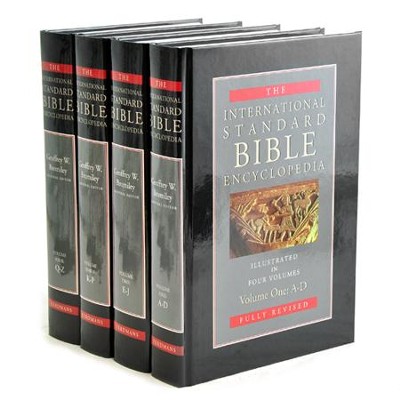
Here is an excerpt from The International Standard Bible Encyclopedia (ISBE) that may help give some insight:

"it would be quite incorrect to say that in the OT a name was just an identity tag and no more. There, as in other ancient literature, the name of a person sometimes revealed his character, his personality, even his destiny. In fact, a person’s name was often considered to be but an expression, indeed a revelation, of his true nature, as the many popular etymological explanations of names given to people in the OT makes clear OT Old Testament...Because a person’s name is so closely related to what he is, šēm comes also to mean “fame,” “renown,” “reputation"...God sent people to speak “in his name” (Jer. 11:21; 14:14f; etc.).

This sharing of His name with others meant that the message they spoke was spoken under inspiration, with authority, by divine appointment, and thus was to be heard as the word of the Lord and responded to accordingly. “To blaspheme the name of Yahweh” does not mean that someone uses the divine name in a thoughtless oath or expletive. Rather it means that the proud and arrogant and strong intentionally abuse the people of God, those people who bear His name (Ps. 74:10, 18; Isa. 52:5; Jas. 2:7). It means, therefore, that whenever persons revile the people of God, they revile the name of God, and thus revile God Himself (cf. Mt. 25:40).

It is also possible for the people of God themselves to blaspheme the name of God by living in a way contrary to the nature of God, whose name they bear. If the name of God is the revelation of the nature of God, and if the nature of God is characterized by compassion, grace, forgiveness, lovingkindness, truth, justice, etc. (cf. Ex. 34:6f), and if those who carry that name live in a way opposite to that name, to the nature of God, then that name is reviled by the scandal of inconsistency (Ezk. 36:20; Rom. 2:24)."

G. W. Bromiley, "Name; OT," The International Standard Bible Encyclopedia, Revised (Wm. B. Eerdmans, 1988; 2002), 3:481-482.

One Great Tri-Personal Book - Part III

The first of the three sections begins with Irons. As this is a book review, I intend to make my observations brief regarding my objections to some of Dr. Irons’s conclusions. While I disagree with him on multiple levels, I do so respectfully.

Irons - as did Smith - started off by defining his intention with the words “deity” and “divine,” which was helpful in determining from the beginning what he was essentially communicating. He recognizes that these can be used in multiple senses and uses the example of emperor and hero veneration (although not in those exact words) to make clear that this is not his context when employing the terminology. He stresses that ancient heroes were nothing but mere men, deified and perceived as having joined the gods in the Pantheon.
This is where he first brings in the argument predominantly relied upon throughout the entirety of his discourses. He interprets Jesus as the preexistent logos - the creator - thus placing Jesus on the creator side of the creator-creature distinction. For Irons, this speaks ontology: 

“He is not man who became a god, but the Son of God who became man” 4.

I found many of his arguments dependent on an anachronistic premise and laden with metaphysical speculation not inherent to the text itself although he claims to hold 

“the formal principle of the Reformation, sola Scriptura” 149. 

His language however, was not that of Scripture alone. In developing his argument to positively relate Jesus’ unique identity with Yahweh, Dr. Irons used the word ontology/ontological a total of 42 times. This is not how the Bible speaks of Jesus, despite hardships to ascertain the author’s intent beyond doubt in various texts (most notably John, as this book bears out).

An unwarranted and unproven premise upon which he built is the belief that “son of God” signifies a statement of ontology. I found the following a telling admission:

“I hate to say, ‘Jesus is God,’ nor would I say ‘Jesus is not God.’ Instead I prefer to say, as the New Testament says, that ‘Jesus is the Son of God.’ although it is possible to construe it in a valid sense, I am cautious about the statement ‘Jesus is God,’ because the name ‘God’ (with the definite article, ho theos) most frequently and properly refers to the Father. ‘Jesus is God’ could be taken to mean ‘Jesus is the Father,’ which would be modalism” 20.

His apprehension to use the statement “Jesus is God” is curious due to the other claims he is comfortable making without biblical veracity. The title “son of God” has been the subject of much scholastic investment, and while there are certainly those who would share in Irons’s opinion, this would hardly represent the majority opinion on the matter. That the biblical use “son of God” denotes ontological identity with God the Father, Yahweh, is a pivotal distinction for him, but is built on shaky theological grounds when a closer examination of this title is made within its rightful Hebraic framework.

On page 5 he makes the comment,

“Whether it is the voice of God the Father from heaven saying, ‘This my beloved Son’ at Jesus’ baptism and transfiguration, or Peter confessing, ‘You are the Christ, the Son of the living God,” or Jesus before the high priest Caiaphas being charged with blasphemy and condemned to death because he claimed to be the Son of God, or the centurion at the scene of the crucifixion confessing, ‘Truly this was the Son of God!’ – in all five key moments, the declaration of Jesus’ divine Sonship has the aura of being utterly significant and decisive.”

There is no disputing these moments as “significant and decisive,” and much is left to be examined regarding the nuances “son of God” communicates, but as “divine” from Irons’s own definition predicates ontology, it is a baseless claim since there is nothing in these texts to place the title in a metaphysical category. Both Dixon and Smith voice their difficulties and present much more biblical evidence than that with which Irons’s drew his conclusions. Dixon cites D. Garland and Smith, N.T. Wright, 

“we must stress that in the first century the regular Jewish meaning of this title [Son of God] had nothing to do with an incipient trinitarianism; it referred to the king as Israel’s representative” 39, Wright, Jesus and the Victory of God, 485-86.

Sonship cannot be extracted from its Hebraic roots: 

“The psalms speak of the king as son of God, and say he is begotten, not adopted. This language is mythical and metaphorical rather than philosophical. It does not employ ontological categories. But it should not be dismissed as ‘mere’ metaphor. It was a powerful way of shaping perceptions about the special relationship between the king and his god.” Collins, Son of God, 204.

Irons is honest in his admission and rightfully careful to not "verge on modalism," (19) but by saying Jesus shares the identity of Yahweh is essentially communicating the same idea. He maintains that Jesus is the son of Yahweh, and in his way of reckoning believes this denotes an ontological and eternally generated son.

"When the son is exalted he receives the divine name, YHWH, because it is fitting in terms of his ontological status. His receiving the divine name shows that he shares in the identity of YHWH” 20. 

Adequately refuted by both Dixon and Smith is the fact that in the scope of scriptural use, actions that Yahweh is said to do or bearing his name does not make one equal to, one in substance/essence with or ontologically identical to him. This is a gross misrepresentation of biblical data.

Irons uses various other passages and continues to regard them as ontological descriptions of Jesus’ identity with Yahweh. This is a difficulty, because he develops his argument on the basis of the false notion that Sonship denotes ontology. “Son of God” and the later term “God the Son” are not synonymous or interchangeable terms. 

The Word of God

“Say to the servant that he might go ahead of us and pass on, but you remain standing now, that I may proclaim the word of God to you.” 1Sa. 9:27

“It came about the same night that the word of God came to Nathan.” 1Ch. 17:3

“I [Paul] became a servant of the Good News because God gave me this work to do for your benefit. The work is to make fully known the message [word] from [of] God, the secret hidden for generations, for ages, but now made clear to the people he has set apart for himself.” Col. 1:25-26

“…the heavens existed long ago, and the earth was formed out of water and through water by the word of God.” 2 Pe. 3:5

“The vision of Isaiah the son of Amoz concerning Judah and Jerusalem, which he saw during the reigns of Uzziah, Jotham, Ahaz and Hezekiah, kings of Judah. Listen, O heavens, and hear, O earth; For the LORD speaks, ‘Sons I have reared and brought up, But they have revolted against Me.’" Isa. 1:1-2

“Now it came about in the thirtieth year, on the fifth day of the fourth month, while I was by the river Chebar among the exiles, the heavens were opened and I saw visions of God…the word of the LORD came expressly to Ezekiel the priest… Then He said to me, ‘Son of man, stand on your feet that I may speak with you!’As He spoke to me the Spirit entered me and set me on my feet; and I heard Him speaking to me.” Ezek. 1-2

“Now the word of the LORD came to me saying, ‘Before I formed you in the womb I knew you, And before you were born I consecrated you; I have appointed you a prophet to the nations.’ Then I said, ‘Alas, Lord GOD! Behold, I do not know how to speak, Because I am a youth.’ But the LORD said to me, ‘Do not say, 'I am a youth,' Because everywhere I send you, you shall go, And all that I command you, you shall speak.’” Jer. 1:4-7

Many Christians today refer to the Bible as “the word of God.” What exactly is God’s word? If this question was posed in most churches, would the answer be “the Bible”? Has it changed definition since its use in the Scriptures? How could “word of God” be synonymous with “the Bible” if the Bible did not exist when “word of God” was used in it? Have the waters perhaps been muddied as often done in Christian terminology? Are Christians confused about what the “word of God” actually is and represents? Did God speak all the words in the Bible or only a few, as seen in some of the passages exemplified above? Are the individuals found in the Bible historical figures with a real voice through whom God spoke, interacted and moved? Did they have freedom to express their experiences with the God of Israel in their own unique way, or were they merely puppets on a string contributing to God’s great Bible compilation schema?

What gives justifiable cause to assume every word in the Bible is God’s word(s)? Whence is this idea derived? A common response may be, “but God inspired the Bible, thus making it from him”. Should a distinction be recognized between words that God actually spoke to his prophets for delivery to his people and the record of what the men of God penned about their experiences, circumstances, feelings and interpretations of what God said?

A couple of years ago I posed these questions in a conversational setting to an individual of influence in the Christian community. At doing so, stern opposition and a verbal chastisement was the reply for even insinuating such blasphemous notions. While there was no evidence presented to refute the proposition, nonetheless there was a vigilant unwillingness to consider what was being stated. Instead of legitimate responses, personal attacks pertaining to lack of credentials and experience were hurled. The question and proposition was almost unfathomable. How has Christianity come to this, and why?

What is inspiration, and what does it mean to most Christians? Did “writers” of the biblical record sit in a hypnotic state and function as an ink jet printer while God dictated the words of the Bible? “Ok Jeremiah, take a seat and get ready, here’s what I want you to write, set, go!

“The words of Jeremiah the son of Hilkiah, of the priests who were in Anathoth in the land of Benjamin, to whom the word of the LORD came in the days of Josiah the son of Amon, king of Judah, in the thirteenth year of his reign….” 

This is an absurdity, yet not too far from how it is often conceived and portrayed, a nebulous of inspiration, infallibility and inerrancy with a hint of mystery thrown-in. Are these opening words of the book of Jeremiah the words of the author or God? They never claim to be God’s words, because they are not. God’s words are carefully emphasized by stating, the 

“word of the LORD came to me saying”….

and then God’s message to Jeremiah follows. Did God inspire Jeremiah to record his experience and message?

The apostle Paul had messages or “words” from/of God for people, but sometimes (by his own admission), it was not always directly a message “from the Lord," e.g. 1 Co. 7, 

“…I say (I, not the Lord) that if any brother has a wife who is an unbeliever, and she consents to live with him, he should not divorce her…I have no command from the Lord, but I give my judgment as one who by the Lord's mercy is trustworthy. I think…I want…I mean…I would…I say…in my judgment…and I think that I too have the Spirit of God” 1Co. 7:12, 25, 28, 29, 32, 35, 40.

The Bible never once calls itself “the word of God.” Why not? Perhaps it is because “God’s word” cannot be limited to written words on a page. 

“For the word of God is living and active and sharper than any two-edged sword” Heb. 4:12. 

God sends his word and it doesn’t return to him until it has accomplished its purpose (Isa. 55:10,11). The word of God spreads on earth (Acts 6:7). We are 

“born again...through the living and enduring word of God” 1 Pet. 1:23. 

The word of God abides in us (1 John 2:14). All things were made through God’s word (John 1:1-3). Even Jesus’ is given the title “word of God” (Rev. 19:13) as a correlation to Deut. 18. The word of God, God’s revealed and proclaimed truth is not a book, even though the book reveals things about God and words he did indeed speak, but the two are not synonymous. The most obvious reason is that a “complete” Bible (as is known today) did not exist until much later. The books and letters contained within the framework of “the Bible” know nothing of this later “canonized” development.

The fact of the matter is, it is the prophets[1] through whom the words of God are delivered. The writer of Hebrews is also of this opinion: 

“Long ago, at many times and in many ways, God spoke to our fathers by the prophets, in these last days, he spoke to us through a son…” Heb 1:1-2. 

This has been known early on when God made the declarative promise to and through the authority figure Moses: 

“I will raise up a prophet from among their countrymen like you [Moses], and I [Yahweh, the LORD] will put my [Yahweh] words in his [prophet’s] mouth, and he [prophet] shall speak to them [the people, as a prophet is supposed to do] all that I [Yahweh] command him [prophet]. 'It shall come about that whoever will not listen to My [Yahweh] words which he [prophet] shall speak in My [Yahweh] name, I Myself [Yahweh] will require it of him [whoever doesn’t listen].” Deut. 18:18-19.

In 2 Tim. 3:15 the writer calls the Tanakh, (Old Testament)[2] “scripture” (literally “writings”).[3] It is given by God, for the community of God. God has inspired, motivated, gifted, commissioned men for this purpose. An inspired or “sacred canon” is not synonymous to “the words of God.” These scriptures or “writings” of this library are considered “holy” or set apart from others. The reason for this is the community.

Isaiah was recognized as a prophet of God, and God spoke through him to the people. His words were verified (cf. Deut. 18:20-22). He had words of God for the community of Israel. It is not the books of Isaiah that carried authority, those came later. The only reason they carried any authority was because they had as their fountainhead the eponymous prophet Isaiah. It was God’s authority in Isaiah, which in turn made the record of his experiences, interactions, feelings, even interpretations regarded as authoritative by the community. Second Temple era Judaism had their set of “writings”.[4] As time went on, the movement that became known as Christianity procured trustworthy books recognized by the church as “inspired” and normative. This developed into the New Testament, which more accurately stated is a commentary on the Hebrew Scriptures. It seeks to shows why this “Jesus of Nazareth” is God’s chosen one, Messiah, and what that means for not only Israel, but also the rest of the world. It contains interpretations of the Hebrew text aimed at aiding outsiders and gentiles in their comprehension of concepts Hebraic in nature, as taught in the Tanakh and therefore hard to grasp for a Hellenistic and western, philosophically trained worldview.

Simply put, the “word of God” is that which God spoke and/or speaks. For example, 

“In the beginning God created the heavens and the earth. The earth was formless and void, and darkness was over the surface of the deep, and the Spirit of God was moving over the surface of the waters. Then God said, ‘Let there be light’; and there was light” Gen. 1:1-3. 

Is it to be assumed that all the words above are God’s words or just those described as such? If not, then what’s the point of making a distinction?

Does a clarification of the “word of God” really matter or is this a pointless and perhaps pedantic exercise? While referring to the Bible as “God’s Word” or the “Word of God” may seem to heighten its divine inspiration and authoritative content, it also homogenizes the distinctive portions where God is said to “speak”. Basically, it minimizes Yahweh’s actual words he commanded the prophets to speak. When reading the testimonies of the prophets sometime, pay close attention to those specific words spoken by God. Observe the interaction and realize that the God whom they served is the same God who works in the present day and age, with the same communicative power. There have been times, such as what is found in the days of Eli when, 

“the word of the LORD was rare in those days; there was no frequent vision” 1Sa 3:1. 

At that time, God raised-up a prophet through whom he spoke. And in the narrative, a message was delivered to Eli by young Samuel that had already been delivered to him. It was the “second witness”, by the mouth of a child.[5]

What about the much quoted (as though it speaks of “the Bible) 

“Your word I have treasured [hidden] in my heart, That I may not sin against You” 

or 

"Your word is a lamp to my feet And a light to my path” Psa. 119:11, 105.

 This is a good example how a verse can be taken out of its proper contextual understanding. Exegetical guidelines need to be followed: what did the words mean to the original hearers/readers? What is the cultural meaning of the language (idioms, terminology, cultural colloquial phrases etc.)? What was original communicator’s intent? At the time this passage was composed, there was neither a Christian nor Hebrew “canon”. There were God’s “words” to Moses, the Torah (instruction, statutes, teachings).

Deuteronomy is the common Christian title of the last book of the Torah (Pentateuch). However, the Hebrews know it by another name, d’varim, which is Hebrew for “words”. This title comes from the first few words of the book itself, 

“These are the words which Moses spoke to all Israel…” Deut. 1:1. 

This was very important for the Hebrews and even more so for a King of Israel, for in the book of “words” was this “word”: 

“If, after you have entered the land that the LORD your God has assigned to you, and taken possession of it and settled in it, you decide, ‘I will set a king over me, as do all the nations about me,’ you shall be free to set a king over yourself, one chosen by the LORD your God. Be sure to set as king over yourself one of your own people...When he is seated on his royal throne, he shall have a copy of this Teaching [Torah] written for him on a scroll by the levitical priests. Let it remain with him and let him read in it all his life, so that he may learn to revere the LORD his God, to observe faithfully every word of this Teaching [Torah] as well as these laws. Thus he will not act haughtily toward his fellows or deviate from the Instruction to the right or to the left, to the end that he and his descendants may reign long in the midst of Israel” Deut. 17:14-20

Within the same book of d’varim (words, Deuteronomy) these words are also found: 

“These words, which I am commanding you today, shall be on your heart”[6] 6:6; 

“You shall therefore impress these words of mine on your heart and on your soul” 11:18; 

“But the word is very near you, in your mouth and in your heart, that you may observe it.” 30:14; 

“Take to your heart all the words with which I am warning you today, which you shall command your sons to observe carefully, even all the words of this law. For it is not an idle word for you; indeed it is your life. And by this word you will prolong your days…” 32:46-47 

So then, the words of the Psalmist are not about the “Bible” as is viewed today, but a confirmation of the composer’s intention to take seriously the “words” spoken by God through his servant Moses, words to be lived, breathed and treasured. Jesus famously quoted these “words” as well, 

“man does not live by bread alone, but man lives by everything that proceeds out of the mouth of the LORD” Deut. 8:3

This is not to suggest that the “Bible” is in any way insufficient or lacking in its revelation of God. But God does continue to speak to his people and direct them, outside of a “book”. This is his word. It is better to recognize the Bible for what it is, a library and collection of writings by men and women commissioned (inspired) by God to act and speak in his name rather than a monolithic unit emailed from heaven. When the Bible becomes an object of worship, serious questions must be asked about the worldview that created it as such. God has given his words. But there are also the others words of others about him, providing the necessary context as to why his words have validity, thus showing them to truly be his authoritative “words”.

_____________________________
End Notes:
[1] In the ANE (Ancient Near East) cultures, oral communication and transmission was the norm. It wasn’t until later times that developments brought civilization to the textual dominance with which the world is accustomed to today. “Writing was associated primarily with preservation (archives and libraies) and only secondarily with dissemination (written copy so that others could read it aloud; see 2 Chron 17:9).” John Walton, The Lost World of Scripture (IVP Academic, 2013), 28.
[2] Tanakh is an acronym. In Hebrew vowels are not written. It takes the T from Torah, which is the first five books, the N from Nevi'im, which is the books of the prophets, the K from Ketuvim, which is all the writings such as Ezra Nehemiah, Chronicles, Poetic books such as the Psalms and Proverbs, adds a couple vowel sounds to make TaNaKh. Using the phrase “Old Testament” is very offensive to the Hebrew people, because in doing so, we are stating whether we know it or not, that the New Testament is the new and improved version and they have the old one.
[3] Cf. Mt. 21:42; 22:29; 26:54, 56; Mk. 12:10, 24; 14:49; 15:28; Lk. 4:21; 24:27, 32, 45; John 2:22; 5:39; 7:38, 42; 10:35; 13:18; 17:12; 19:24, 28, 36, 37; 20:9; Act 1:16; 8:32, 35; 17:2, 11; 18:24, 28; Rom. 1:2; 4:3; 9:17; 10:11; 11:2; 15:4; 16:26; Gal. 3:8, 22; 4:30; 1 Co. 15:3, 4; 1 Ti. 4:13; 5:18; 2 Ti. 3:16; Jam. 2:8, 23; 4:5; 1 Pe. 2:6; 3:16; 2 Pe. 1:20.
[4] Not all were in agreement. The ruling, priestly Sadducees did not accept the progressive revelation of God through the prophets as authoritative and therefore rejected them, accepting only the Torah. The Pharisees however, were fully acceptant of not only the writings that make up our Old Testament, but also other writings (apocryphal, pseudepigraphal).
[5] The instruction given the people of Israel was that a single accusation was insufficient; it needed to be verified by a second. Deut. 19:15 In 1 Samuel 2:27-36 an unknown “man of God” delivers a message that was almost identical to what the young Samuel relayed to Eli “from the Lord”. This (among other things) was confirmation that Samuel was “established” as a prophet, a voice for the God of Israel.
[6] Cf. Job 22:22
[7] Cf. Matt. 4:4; Lk. 4:4

The Word of God to...

It should give reason for pause and reflection that the Bible never refers to itself as the “Word of God" as many moderns are accustomed. The OT is known as the Scriptures, among other titles. Scriptures are writings held sacred by a group, and therefore if one is taking the NT seriously, it falls into this category, as the Word of God is recorded to have been given to individuals in it. Not least of which is the promised "prophet like Moses" which Deut. 18 details,

"I [Yahweh] will put my [Yahweh] words in his [prophets] mouth, and he [prophet] shall speak to them [people, Israel, whoever] all that I [Yahweh] command him [prophet]. And whoever will not listen to my [Yahweh] words that he [prophet] shall speak in my [Yahweh] name, I [Yahweh] myself will require it of him [whoever]."

The Word of God - that which God speaks - is recorded in the Scriptures as coming to many individuals in various times and places, e.g. the “Word of God” that came to Isaiah, Ezekiel, Daniel etc. That Word (davar, instruction, speech, statement, pronouncement) has been

“handed down through angels and a mediator” Gal. 3:16 (think Sinai).

The word angel comes from the Hebrew, malak, meaning messenger. According to the writer of Hebrews,

“in these last days, He has spoken to us by His Son” Heb. 1:2.

C.S. Lewis on the "Word of God"

How the “Word of God” became a synonymous term for the Bible, I am not sure. The Bible never calls itself this, and it has caused confusion among many as to what it actually means. Here is an excerpt of C.S. Lewis from his book, “Reflections on the Psalms” dealing with this subject:


"…Holy Scripture is in some sense though not all parts of it in the same sense-the word of God…I take it that the whole Old Testament consists of the same sort of material as any other literature-chronicle (some of it obviously pretty accurate), poems, moral and political diatribes, romances, and what not; but all taken into the service of God’s word. Not all, I suppose, in the same way. There are prophets who write with the clearest awareness that Divine compulsion is upon them. There are chroniclers whose intention may have been merely to record. There are poets like those in the Song of Songs who probably never dreamed of any but a secular and natural purpose in what they composed. There is (and it is no less important) the work first of the Jewish and then of the Christian Church in preserving and canonising just these books. There is the work of redactors and editors in modifying them. On all of these I suppose a Divine pressure; of which not by any means all need have been conscious. The human qualities of the raw materials show through. Naivety, error, contradiction, even (as in the cursing Psalms) wickedness are not removed. The total result is not “the Word of God” in the sense that every passage, in itself, gives impeccable science or history. It carries the Word of God; and we (under grace, with attention to tradition and to interpreters wiser than ourselves, and with the use of such intelligence and learning as we may have) receive that word from it not by using it as an encyclopedia or an encyclical but by steeping ourselves in its tone or temper and so learning its overall message. To a human mind this working-up (in a sense imperfectly), this sublimation (incomplete) of human material, seems, no doubt, an untidy and leaky vehicle. We might have expected, we may think we should have preferred, an unrefracted light giving us ultimate truth in systematic form-something we could have tabulated and memorised and relied on like the multiplication table. One can respect, and at moments envy, both the Fundamentalist’s view of the Bible and the Roman Catholic’s view of the Church. But there is one argument which we should beware of using for either position: God must have done what is best, this is best, therefore God has done this. For we are mortals and do not know what is best for us, and it is dangerous to prescribe what God must have done-especially when we cannot, for the life of us, see that He has after all done it. We may observe that the teaching of Our Lord Himself, in which there is no imperfection, is not given us in that cut-and-dried, fool-proof, systematic fashion we might have expected or desired. He wrote no book. We have only reported sayings, most of them uttered in answer to questions, shaped in some degree by their context. And when we have collected them all we cannot reduce them to a system…He will not be, in the way we want, “pinned down”. The attempt is (again, I mean no irreverence) like trying to bottle a sunbeam.”

C. S. Lewis, Reflections on the Psalms (London: Wyman & Sons, Ltd, 1958), 19, 111, 112, 113.

The Acts Creation Question

I read the book of Acts yesterday from start to finish in one sitting. Reading it as a whole unit this way allows the story being told to come together beautifully, and the result is the context coming out naturally (as if you were reading a novel).
In traditional use of the Bible, we have become accustomed to chopping, dicing, cutting and pasting as necessary to fit our interpretations. The letters and books were originally meant to be treated as a whole.

Every time I read the book of Acts (as well as other books, specifically the prophets), I take away new things I hadn't picked up on before (reading a different translation also helps to digest the story and not just words).

In chapter 4 of Acts, Peter and John are doing what their Master and Messiah commissioned them to do; proclaim that

“there is salvation in no one else, for there is no other name under heaven given to people by which we must be saved."


In this particular part of the story, Peter and John are subsequently threatened and released for their proclamations “in this name”(verse 17). In verse 23 it says,

“After they were released, they went to their own fellowship and reported all that the chief priests and the elders had said to them.”

This is the context. The very next phrases this passage relates are of particular interest to me.

“When they heard this, they raised their voices to God unanimously and said, "Master, You are the One who made the heaven, the earth, and the sea, and everything in them. You said through the Holy Spirit, by the mouth of our father David Your servant: Why did the Gentiles rage, and the peoples plot futile things? The kings of the earth took their stand, and the rulers assembled together against the Lord and against His Messiah.”Act 4:24-26  

They begin to pray and they lift their voices to God and pray to Him who they credit with the creation of Heaven, earth etc, etc. They quote Psalm 2 which says, 

“Why do the nations rebel and the peoples plot in vain? The kings of the earth take their stand and the rulers conspire together against the LORD [Yahweh] and His Anointed One [messiah]” 

Yahweh is called Father (Is 64:8). Jesus clearly called Yahweh his Father and God (Psalm 45:7, Is 49:4-5, John 20:17, Rev 3:12, Matt27:46, Mark 15:34 from Psalm 22:1). The apostles are praying to God (who is the creator of all), and continue in their prayer, Act 4:27-30 

“For, in fact, in this city both Herod and Pontius Pilate, with the Gentiles and the peoples of Israel, assembled together against Your holy Servant Jesus, whom You anointed, to do whatever Your hand and Your plan had predestined to take place. And now, Lord, consider their threats, and grant that Your slaves may speak Your message with complete boldness, while You stretch out Your hand for healing, signs, and wonders to be performed through the name of Your holy Servant Jesus." 

They are attributing the creation of all to God and then speak of God’s holy servant Jesus (as seen in Isaiah 42, 49, 53, 61 etc.). They make a clear and precise distinction (even quoting prophecy) about God the creator and His servant Jesus. It is Yahweh who is given the attribution of creation (Deut 4:32, Psalm 148:1-6, Is 42:5, 44:24, 45:11-12, Job 38:1-41, Neh 9:6, Matt 19:4, etc). What is to be understood here? Are they confused, or are they basing their theology on the creator as revealed in the Old Testament?