Investigating the Contexts and Themes of the Hebrew Scriptures and New Testament.
Cognitive Dissonance
In various aspects of life, but especially true in matters pertaining to religion, doctrine and theology, most people would rather foster a cognitive dissonance, than face truth. There are documented and clinically proven reasons as to why this is the "case". In the end, all are faced with an ultimatum, and unfortunately for some, truth gets in the way of a preferred worldview, outlook and perspective on reality, including God's. We as people, tend towards loving a reassuring lie, rather an inconvenient or uncomfortable truth. When someone comes along who challenges that in which we take comfort, we direct the anger, rage, resentment and terror that wells up within us from the prospect of the message being true against the messenger who bears it. We attack the messenger as a person, perhaps using a cliché that we feel will justify our reasons for doing so, such as "conspiracy theorist" or my all time favorite, "heretic". I don't think most who use these stereotypical phrases even truly know what they mean. We will do anything in our power, often resorting to subterfuge, even (or especially) in our "Christian" communities, to protect at all costs the distortion that has begun to be unveiled which we have allowed to provide comfort, security and in some ways define us.
Ground-rules for comments: 1) Identify yourself by observing social decorum and use your real name. 2) Please stick to the subject of the post. Introducing extraneous issues makes it confusing for everyone. 3) Relevant queries, informed comments and disagreement are welcomed, but don't use this as a soap-box to vent your pet views or to simply to be obnoxious. 4) State your query concisely and make your comment with regard for other readers. 5) Be honorable and avoid insults and slurs, and focus on engagement with the issues and data. Comments with personal attacks or insults will not be tolerated. Refutation, declaring an error, all welcome and appropriate, but keep it polite and fair.

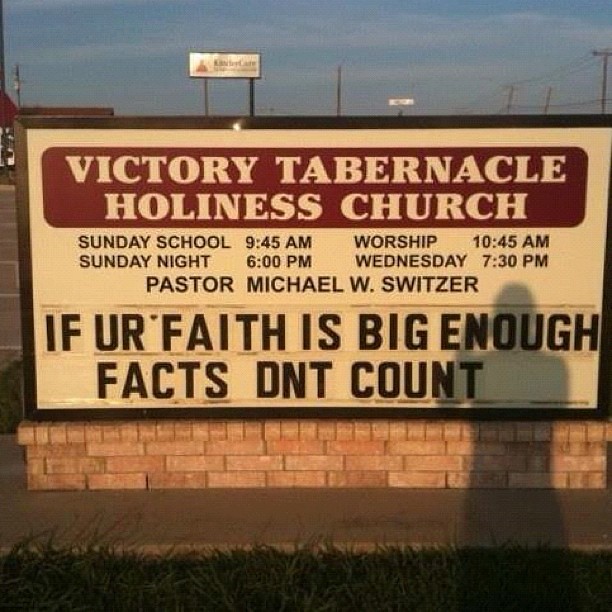
 In various aspects of life, but especially true in matters pertaining to religion, doctrine and theology, most people would rather foster a cognitive dissonance, than face truth. There are documented and clinically proven reasons as to why this is the "case". In the end, all are faced with an ultimatum, and unfortunately for some, truth gets in the way of a preferred worldview, outlook and perspective on reality, including God's. We as people, tend towards loving a reassuring lie, rather an inconvenient or uncomfortable truth. When someone comes along who challenges that in which we take comfort, we direct the anger, rage, resentment and terror that wells up within us from the prospect of the message being true against the messenger who bears it. We attack the messenger as a person, perhaps using a cliché that we feel will justify our reasons for doing so, such as "conspiracy theorist" or my all time favorite, "heretic". I don't think most who use these stereotypical phrases even truly know what they mean. We will do anything in our power, often resorting to subterfuge, even (or especially) in our "Christian" communities, to protect at all costs the distortion that has begun to be unveiled which we have allowed to provide comfort, security and in some ways define us.
No comments:
Post a Comment
Ground-rules for comments:
1) Identify yourself by observing social decorum and use your real name.
2) Please stick to the subject of the post. Introducing extraneous issues makes it confusing for everyone.
3) Relevant queries, informed comments and disagreement are welcomed, but don't use this as a soap-box to vent your pet views or to simply to be obnoxious.
4) State your query concisely and make your comment with regard for other readers.
5) Be honorable and avoid insults and slurs, and focus on engagement with the issues and data. Comments with personal attacks or insults will not be tolerated. Refutation, declaring an error, all welcome and appropriate, but keep it polite and fair.